
Reviewed · PRIVATE
Battle of Crete WW2 Private Tour (price per group of 6)
The most striking part of this Chania tour is its human scale. You move from military cemeteries to village squares, prison grounds, and hills above the old battle lines, following not only the Allied and German forces but also the Cretan families who hid and fed soldiers. This is battlefield history tied to real places, not a quick museum stop.
I like the private format, which lets you ask about a particular regiment, country, or family connection. I also like the practical touches: two-way transport from your Chania address and a USB stick filled with reports, books, diaries, maps, and photographs. The main drawback is the six-hour focus on war history. If WWII is not your main interest, the pace and subject may feel heavy.
In This Review
- Key points to know before booking
- Why this Battle of Crete tour feels different
- Souda Bay War Cemetery and the 42nd Street memorial
- German Military Cemetery and Hill 107
- Tavronitis Bridge and the RAF Memorial
- Galatas, the Welch memorial, and village history
- Alikianos and the Agia Prison valley
- What the private format adds
- Price, food, and practical value
- Who will enjoy this six-hour route
- Booking details and cancellation
- Should you book the Battle of Crete tour?
- FAQ
- How long does the Battle of Crete private tour last?
- How many people can join the private tour?
- Where can pickup and drop-off be arranged?
- Is Maleme airfield open to visitors?
- What is included in the price?
- Are food and drinks included?
- Can I cancel for a full refund?
Key points to know before booking
- Hill 107 gives the battle its geography: You can look toward Maleme airfield and understand why this ground mattered.
- The route links several national stories: Allied cemeteries, German graves, Greek units, New Zealand memorials, and RAF losses all appear.
- Private guiding changes the day: You can focus on individual units, family stories, or the parts of the battle that matter most to you.
- Transport is built in: Pickup and drop-off are offered from Souda port, accommodations, and convenient points around Chania.
- The tour goes beyond monuments: A bakery, village views, and a large private collection of wartime objects may be included along the way.
- The price works best for a full group: At $555.98 for up to six people, the cost is about $92.66 each when six people share it.
Why this Battle of Crete tour feels different
Many WWII excursions reduce a battle to dates and arrows on a map. This one works better because the stops help you see the ground. You visit the cemeteries where the dead are buried, the hill that overlooks Maleme, the bridge attacked early in the German operation, and villages where Greek, New Zealand, British, Australian, and German forces were involved.
The guide also brings a local point of view. The Battle of Crete was not just a clash between armies. Cretan civilians became involved in fighting, hiding Allied soldiers, carrying supplies, and facing reprisals during the occupation. That local connection gives the day a more personal tone.
You should bring a USB stick if you want the extra material offered during the tour. Reports, books, diaries, maps, and photographs can help you continue the subject after you leave Crete. If you have a relative who served in the battle, send the guide the name or unit before the tour. The private setup is well suited to that kind of focused question.
A few more Chania half-days to weigh up
- From Kissamos Port: Boat Cruise to Balos Lagoon & Gramvousa
★ 4.2 · 6,755 reviews - From Chania: Full-Day Samaria Gorge Trek Excursion & Guide
★ 4.6 · 3,191 reviews - Cretan Safari – 4×4 Adventure to Preveli Beach with Lunch
★ 5.0 · 780 reviews
Souda Bay War Cemetery and the 42nd Street memorial
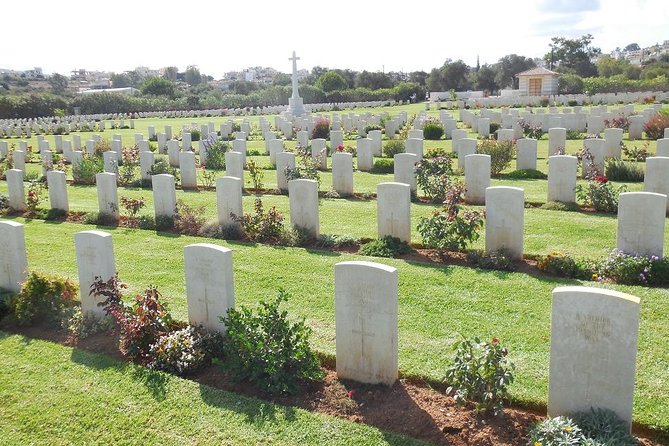
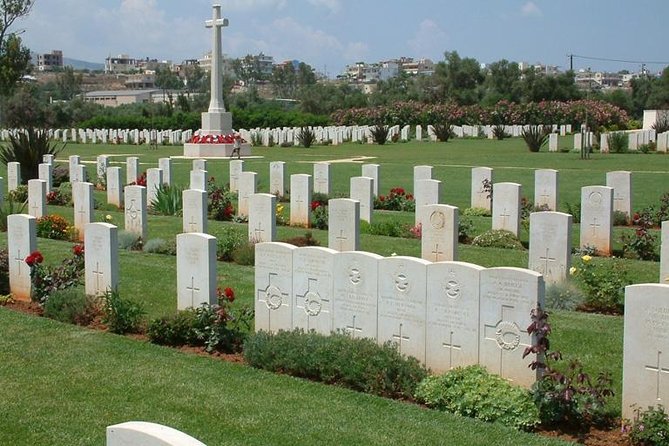
The tour begins with about an hour at Souda Bay War Cemetery. This is a quiet, carefully kept place where Allied soldiers who died in the Battle of Crete are buried. Walking among the graves puts names and dates ahead of military labels. You are not simply hearing how many troops were lost. You are seeing the final resting place of individuals from the campaign.
The guide uses the cemetery to explain the fighting and tell stories connected to the graves. That matters because the Battle of Crete can become confusing quickly. Airfields, parachute landings, local resistance, naval action, and ground fighting all overlap. A good explanation here gives you a framework for the rest of the day.
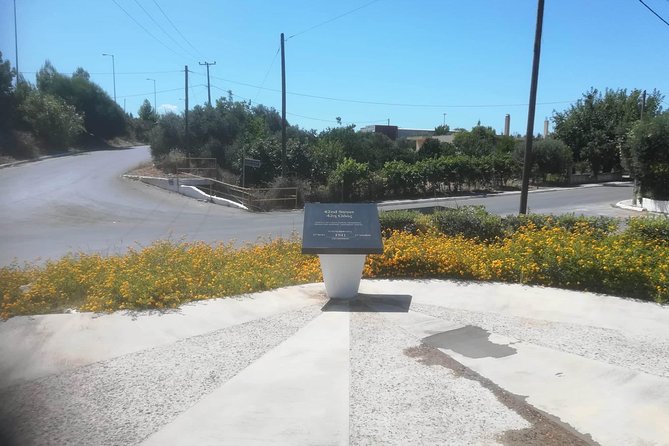
Nearby, you visit the 42nd Street memorial. The site recalls a bayonet charge, a detail that brings the close-range violence of the fighting into view. It is a useful contrast with the calm cemetery. One stop is reflective, while the other points to a sudden action on the ground.
Admission is free, but the value is in the guide’s explanation. Without context, you could walk through the cemetery in a few minutes. With a private guide, you can slow down, ask about individual units, and connect the memorial with what comes later.
German Military Cemetery and Hill 107
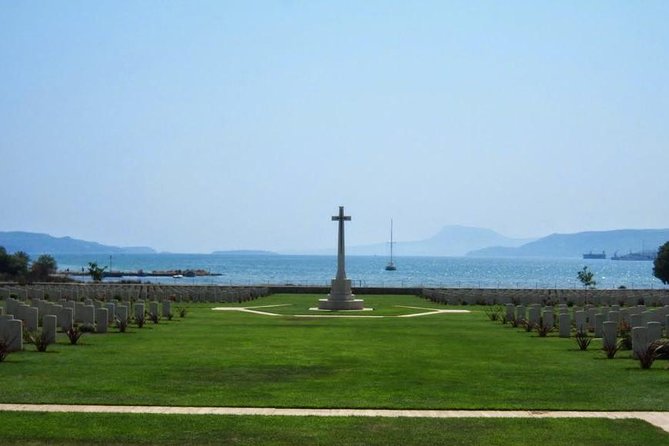
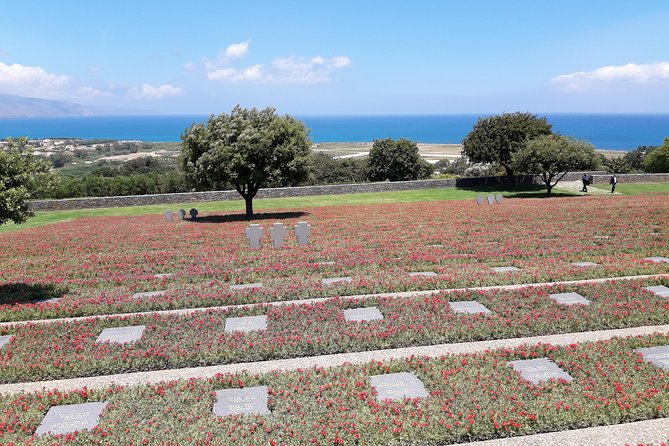
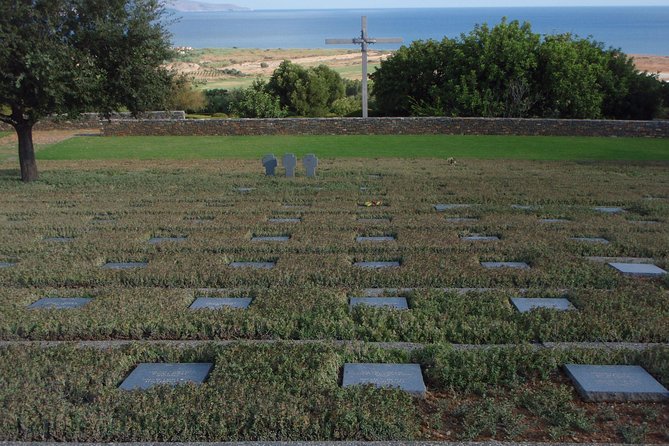
The German Military Cemetery sits on Hill 107, above Maleme airfield. This is one of the strongest parts of the tour because the view helps explain the battle’s early stages. From the hill, you can see the area that made Maleme so important and discuss how control of the airfield affected the German assault.
You will make a quick stop near Maleme airfield. It remains a military area, so access is forbidden. That limitation is worth knowing in advance. You are viewing the airfield from outside rather than walking across it, but the nearby hill still gives you a useful sense of its position.
The guide also takes you toward the former Allied headquarters on top of Hill 107. The combination of cemetery, headquarters site, and view turns the hill into a natural history lesson. You can compare the military plans with the physical ground and ask why a position that looked defensible could still be lost.
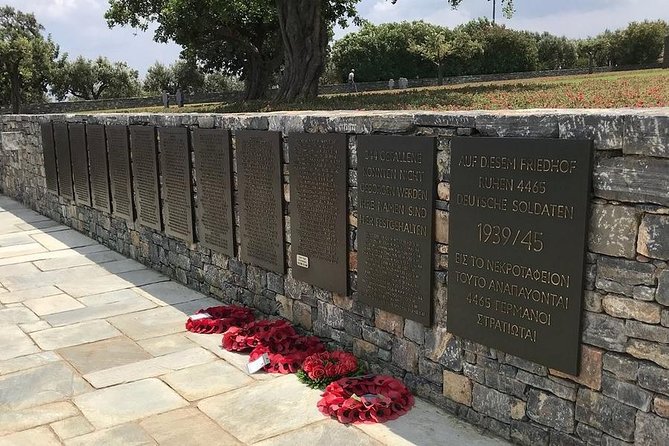
The German cemetery brings another layer to the day. It is important to remember that the tour does not present the conflict from only one national angle. You see where German soldiers were buried, then consider the same battle from the Allied and Cretan perspectives.
The walking here may require a reasonable level of mobility, especially around the hill. The tour notes that most people can take part, but anyone with serious health concerns should tell the operator in advance.
Tavronitis Bridge and the RAF Memorial
Tavronitis Bridge was one of the main German targets during the assault on Crete. The stop lasts about 45 minutes, so it is shorter than the cemetery visits, but it fills an important gap in the route. Here, the guide can explain how a bridge became part of the opening military objectives.
You will also visit the RAF Memorial nearby. This focuses attention on the pilots who died during the battle. It is easy to think of Crete as a ground campaign because the villages and hills dominate the route. The RAF memorial reminds you that the fighting involved air operations as well.
This part of the tour is also useful for orientation. After seeing the battlefield from Hill 107, you are now closer to one of the locations tied to the German advance. The bridge and memorial help connect the broad view from above with a specific target on the ground.
Do not expect a large visitor center or a long indoor presentation at every stop. The strength of the day is the guide’s storytelling beside the actual sites. On a hot day, the amount of time outside may also affect your energy, so comfortable clothing, water, and sensible shoes are practical choices.
Same island, a completely different day out:
- Elafonissi Beach Day Trip from Chania -Stop in Elos Village
★ 4.5 · 744 reviews - From Chania: Samaria Gorge with Professional Hiking Guide
★ 4.6 · 720 reviews - Chania/Almyrida: Balos Gramvousa Day Trip with Boat Ticket
★ 4.4 · 590 reviews - Stand -Up Paddleboard and Multi-Surprise Elements Tour in Crete
★ 5.0 · 554 reviews
Galatas, the Welch memorial, and village history
The hour in Galatas adds a strong Greek and New Zealand connection. In the village square, you visit the Greek-New Zealand memorial and discuss the fighting there. This is a good place to consider the cooperation between local Greek units, New Zealand forces, and other Allied personnel.
The stop also includes the Welch memorial. Together, the memorials show that the battle cannot be reduced to one army against another. Different units arrived with different orders, while local people faced the fighting in their own streets and fields.
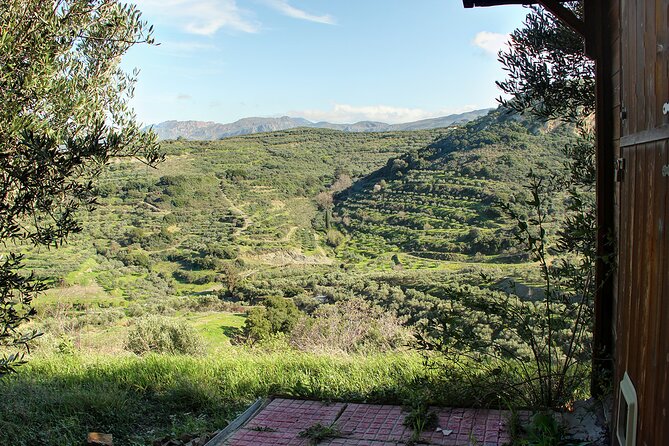
Galatas is one of the places where the tour feels less like a cemetery circuit and more like a walk through living Cretan surroundings. You see a village that remains part of daily life while learning what happened there during the war. That contrast can be moving, but it also makes the subject more accessible for family members who are not dedicated military historians.
A bakery visit has been part of the wider experience described by the guide, along with small villages that would be difficult to reach in a standard group excursion. These informal moments are a welcome change from memorials. They give you a taste of present-day Crete without pulling the day away from its main subject.
You may also see a large private collection of WWII artifacts. The supplied details do not promise a formal museum visit, so I would treat this as an extra possibility rather than the core reason to book. If it is available on your day, it can be a memorable addition, especially for anyone interested in equipment, documents, and personal objects.
Alikianos and the Agia Prison valley
The final listed stop is Alikianos, with about 20 minutes in the Agia Prison valley. This area connects the battle with the Greek units stationed nearby and with the later occupation. You will see Agia Prison, which served as a hospital during the battle and later became a prison where hundreds of Greeks were executed.
That change in use is one of the most sobering facts of the route. It shows that the story did not end when the main fighting stopped. The valley also helps explain the cost paid by local people, not just by soldiers arriving from Britain, New Zealand, Australia, Germany, and elsewhere.
The stop is short, but its subject is heavy. You may want to ask the guide to explain how the local units fitted into the wider campaign and how the occupation changed life in the area. Since this is a private tour, you can spend more time on that question if it matters to your group.
What the private format adds
The tour is designed for one group of up to six people. That is a strong arrangement for a subject that often raises detailed questions. You can ask about a specific regiment, an individual soldier, the role of Greek civilians, or the difference between the German and Allied operations without waiting for a large group to catch up.
The guide’s approach is also personal. The information provided describes a passionate local guide with a strong interest in modern history and gratitude for the sacrifices made by both Cretans and Allied forces. That local connection is valuable, since the day is not presented as a distant military study.
The private format does not mean you can completely redesign the route. The main stops remain the core of the experience, and the schedule is about six hours. Still, the guide can adjust the discussion toward your interests, including individual units. That is particularly useful for families researching an ancestor.
Two-way transfers make the day much easier. Pickup and drop-off are available at Souda port, your accommodation, or another convenient place within about 10 kilometers, or six miles, of Chania Old Town. Pickup can also be arranged near the national road toward Maleme airport. You should contact the operator with your exact location before booking or as soon as possible afterward.
The vehicle is air-conditioned, an important comfort in Crete. The listed operating hours are Monday through Sunday, from 7:00 a.m. to 11:00 a.m., and the experience runs roughly six hours. That early start suits the length of the route and may help you avoid the strongest midday heat.
Price, food, and practical value
The price is $555.98 per group of up to six. Split six ways, that is about $92.66 per person. For a couple, the per-person price is much higher, but the same private vehicle and guide are still reserved for your group. The value improves sharply for a family or group of friends.
The cost includes the air-conditioned vehicle, private transportation, and guiding services at the WWII memorials around Chania. Free admission at the listed stops also keeps the day’s basic cost clear. You are mainly paying for the guide’s time, transport, route planning, and local interpretation.
Lunch is optional at $25 per person. Snacks and drinks are listed at 10 euros. Since the tour covers several outdoor sites, I would plan for water and consider the lunch option if you prefer not to organize food yourself. The exact food arrangement should be confirmed with the operator, since the listed details do not describe a fixed restaurant or menu.
The USB materials add value for serious history fans. You should bring your own USB stick if you want to take home the reports, books, diaries, maps, and photographs offered by the guide. This is more useful than a generic souvenir because it lets you revisit the events and perhaps compare the material with family records.
Who will enjoy this six-hour route
I would recommend this tour first to WWII enthusiasts, people with family links to the Battle of Crete, and anyone who wants to understand the campaign through its actual locations. It also suits mixed-age families better than you might expect, since the village stops, views, and personal stories can hold the attention of people who are not military specialists.
You should book it if you value conversation over a fixed script. The guide can discuss the units and questions that interest you, and the small group means you are not trying to speak over 20 other people.
I would think twice if you want a general sightseeing tour of western Crete. The route is built around war memorials, cemeteries, military positions, and occupation-era suffering. The village scenery is an added benefit, not the main event.
You should also be comfortable with a day that can be emotionally serious. The graves, executions at Agia Prison, and stories of civilian sacrifice are not light subjects. The guide’s aim is to make the information engaging without making the day tiring or dull, but the material itself remains difficult.
Booking details and cancellation
Confirmation is provided at booking. Pickup is offered, but you need to share your location because the service area has specific limits around Chania and the road toward Maleme.
Most people can participate, and the activity is private, with only your group taking part. Tell the operator about serious health problems or other medical concerns before the tour, especially since some discussion and walking take place outdoors around hills and memorial grounds.
Free cancellation is available if you cancel at least 24 hours before the start time. Changes or cancellations inside that window are not accepted for a refund. The tour requires good weather, and if poor weather forces cancellation, you will be offered another date or a full refund.
Should you book the Battle of Crete tour?
Book it if you want more than a quick visit to a war cemetery. The route links Souda Bay, the 42nd Street memorial, Hill 107, Maleme, Tavronitis Bridge, Galatas, and Alikianos into one clear story. You also get the rare benefit of a private local guide who can discuss individual units and the role of Cretan civilians.
For a group of six, the price is reasonable for a full day of private transport and specialist guiding. For two people, it is a larger outlay, but the flexibility may still be worth it if the Battle of Crete has personal meaning.
The best reason to choose this experience is its balance of military detail and human stories. You see where the armies fought, but you also learn how ordinary Cretans became part of the conflict and paid a lasting price. Bring a USB stick, share any family or unit details in advance, and allow yourself time to take in the places rather than rushing from one marker to the next.
FAQ
How long does the Battle of Crete private tour last?
The tour lasts approximately six hours.
How many people can join the private tour?
The price covers one private group of up to six people.
Where can pickup and drop-off be arranged?
Pickup and drop-off can be arranged at Souda port, your accommodation, or another convenient location within about 10 kilometers, or six miles, of Chania Old Town. Locations near the national road toward Maleme airport may also be possible. Contact the operator with your exact pickup place.
Is Maleme airfield open to visitors?
No. Maleme airfield remains a military area, and access is forbidden. The tour makes a quick stop nearby and visits Hill 107 for views and discussion of the battle.
What is included in the price?
The price includes an air-conditioned vehicle, private transportation, and guiding services for the WWII memorials in Chania.
Are food and drinks included?
No. Snacks and drinks are listed at 10 euros, and an optional lunch is listed at $25 per person.
Can I cancel for a full refund?
Yes, if you cancel at least 24 hours before the experience start time. Cancellations or changes made less than 24 hours before the start time are not refunded. If poor weather causes the operator to cancel, you will be offered another date or a full refund.
Just added around Chania
- Cooking Class & Greek Night Experience★ 5.0 · 3 reviews
- Chania: Private Guided Food and Wine Walking Tour with Lunch★ 5.0 · 3 reviews
- Chania: Knossos Palace – Archaeological museum!★ 3.4 · 3 reviews
- Chania Highlights:Venizelos, Stavros, Agia Triada & Marathi★ 5.0 · 3 reviews
- Chania: Private Tour to Balos Lagoon★ 5.0 · 3 reviews
- Your Tailored Samaria Tour That Nobody Will Believe. From Chania.★ 5.0 · 3 reviews
- Sips of Crete: Flavors, Legends & Hidden Gems★ 5.0 · 3 reviews
- Elafonisi Beach Tour★ 3.3 · 3 reviews
Private, compared.
Knossos Palace Skip-the-Line Ticket & Private Guided Tour
Read our review →
Heraklion SUV Private Guided Wine Tour with Lunch
Read our review →
Wine & Olive Oil Tour with Lunch – Semi Private Safari Tour
Read our review →
Private Boat Trip Kissamos Balos (price per group – up to 10 people)
Read our review →
Private Tour-Knossos Palace Zeus Cave Olive Oil Mill & Wine
Read our review →Browse the lists this tour appears in