

Reviewed · MUSEUMS & ARCHAEOLOGICAL SITES
Chania: Archaeological Museum Entry Ticket and Audio Guide
Chania’s Archaeological Museum packs centuries of Cretan life into a handsome modern setting, from Bronze Age jewelry to Roman mosaics and a haunting image of souls being weighed. This self-guided ticket and audio tour lets you set your own pace rather than follow a group from case to case.
I like the freedom to pause at objects that catch your eye, and I like having the audio, text, and maps stored offline before entering. The main drawback is value: the package costs $28, while basic admission has previously been reported at about €6 when bought at the museum, so you are paying a sizable premium for convenience and narration.
In This Review
- Key points to know
- What this Chania museum visit is really like
- Reaching the museum on Skra 15
- The building and the first impression
- Kydonia necklaces and the human side of ancient Crete
- The Master Impression clay sealing
- The Chania larnax and ancient burial customs
- The scales for weighing souls
- Mosaics from two Roman houses
- How the audio tour works in practice
- Is $28 a fair price?
- Who should book this experience?
- Practical details before you go
- Should you book the Chania Archaeological Museum audio tour?
- FAQ
- Where does the museum audio tour begin?
- Is there a meeting point or live guide?
- What does the $28 ticket include?
- Do I need my own phone and headphones?
- Which phones work with the audio guide?
- Can I use the audio guide without mobile data?
- What language is the audio guide in?
- Is the museum wheelchair accessible?
Key points to know
- The Master Impression clay sealing offers a close look at an important ancient administrative object.
- Roman mosaics from the House of Dionysus and the House of Poseidon and Amymone give the museum some of its most striking visual displays.
- The scales for weighing souls add a memorable glimpse into ancient ideas about death and judgment.
- The tour works offline, so you can listen without using mobile data inside the museum.
- You need your own charged smartphone and headphones, and the English narration is delivered through an app.
- There is no live guide or meeting point, so you begin independently at the museum entrance on Skra 15.
What this Chania museum visit is really like

This is not a guided walk with a person waiting outside to greet you. It is a museum ticket joined to a downloadable audio tour, designed for independent use during one day.
Before you go, you receive an email with instructions and an activation link. You download the app, load the audio tour, and make sure the content is stored on your phone. That last step matters in Crete, where reliable data service inside a thick-walled museum should not be taken for granted.
At the entrance of the Archaeological Museum of Chania, you show your e-ticket and begin the audio tour yourself. There is no assigned start time stated beyond the available booking options, no transportation, and no hotel pickup. The visit both starts and ends at Skra 15, Chania 731 33.
The arrangement suits me because museums are rarely improved by being rushed. You can stop the narration, return to an object, skip a section, or simply enjoy the room in silence. The audio guide can also be used again after the visit, which is handy if you want to remember an object later.
More Entry Tickets in Chania
- Chania/Almyrida: Balos Gramvousa Day Trip with Boat Ticket
★ 4.4 · 590 reviews - Rethymno: Gramvousa & Balos Lagoon Day Trip with Boat Ticket
★ 4.6 · 249 reviews - Gramvousa and Balos Tour from Chania(Boat ticket is included!)
★ 3.5 · 114 reviews
Reaching the museum on Skra 15

The meeting point is simple because there is no meeting point in the usual tour sense. You go directly to the Archaeological Museum of Chania at Skra 15, and the activity begins at the entrance.
You can reach the museum by car, though the ticket does not include transportation or parking arrangements. Plan that part yourself. Since the audio tour is not a live service, you do not need to arrive looking for a guide holding a sign.
The museum’s interior spaces are described as free of architectural barriers, and the activity is wheelchair accessible. Site rules or the route through the building can change, so follow any instructions given on arrival.
Bring two things: a charged smartphone and headphones. The tour requires an Android phone running version 5.0 or later, or a compatible iPhone. It does not work with Windows phones, iPhone 5 or 5C, older iPod Touch models, iPad 4 or earlier, or the first-generation iPad Mini. Leave 100 to 150 MB of storage space for the app and offline material.
The building and the first impression
The museum occupies a beautiful building, and the setting is part of the pleasure of the visit. You are not simply moving through a bare row of display cases. The space gives the objects room to breathe, and the presentation helps you see links between different periods of Cretan life.
A coffee shop on an elevated level provides views, and the gift shop has a good range of items according to the information available for this visit. Neither is included in the $28 price, but both can make the museum a more relaxed stop rather than a quick indoor chore.
The audio begins with short pieces of narration rather than a long lecture. That format is useful if your attention is divided between labels, objects, architecture, and the people in your group. The written text and maps remain available in the app, which gives you another way to follow the route if you prefer reading to listening.
The English voice has an American accent. That will not bother everyone, but pronunciation of Chania and other Greek names has been criticized as distracting. If you are sensitive to spoken accents, use the written material alongside the audio or listen selectively.
Kydonia necklaces and the human side of ancient Crete

Among the named highlights are necklaces from Kydonia. Jewelry is often easier to connect with than a fragment of pottery because it carries an obvious personal story. Someone wore these pieces, valued them, and perhaps received them as a gift or status symbol.
The audio tour gives you a reason to pause here rather than treating the necklaces as attractive decorations in a glass case. Its short stories are meant to connect objects to their use and setting, helping you read the collection as evidence of daily life, belief, trade, and social rank.
The guide does not replace a museum scholar. It offers selected facts and anecdotes, distilled into brief sections. That is a fair trade for visitors who want a clear route without committing to a long academic talk.
More Museums & Archaeological Sites in Chania
- Minoans World 3D Museum & 9D Cinema
★ 4.5 · 315 reviews - Knossos Palace, Museum & Rethymno city Private Tour from Chania
★ 5.0 · 69 reviews - Knossos Palace, Museum & Heraklion City Tour From Chania
★ 4.2 · 61 reviews - Private Tour Knossos Palace-Archaeological Museum-Heraklion Town
★ 4.5 · 11 reviews
The Master Impression clay sealing
The Master Impression clay sealing is one of the objects singled out for special attention. A clay sealing may look modest beside gold jewelry or a large mosaic, but its small size is precisely what makes it interesting.
This kind of object points toward the systems used to mark, secure, and manage goods or documents. The audio treatment encourages you to look closely at what might otherwise be an easy object to pass by.
I would give this stop time. Small seals reward careful viewing, and the narration can help you understand why the item matters. It is also a good example of the tour’s wider purpose: to make less immediately spectacular pieces feel worth your attention.
The Chania larnax and ancient burial customs
The Larnax from Chania introduces a different side of the collection. A larnax is associated with burial, so it shifts the mood from household display and administration to ritual and remembrance.
The audio guide places the object within a larger story about how people handled death. You are not only looking at a container. You are considering the customs, beliefs, and practical choices that shaped burial in ancient Crete.
This is one reason the self-guided format can work well. You can give the larnax a quiet minute, then continue when you are ready. A live group might move on according to its schedule. Here, your pace is your own.
The scales for weighing souls
The discs for the weighing of souls are likely to be among the most memorable pieces in the museum. Their purpose connects a physical object with an idea that feels surprisingly direct: the weighing or judging of a person after death.
The subject gives the audio guide a strong storytelling hook. It can explain the object in plain terms while pointing you toward the beliefs behind it. This is the sort of stop that benefits from narration because the meaning is not always obvious from appearance alone.
I would save a little attention for this part of the tour, even if you are moving quickly. The object offers more than visual interest. It gives you a compact window into ancient ideas about morality, death, and what might happen beyond life.
Mosaics from two Roman houses
The museum’s mosaics provide the largest visual break from the smaller objects. You will see mosaics from the House of Dionysus and the House of Poseidon and Amymone, both named among the key works on the audio route.
Mosaics reward a slow look. Start with the overall scene, then examine the borders, figures, patterns, and use of color. These floors once belonged to domestic spaces, so they also help you picture the level of decoration found in Roman-era homes.
The House of Dionysus mosaic brings mythology into the home. The mosaic from the House of Poseidon and Amymone does the same through another mythological scene. The audio narration can help you identify the subject and understand why these stories were suitable for display in a house.
These are strong stops for families and for anyone who prefers art over chronological explanation. They also break up the smaller, more technical displays. If the museum begins to feel object-heavy, the mosaics give your eyes a larger composition to follow.
How the audio tour works in practice
The experience is built around an app for Android and iOS. After booking, you receive instructions by email, including the activation link. Check your spam folder if the message does not appear soon enough.
Download everything before you enter. The included offline content covers text, audio narration, and maps, so you can avoid roaming charges and reduce the risk of a weak connection interrupting the tour.
The content is in English only. There is no listed Greek, Dutch, French, or other language option, so this package is best for English-speaking visitors who want more than the labels provide.
The narration uses short original stories based on research rather than a continuous lecture. That makes it easier to listen in pieces. You can use the tour during your museum visit, then access it again afterward for a refresher.
Do not forget that the ticket is booked per device, not per person. If two people want to listen independently, each device needs access. If you are sharing one phone and one pair of headphones, you can still move through the museum together, but you will lose some freedom to wander apart.
Is $28 a fair price?
The price needs a clear-eyed look. At $28 per person, this is not a cheap museum admission. A past price comparison put direct entry at around €6, which means much of the extra cost pays for the app, the audio content, advance booking, and the ease of having the ticket ready.
That premium can make sense in certain situations. If you want a fixed plan, dislike sorting out tickets at the door, or know that a museum makes little sense to you without explanation, the audio guide adds real value. The offline maps and repeat access are useful extras.
It is harder to justify if you mainly want to wander through the building, read labels, and spend a short time with the major objects. In that case, buying admission directly may be the better bargain, if the current on-site price remains similar.
Free or reduced admission tickets are acquired on-site, not through this package. Check your eligibility before booking, since the activity is non-refundable.
Who should book this experience?
I would recommend it to independent visitors who want structure without a group. It is also a good match for people who like to pause, replay, and move at their own speed.
The package suits you especially well if:
- You want to focus on the Master Impression seal, Chania larnax, mosaics, Kydonia necklaces, and discs for weighing souls.
- You prefer audio storytelling to reading every museum label.
- You can prepare the app before arrival and have a compatible phone.
- You are comfortable exploring without a guide or meeting time.
- You want offline access and the option to listen again later.
I would think twice if you are looking for a live expert who can answer questions. Nothing in this activity provides one. I would also compare the price with direct museum admission before committing, especially if you qualify for free or reduced entry.
Practical details before you go
The ticket is valid for one day, with availability shown during booking. The tour language is English, and the museum visit is self-guided.
The activity is non-refundable, so check your date, phone compatibility, storage space, and email access before paying. Download the app and audio content in advance, not while standing at the entrance with your group waiting.
You should also bring your own headphones. The package includes neither a smartphone nor headphones, and there is no food, drink, transportation, or hotel transfer.
The route may be modified if the museum imposes special restrictions. Follow the site’s instructions on the day, even if they differ from the expected order in the app.
Should you book the Chania Archaeological Museum audio tour?
Book it if you want a calm, independent museum visit with clear English narration and offline access. The strongest parts are the chance to spend time with the mosaics, the Master Impression clay sealing, the Chania larnax, and the unusual scales for weighing souls.
Skip it if your priority is the lowest possible admission price or if you want a live guide. At $28, the package is a convenience purchase, not a bargain ticket. For the right visitor, that convenience makes the museum easier to understand and more enjoyable to explore. For a confident museum-goer, direct entry may leave more money for coffee and the view upstairs.
FAQ
Where does the museum audio tour begin?
The self-guided tour begins at the entrance of the Archaeological Museum of Chania, at Skra 15, Chania 731 33.
Is there a meeting point or live guide?
No. There is no meeting point and no live guide. You go directly to the museum entrance and follow the audio tour independently.
What does the $28 ticket include?
It includes an adult entry ticket to the Archaeological Museum of Chania, an English self-guided audio tour, an activation link, and offline text, audio narration, and maps.
Do I need my own phone and headphones?
Yes. You need to bring a charged compatible smartphone and your own headphones. Neither is provided with the activity.
Which phones work with the audio guide?
The app works on Android version 5.0 and later and on compatible iOS devices. It does not work with Windows phones, iPhone 5 or 5C, older iPod Touch models, iPad 4 or older, or the first-generation iPad Mini.
Can I use the audio guide without mobile data?
Yes. The tour includes offline content with text, audio narration, and maps. Download it before your visit to avoid roaming charges.
What language is the audio guide in?
The audio guide is available in English only.
Is the museum wheelchair accessible?
Yes. The interior spaces are described as having no architectural barriers, and the activity is wheelchair accessible. Follow any temporary instructions or route changes issued by the museum.
More Self-Guided Tours in Chania
- Crete: Knossos Palace Entry Ticket with Optional Audio Guide
★ 3.9 · 2,251 reviews - Crete: Palace of Knossos E-Ticket and Audio Guide
★ 3.8 · 1,540 reviews - Crete: Knossos Palace and Museum E-Tickets with Audio Guides
★ 4.0 · 828 reviews - Heraklion Archaeological Museum Ticket & Audio Guide
★ 4.3 · 396 reviews
More Museums and Archaeological Sites in Chania
- Minoan Crete from 3.000 BC: Knossos Palace & Museum with Wineries from Chania
★ 5.0 · 6 reviews - Chania Archaeological Museum E-Ticket and Audio Tour
★ 4.5 · 6 reviews - Monastery – Ancient Olive tree & Museum-Cretan Brewery Private Tour from Chania
★ 5.0 · 5 reviews - Chania: Knossos Palace – Archaeological museum!
★ 3.4 · 3 reviews
Just added around Chania
- Cooking Class & Greek Night Experience★ 5.0 · 3 reviews
- Chania: Private Guided Food and Wine Walking Tour with Lunch★ 5.0 · 3 reviews
- Chania: Knossos Palace – Archaeological museum!★ 3.4 · 3 reviews
- Chania Highlights:Venizelos, Stavros, Agia Triada & Marathi★ 5.0 · 3 reviews
- Chania: Private Tour to Balos Lagoon★ 5.0 · 3 reviews
- Your Tailored Samaria Tour That Nobody Will Believe. From Chania.★ 5.0 · 3 reviews
- Sips of Crete: Flavors, Legends & Hidden Gems★ 5.0 · 3 reviews
- Elafonisi Beach Tour★ 3.3 · 3 reviews
Museums & Archaeological Sites, compared.
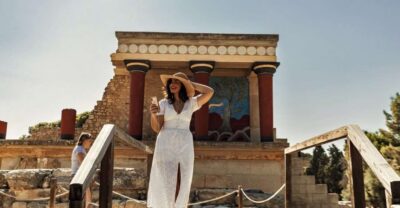
Knossos Palace and Museum E-Tickets with Audio Guides
Read our review →
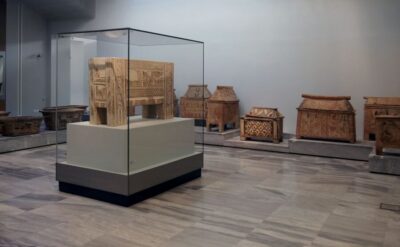
Heraklion Archaeological Museum Ticket & Audio Guide
Read our review →

Knossos Palace and Museum E-Tickets with Audio Guides
Read our review →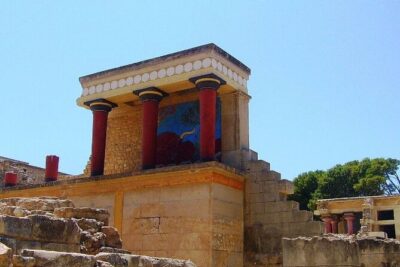
Knossos Palace, Museum & Rethymno city Private Tour from Chania
Read our review →
Heraklion Highlights: Knossos, Museum & Historic City Drive
Read our review →Browse the lists this tour appears in