
Reviewed · CRETAN COOKING CLASSES
Chania: Authentic Cooking Class in the White Mountains
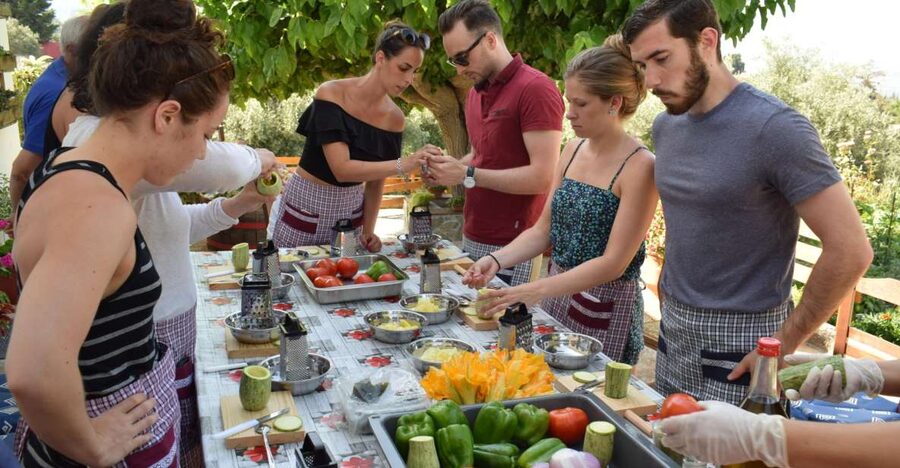
The best part of this Chania cooking class is that it takes you out of town and into a real family setting beneath the White Mountains. You cook with garden vegetables and herbs, hear stories about Cretan life, feed sheep, and sit down to a long meal with local wine. It feels like an evening in the countryside, not a lesson in a commercial kitchen.
I like two things in particular: the food is tied to the land, and the guides add far more than recipe instructions. Alex, Yannis, and Costa are frequently named as warm, funny, capable guides who explain Crete’s food, geology, customs, and past along the drive. The family hosts, including Maria, make the cooking feel relaxed and personal.
The main drawback is timing. This is sold as a six-hour activity, but some departures return to Chania after 11 p.m. Pickup is limited to specific places in the Chania region, and you may have little chance to drink water during the first part, so bring a bottle and wear shoes suited to a short mountain walk.
In This Review
- Key points to know before booking
- Why this is more than a cooking class
- The ride from Chania sets the scene
- A garden introduction to Cretan ingredients
- A short walk and the story of olive harvesting
- Cheese, wine, dakos, and tzatziki
- Preparing dinner, then eating together
- What $129 includes, and where the value lies
- Who will enjoy it, and who may want something else
- Should you book the White Mountains cooking class?
- FAQ
- How long does the cooking class last?
- What is the price?
- Is pickup included?
- What language is used?
- What food and drinks are included?
- Do I need cooking experience?
- What should I bring?
- Can I cancel the booking?
Key points to know before booking
- A family home, not a standard cooking studio: You prepare food on a small farm and eat in the hosts’ home or outdoor setting.
- Garden-to-table cooking: Fresh vegetables and herbs from the property help explain why Cretan food is simple, seasonal, and generous with olive oil.
- More than recipes: Your guide may cover olive harvesting, local customs, family history, World War II, and the area around the White Mountains.
- A full afternoon and evening: The six-hour schedule includes transportation, tastings, cooking, a walk, animal feeding, and dinner.
- Excellent small-group atmosphere: Groups can reach about 15 people, yet the setup still allows conversation and hands-on participation.
- Strong value at $129: Pickup, transport, instruction, ingredients, wine, food, recipes, photos, gifts, insurance, and taxes are included.
Why this is more than a cooking class
Crete is easy to enjoy from a restaurant table. You can order dakos, tzatziki, grilled meat, cheese, and wine almost anywhere in Chania. This experience helps you understand the people and habits behind those dishes.
The setting does much of the work. Instead of arriving at an anonymous kitchen, you reach a family property at the base of the White Mountains. You may see fruit trees, a vegetable garden, sheep, old family photographs, and wide views toward the bay. The exact flow can vary with the season, but the feeling is consistent: you are being welcomed into a working rural home.
That matters because Cretan cooking is not only about a list of ingredients. It is about using what grows nearby, preserving food, sharing work, and putting a generous meal on the table. The hosts explain those connections as you cook. You are not simply told to add olive oil or herbs. You learn why those ingredients are central to daily food on the island.
I also like the social side. You eat with people from different countries, and the shared tasks make conversation easy. Solo visitors are included rather than left hovering at the edge of a group. Couples, families, and friends can all take part without needing previous cooking experience.
More cooking classes in Crete:
- The Real Cretan Cooking Experience
★ 5.0 · 528 reviews - Chania Cooking Class-The Authentic Enjoy traditional Cretan meal
★ 5.0 · 339 reviews - Full-Day Jeep Safari Tour with Cooking Lesson
★ 5.0 · 284 reviews
The ride from Chania sets the scene
Pickup and drop-off are included from specific locations within the Chania region. An air-conditioned minivan handles the journey, which is useful in the hotter months and removes the need to find a rural property yourself.
Your guide is an important part of the ride. Several guides operate this experience, including Alex, Yannis, Yiannis, Costa, Kosko, and Giannis. Names vary by departure, but the role is the same: explain what you are seeing, translate when needed, keep the schedule moving, and make the drive part of the outing rather than dead time.
The strongest guides add context about Crete’s history, food, customs, and geography. Alex is often praised for his humor and easy conversation, while Yannis and Costa are described as attentive and informative. Do not expect a formal lecture. The information comes in practical stories and answers to questions as you travel.
One useful point is the pickup system. Not every Chania hotel or address is necessarily served directly, so check the available meeting places before booking. You may need to reach one of the listed pickup points on your own. The return can be late, particularly when the meal and conversation run long, so avoid scheduling an early evening commitment afterward.
A garden introduction to Cretan ingredients
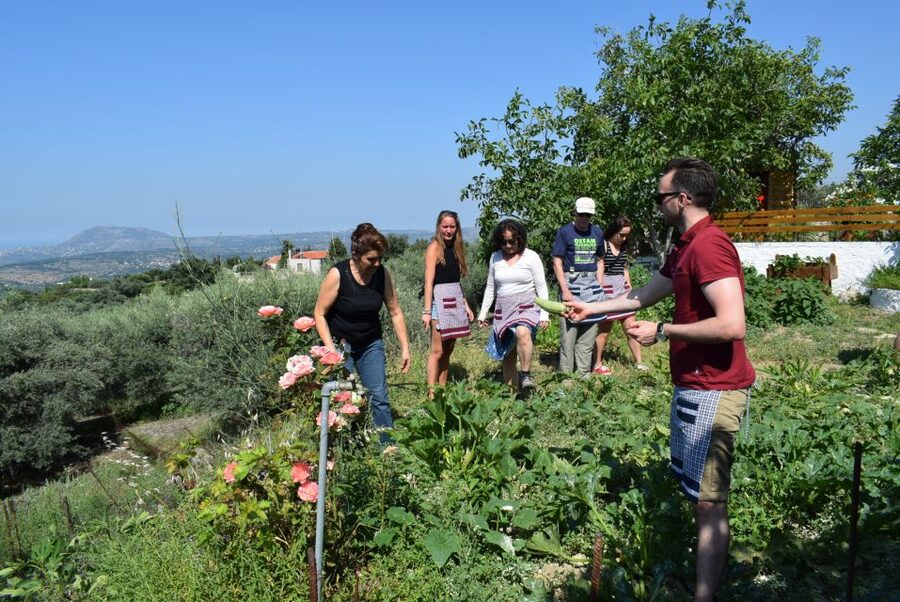
At the property, the experience begins with a walk through the vegetable garden. This is a smart opening because it puts the raw ingredients in front of you before the cooking starts.
You can learn about the herbs, vegetables, and produce used in the meal, with the local setting providing a useful lesson in seasonality. The class centers on organic, locally sourced ingredients, including fresh vegetables, aromatic herbs, extra virgin olive oil, and local meats. The garden makes those claims tangible rather than abstract.
The focus on olive oil is especially worthwhile. Cretan food can look spare on the plate, yet olive oil gives it much of its flavor and texture. You will see how freely it is used in everyday dishes and hear about olive harvesting and the importance of the crop to local families.
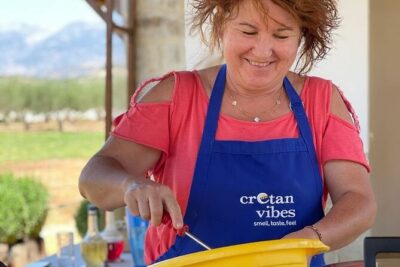
The class is not designed as a technical culinary course. You are learning traditional methods and recipes in a friendly group, likely with plenty of translation and demonstration. Maria is one of the instructors associated with the experience, and her warm, lively teaching style is a recurring feature of the day. Some hosts do not speak much English, but the guide translates the instructions.
That language arrangement is worth knowing. If you want a silent, highly structured class in perfect English, this may feel informal. If you like seeing food taught through demonstration, gestures, translation, and shared work, it adds to the sense that you are taking part in family cooking.
A short walk and the story of olive harvesting
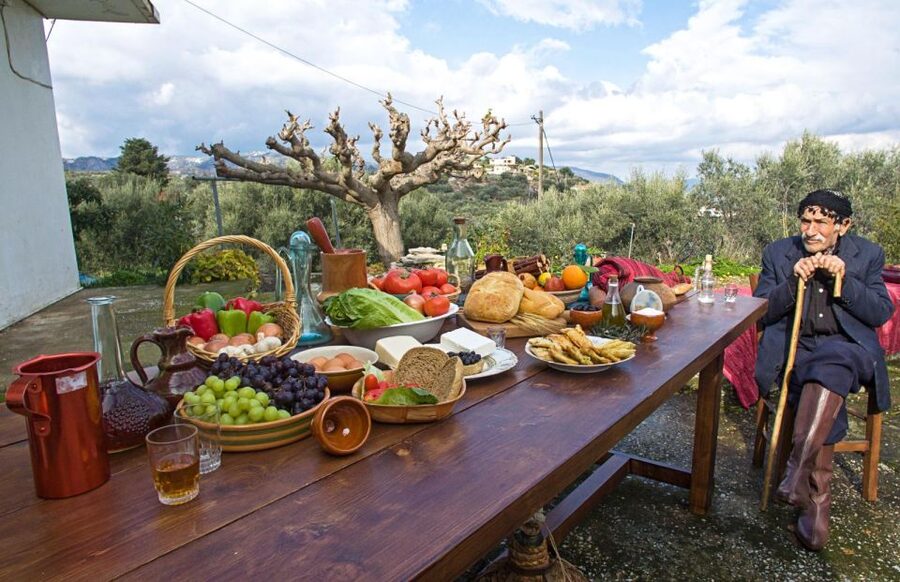
The itinerary includes a scenic mountain walk to a shepherd’s enclave. This gives the day a physical break from cooking and connects the meal to the countryside around the house.
The walk is not presented as a strenuous hike, but comfortable shoes are still important. The ground around a rural property can be uneven, and the activity takes place in a mountain setting. Sunglasses and a jacket are also recommended. Even warm days can feel cooler later, particularly if you are outdoors after sunset.
The shepherd setting adds another layer to the food story. Cretan cuisine developed around what families could grow, gather, raise, or trade locally. Sheep, goats, cheese, herbs, olives, and vegetables all fit into that picture. Some departures include the chance to feed sheep or goats, which is a small but memorable change from the usual sightseeing routine.
The guide also tells the story of olive harvesting. This is one of the more valuable parts of the outing because it connects a familiar food on your plate with demanding seasonal work. You leave with a better sense of why olive oil is treated as a household staple, not a decorative finishing touch.
More walks in the Crete mountains:
- From Chania: Full-Day Samaria Gorge Trek Excursion & Guide
★ 4.6 · 3,191 reviews - From Rethymno: Samaria Gorge Full-Day Trek, Pickup & Guide
★ 4.5 · 1,610 reviews - From Chania/Rethymno: Samariá Gorge Guided Hike with Pickup
★ 4.5 · 1,010 reviews - From Chania: Samaria Gorge with Professional Hiking Guide
★ 4.6 · 720 reviews
Cheese, wine, dakos, and tzatziki
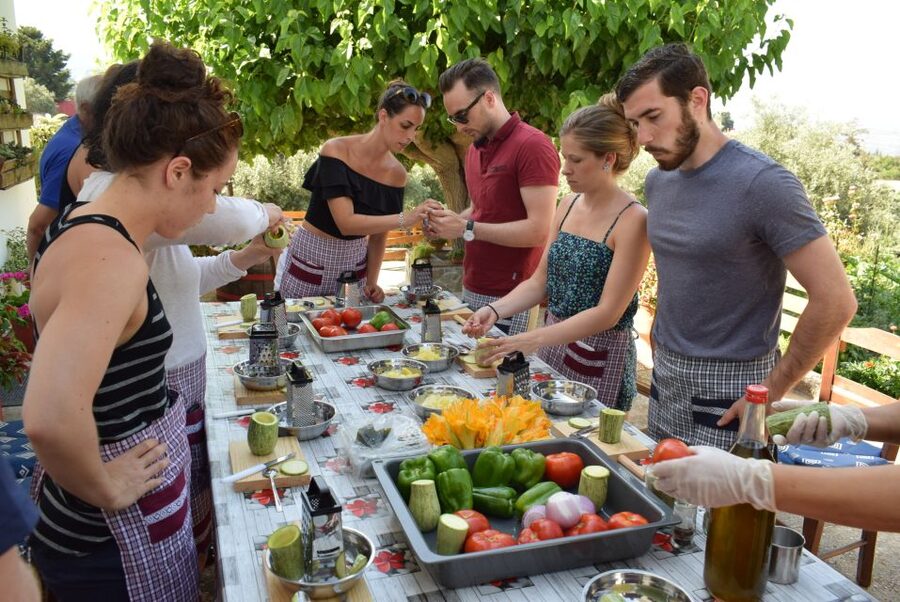
Back at the property, the hosts serve Cretan cheese and wine before the main cooking begins. This tasting gives you time to settle in, look around the home, and meet the people sharing the afternoon with you.
The food is straightforward and local. You may try cheese, olives, fresh produce, and regional wines, with raki also included on some outings. The point is not to compare rare vintages. It is to taste the products in the setting where they belong and understand how small portions, good ingredients, and long conversation can become a meal.
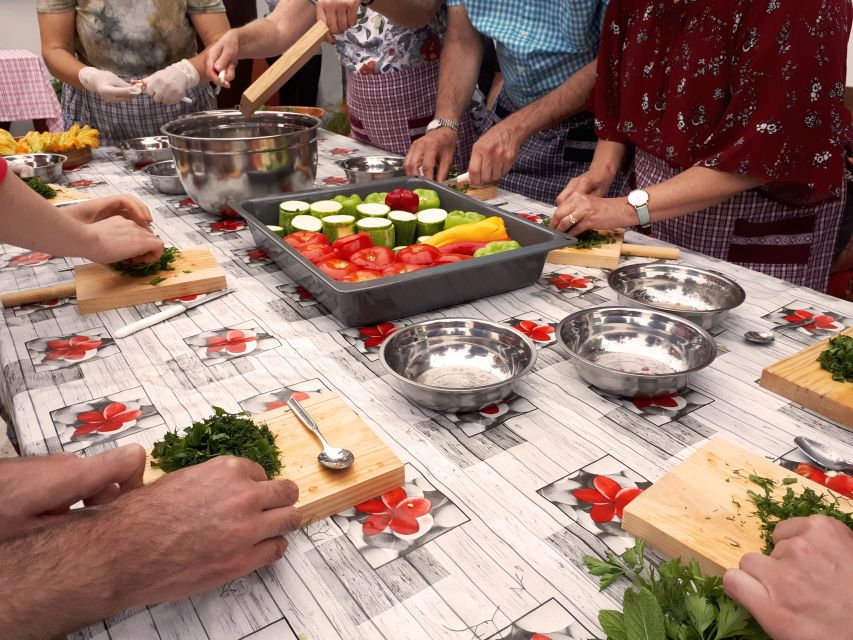
You then help prepare appetizers such as ntakos and tzatziki. Ntakos is a classic Cretan combination built around a crisp barley rusk, tomato, cheese, and olive oil. Tzatziki offers a more familiar introduction to the way yogurt, cucumber, garlic, and herbs are handled in Greek cooking.
These are useful dishes to learn because they are realistic to repeat at home. You do not need specialist equipment, and the ingredients are widely available. One participant even returned home confident enough to make authentic tzatziki, which is exactly the sort of practical souvenir a cooking class should provide.
You receive the recipes by email after the experience, along with photos. That is a better follow-up than a printed card that gets lost in luggage, though you will need to remember to check your inbox after returning home.
Preparing dinner, then eating together
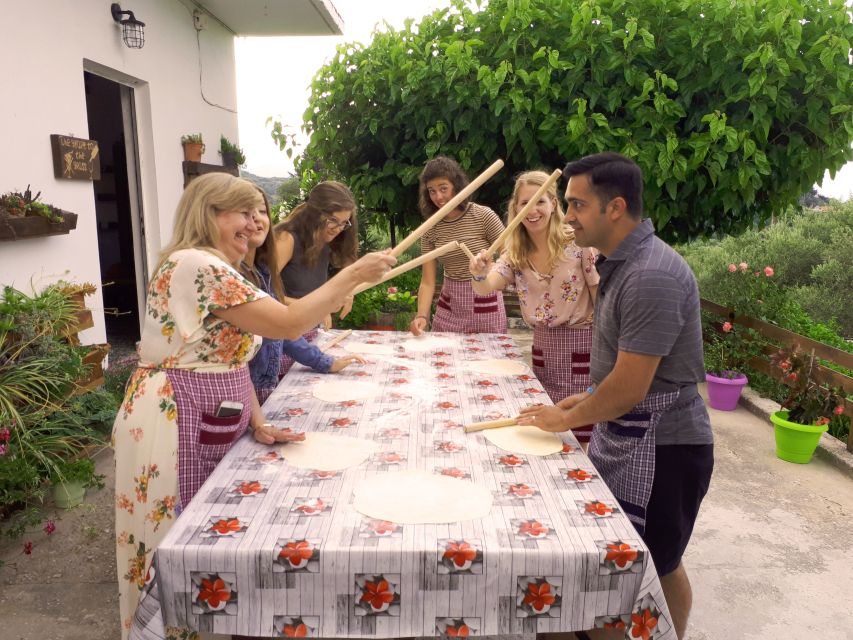
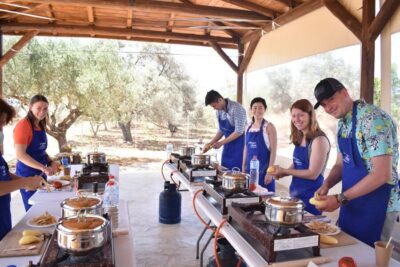
The main meal is prepared as a group, with all ingredients, aprons, utensils, and instruction included. The details of the menu can change, but the meal may include slow-cooked pork alongside the appetizers, vegetables, herbs, cheese, and other traditional dishes.
I like that dinner is not served separately from the class. You help create it, then sit down to eat what the group has made. That simple sequence changes the meal from a restaurant service into a shared achievement. It also keeps the atmosphere relaxed. Nobody needs to produce a perfect plate.
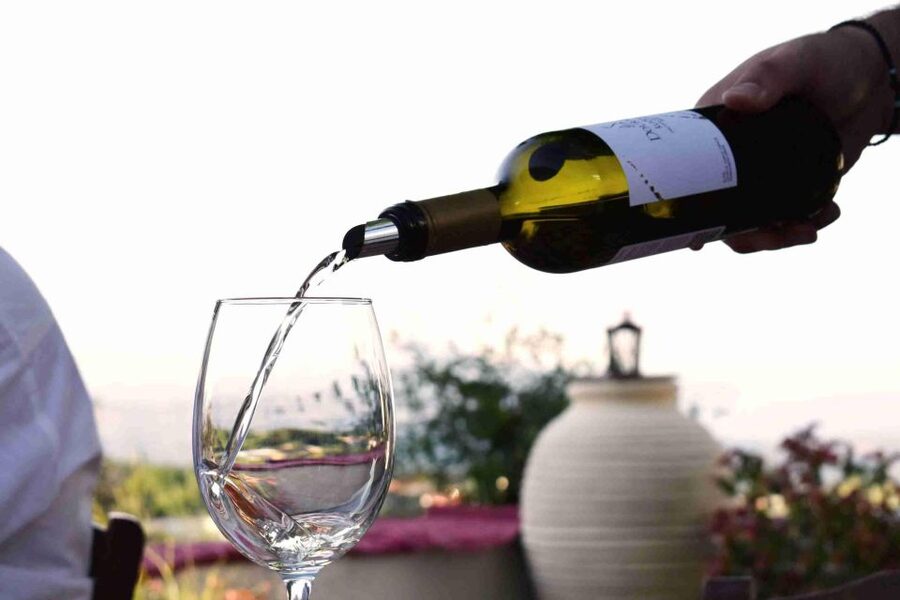
Wine is paired with the food, and the dinner may be served outdoors beneath the evening sky, with mountain and bay views. The setting is a major part of the appeal, but it should not be confused with a formal fine-dining event. This is family-style food, generous portions, local drinks, and conversation around one table.
The hosts’ home adds emotional weight to the evening. Old family photos, restored rooms, and the connection between the house and the land help explain why the experience feels personal. The family does not simply provide a venue. They share pieces of their home, work, and heritage.
Some of the most memorable moments may happen between the planned activities: feeding an animal, hearing a family story, watching the guide translate for the cook, or discovering how a host makes a local product. Keep some flexibility in your expectations. The value lies in the combination of food, place, and people, not in checking off a rigid list of stops.
What $129 includes, and where the value lies
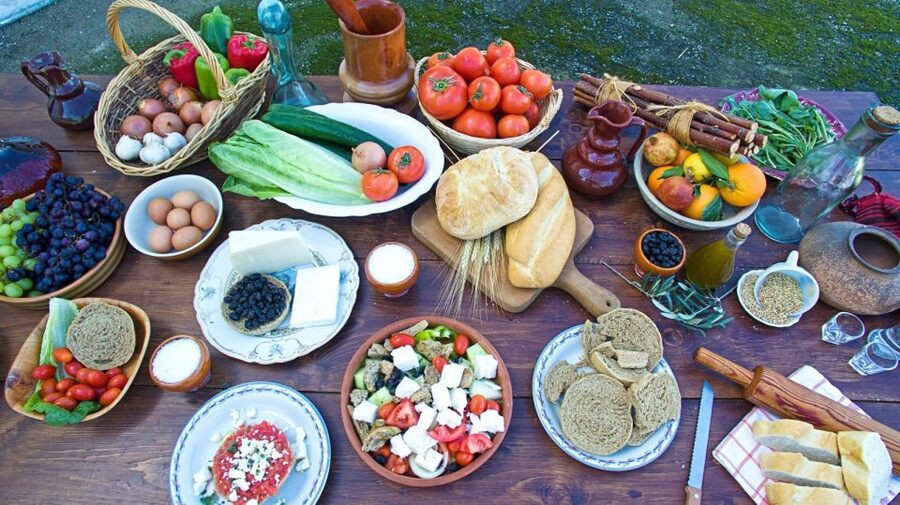
At $129 per person, this is not the cheapest food activity in Crete. A short urban cooking lesson will likely cost less. The comparison changes when you count what is included here: pickup and return, a private minivan, a local driver-guide, a six-hour outing, ingredients, equipment, the cooking class, dinner, wine and food tastings, recipes, photos, gifts, insurance, and local taxes.
The transportation alone has practical value. Reaching a mountain property without a rental car can be difficult, and nobody in your group needs to drive after wine and raki. The dinner is also part of the price, not an extra restaurant bill at the end.
The strongest value is the range of the experience. You receive a countryside visit, a cultural talk, a garden walk, animal contact, food tasting, practical instruction, a cooked meal, and a social evening. If you want only hands-on cooking, part of the price pays for elements you may consider secondary. If you want a fuller introduction to rural Crete, the package makes more sense.
The class also offers free cancellation up to 24 hours before the start and a reserve-now, pay-later option. Those terms are useful when your Chania plans are still shifting, particularly in shoulder season when weather and scheduling can affect rural excursions.
Who will enjoy it, and who may want something else
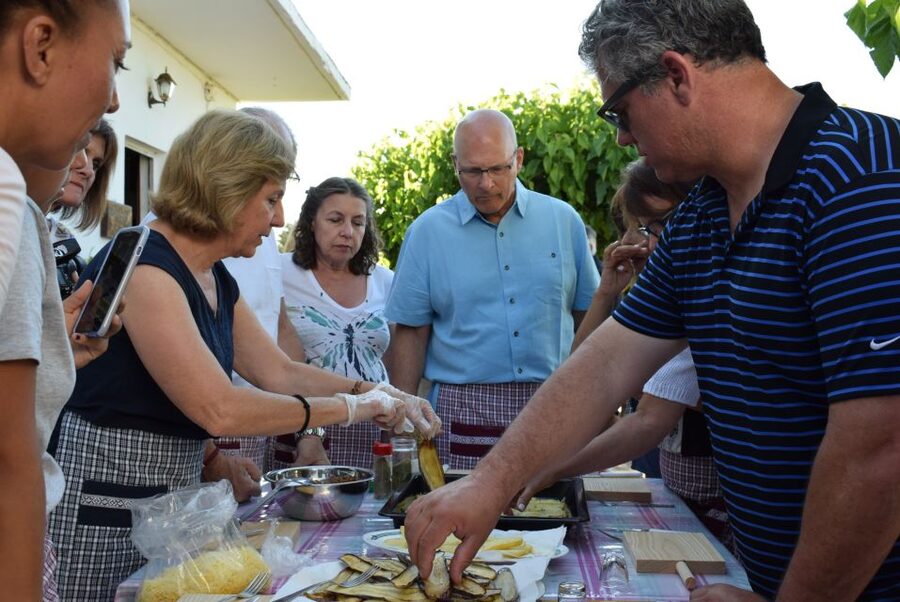
I would choose this for anyone who wants to meet local people and understand food through its setting. It suits couples, families, solo visitors, and small groups of friends. Solo travelers can expect a built-in social evening, and the shared cooking gives everyone an easy way to join in.
It is also a good choice for visitors who have already seen Chania’s old town and want a change of pace. You trade harbor lanes for mountain views, family stories, garden produce, and a long dinner. The highly rated transportation is another reason to choose it if you do not have a car.
You may want another activity if you dislike late evenings, rural walks, group meals, or informal translation. The outing can last longer than the stated six hours, and one departure did not return until after 11 p.m. The exact schedule and pickup time should be checked before you commit.
Bring comfortable shoes, sunglasses, a jacket, and a water bottle. Water is not always readily available during the first part of the activity. If you have food allergies or dietary needs, ask the operator before booking, since the supplied information does not specify special-menu arrangements.
Should you book the White Mountains cooking class?
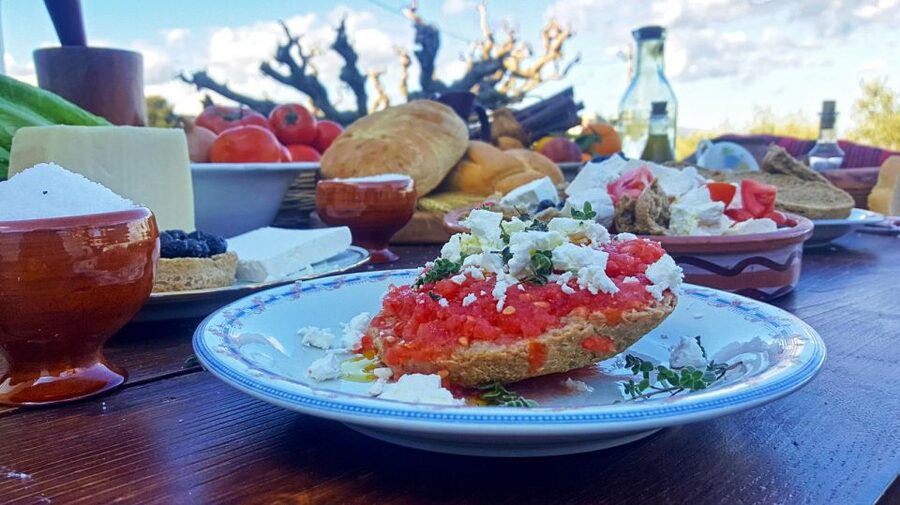
Yes, if you want a personal introduction to Crete rather than another meal in town. The cooking is approachable, the garden and farm setting give the food meaning, and guides such as Alex, Yannis, and Costa add useful context without turning the day into a classroom.
I would book it early if this is important to your Chania plans, especially outside the busiest summer period. The small-group format and limited pickup points require some planning, but the payoff is a warm countryside evening, practical recipes, local wine, and a meal shared with people you met only hours earlier.
Skip it if your schedule cannot handle a late return or if you want a short, highly technical cooking lesson. For most visitors who have six hours to spare, the combination of food, family hospitality, mountain scenery, and Cretan stories makes the $129 price fair.
FAQ
How long does the cooking class last?
The activity is listed as six hours, including transportation, the countryside visit, cooking, tastings, and dinner. Some departures may return to Chania later than expected, with one reported return after 11 p.m.
What is the price?
The price is $129 per person. It includes pickup and drop-off, transport, the guide, the cooking class, ingredients, equipment, food and wine tastings, dinner, recipes, photos, gifts, insurance, and local taxes.
Is pickup included?
Yes. Pickup and drop-off are included from specific locations within the Chania region. Check the available pickup points because service is not described as door-to-door from every address.
What language is used?
The activity is conducted in English. The guide translates cooking instructions when hosts or instructors are not speaking English directly.
What food and drinks are included?
You can expect Cretan cheese, local wine, appetizers such as ntakos and tzatziki, and a dinner prepared during the class. Raki is also included on some departures.
Do I need cooking experience?
No previous cooking experience is specified. The class is a small-group activity with ingredients, utensils, an apron, demonstrations, and local instruction provided.
What should I bring?
Bring comfortable shoes, sunglasses, a jacket, and a water bottle. The walk takes place in a mountain setting, and water may not be available during the first part of the activity.
Can I cancel the booking?
You can cancel up to 24 hours in advance for a full refund. A reserve-now, pay-later option is also available.
Just added around Crete
- Crete: Knossos Palace & Heraklion City Tour★ 3.5 · 3 reviews
- Knossos palace (Last minute booking – Skip The Line Ticket)★ 4.5 · 3 reviews
- Cooking Class & Greek Night Experience★ 5.0 · 3 reviews
- Full-Day Tour:Lasithi Plateau -Mythology Park&Knossos Palace★ 3.0 · 3 reviews
- Chania: Private Guided Food and Wine Walking Tour with Lunch★ 5.0 · 3 reviews
- Knossos: Knossos Private Guided Tour★ 5.0 · 3 reviews
- Individual travel accompaniment East Crete★ 5.0 · 3 reviews
- Chania: Knossos Palace – Archaeological museum!★ 3.4 · 3 reviews
Cretan Cooking Classes, compared.
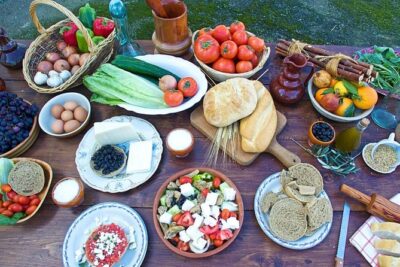
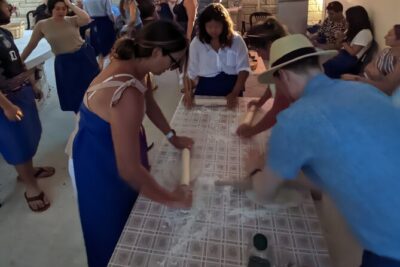
Chania Cooking Class-The Authentic Enjoy traditional Cretan meal
Read our review →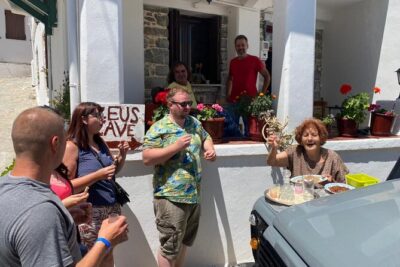
Moires: Cooking Class and Olive Oil Tasting at a Family Farm
Read our review →
Sightseeing Day Trip with Cooking Lesson and Lunch
Read our review →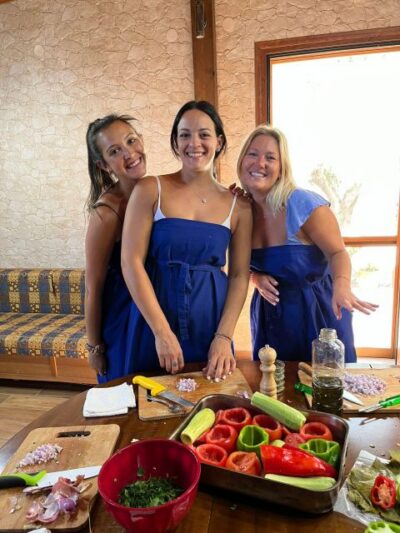
Browse the lists this tour appears in