
Reviewed · CITY TOURS
Chania Old City Walking Tour
Chania’s Old City is a history book you can walk through, with Minoan remains, Venetian mansions, Ottoman mosques, churches, hamams, and neoclassical buildings packed into a compact center. This four-hour private walk gives you the stories behind those layers, not just a parade of pretty façades.
I like the private format, which lets you ask questions and spend more time on subjects that interest you. I also like the local pause for Greek coffee or a soft drink, since a break at the right café can tell you as much about everyday Cretan life as another monument.
The main consideration is the price: $495 per group of up to eight is good value for a full small-group experience, but expensive for one or two people. The streets can also be tiring in summer, and the activity is not recommended for people with mobility impairments despite being listed as wheelchair accessible, so clarify access before booking.
In This Review
- Key points to know before you book
- Why Chania works so well as a first Cretan walk
- Following Minoan and Byzantine traces
- Venetian mansions, churches, and the shape of the port city
- Ottoman Chania and the city’s shared neighborhoods
- Neoclassical buildings and modern Cretan identity
- The coffee break and local food angle
- How the private format affects the value
- What the four hours feel like
- Who will get the most from this walk
- Booking details that matter
- Should you book the Chania Old City Walking Tour?
- FAQ
- How long does the Chania Old City Walking Tour last?
- How much does the tour cost?
- Where do I meet the guide?
- Which languages are available?
- Is coffee included?
- Is the tour private?
- Can I cancel or pay later?
Key points to know before you book
- Four hours in Chania’s Old City: This is a serious orientation walk, not a quick harbor stroll.
- Five thousand years of history: The route connects Minoan, Byzantine, Arab, Venetian, Ottoman, Jewish, Christian, and modern Cretan chapters.
- Private group of up to eight: You get room for questions and a pace suited to your group.
- George may be your guide: He is praised for clear explanations, fast replies, and strong knowledge of history and religion. Request him when booking, but do not assume availability.
- Coffee is included: Food is not, though you can taste local delicacies if you choose to buy them.
- Summer needs planning: Wear a hat, use sunscreen, and expect a warm walk with a possible break.
Why Chania works so well as a first Cretan walk
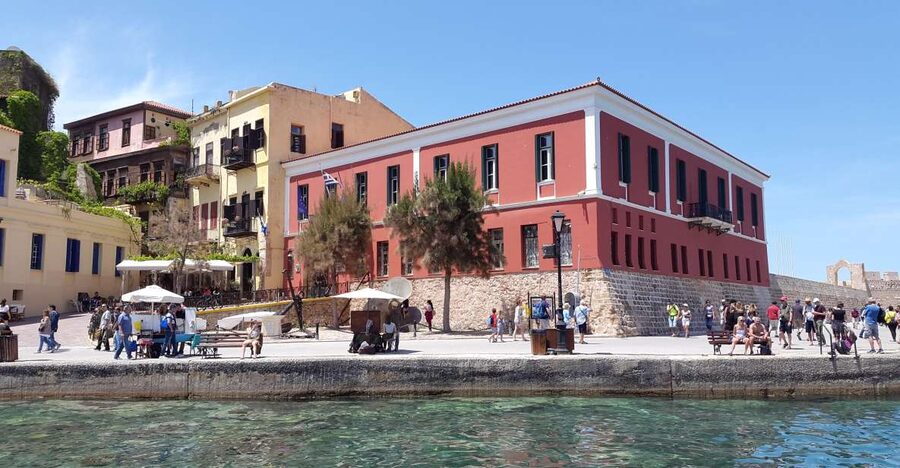
Chania makes an excellent starting point for understanding Crete because its past is visible in one central area. You do not need to travel between distant archaeological sites to see different periods. Instead, the old neighborhoods place them side by side, sometimes in the same street.
The tour begins at the Agora, Chania’s Municipal Market, in the city center. The market is currently under renovation, so the building may not offer the usual experience, but the location remains a practical meeting point. It is easy to identify, central, and useful for getting your bearings before the walk begins.
From there, your guide can build a timeline that reaches back more than 5,000 years. The important point is not simply the age of the monuments. It is the way each period changed the city, its defenses, its faiths, its trade, and its daily routines.
I find this kind of introduction more useful than seeing isolated ruins without context. A Minoan house, a Venetian building, or an Ottoman mosque means more when you understand who used it and how the city changed around it.
More City Tours in Chania
- Knossos Palace, Museum & Rethymno city Private Tour from Chania
★ 5.0 · 69 reviews - Knossos Palace, Museum & Heraklion City Tour From Chania
★ 4.2 · 61 reviews - Chania: Old City & Venetian Harbor Discovery on Segways
★ 4.5 · 56 reviews
Following Minoan and Byzantine traces
The earliest part of Chania’s story reaches back to Minoan settlements, houses, and palaces. The tour does not present Chania as only a Venetian port city. It places the later streets against the much older civilization that shaped Crete’s identity.
You should expect interpretation rather than a visit to one large, perfectly preserved ancient site. The supplied information describes Minoan houses and palaces among the city’s historical layers, while the main focus remains the Old City. Your guide’s explanation helps connect what you see in the streets with the wider development of Chania.
The route also touches Byzantine and Arab walls. These are valuable because they show that Chania was not simply passed from the ancient world to Venice in one clean step. The city changed hands, changed faiths, and adapted its defenses over time.
I would pay close attention here to the less showy details. Walls and fragments can look plain beside ornate Venetian buildings, but they explain why the city grew where it did and how earlier communities protected their homes.
Venetian mansions, churches, and the shape of the port city
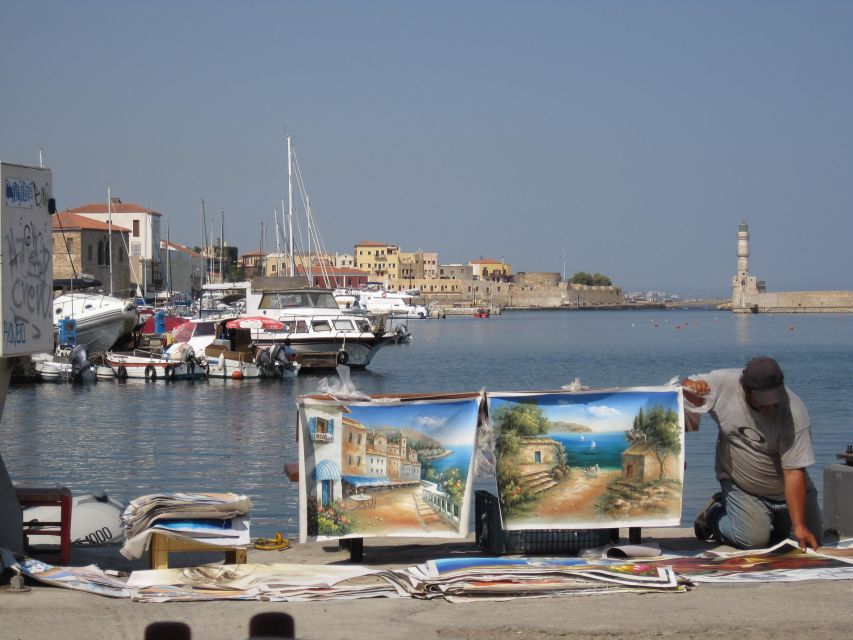
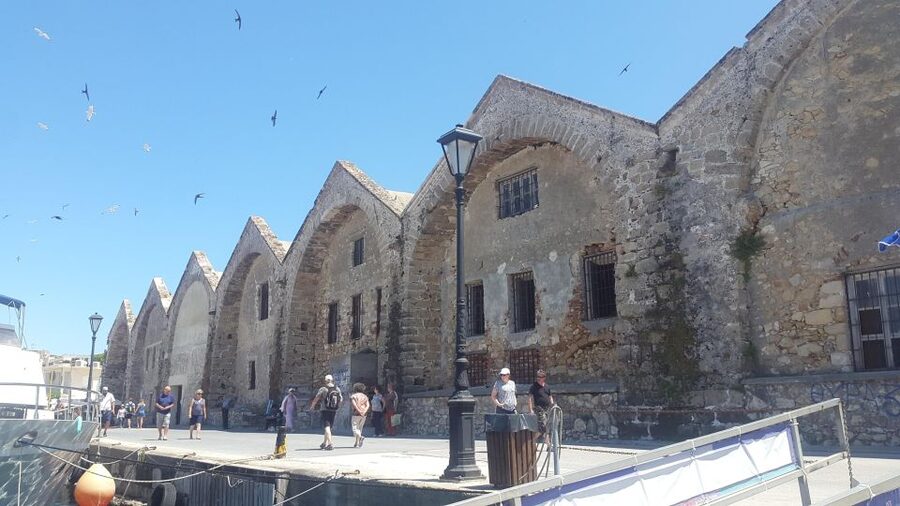
Venetian Chania is likely to be the visual centerpiece of the walk. The Republic of Venice controlled Crete for centuries, and its influence remains easy to see in the old neighborhoods, grand residences, churches, and defensive structures.
Your guide can explain how architecture reflected status and purpose. A Venetian mansion was not just an attractive building. It belonged to a social and commercial world shaped by trade, administration, religion, and the port.
This is where a private guide adds real value. You can stop to ask why one building looks grand while another seems modest, or how Christian and other communities fit into the city’s structure. The experience is designed to move beyond dates and names into customs, work, religion, and ordinary routines.
The guide also leads you through lesser-known corners of the Old City. That does not mean every lane will be empty or untouched. It means you are not limited to the most photographed waterfront views. The older neighborhoods, including Christian, Muslim, and Jewish areas, help you see Chania as a lived-in city rather than a stage set.
Ottoman Chania and the city’s shared neighborhoods
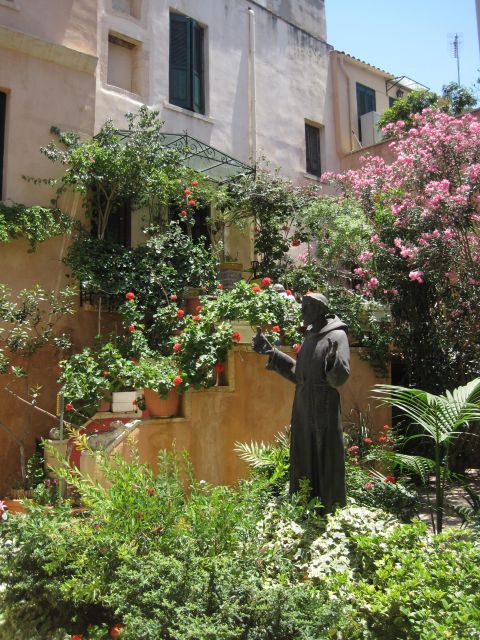
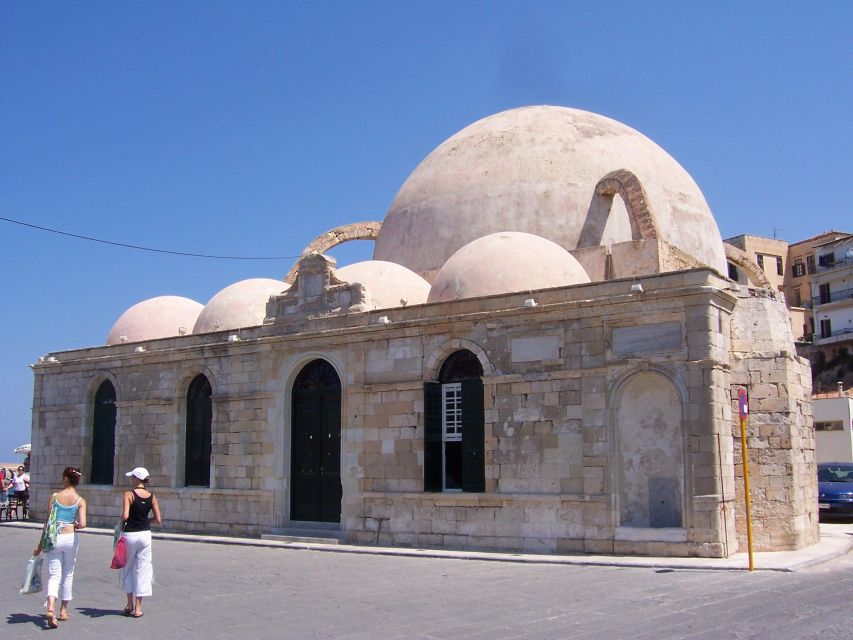
Ottoman monuments add another important layer. Mosques and hamams show how the city changed after Venetian rule, while also revealing the role of religion and public life in shaping neighborhoods.
The tour is especially useful if you want to understand how Christian, Muslim, and Jewish communities formed part of Chania’s story. The information provided does not promise a specific museum or interior visit, so think of this as a guided walk through places and their meaning rather than a ticketed monument tour.
That distinction matters. If you want a long list of interiors, formal exhibits, and archaeological galleries, this may feel less focused than a museum day. If you want someone to explain how several communities lived alongside one another and how historic events affected them, the format is a better match.
I like that religion is treated as part of daily life rather than a separate subject. The guide can connect mosques, churches, neighborhoods, customs, and social changes, giving you a clearer idea of how Cretan identity developed.
More walking tours in Chania:
- PRIVATE Walking Tour with Lunch and Wine Tasting by a Sommelier
★ 5.0 · 113 reviews - CHANIA WALKING FOOD TOURS – 3 HOUR WALKING TOUR
★ 4.9 · 15 reviews - Chania Old Town: Artisans & Sightseeing Walking Tour
★ 4.9 · 11 reviews - Chania: Private Guided Food and Wine Walking Tour with Lunch
★ 5.0 · 3 reviews
Neoclassical buildings and modern Cretan identity
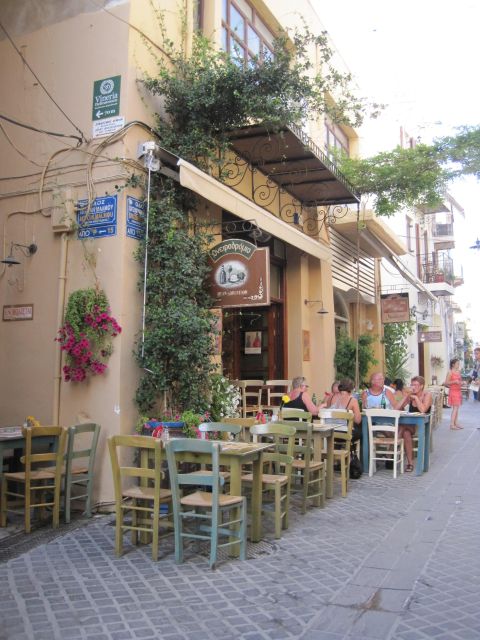
The walk also reaches the early modern period, when neoclassical buildings added a different look to the city. These structures help show that Chania’s story did not stop with the Venetians or Ottomans.
Your guide discusses the island’s people and identity, along with traditions and everyday life. That broader approach is important because monuments alone cannot explain modern Crete. A building tells you what was built. Local stories help explain how people used it, valued it, and remembered the past.
You can also ask about subjects that matter to your own trip, such as local customs, religion, food, shopping, or restaurants. George was praised for helping with places of interest, shopping, and restaurant ideas, as well as for explaining history and religion. Those practical pointers can make the rest of your stay easier.
Because this is a private tour, I would prepare a short list of questions before meeting the guide. Ask about the periods that interest you most, and say if you want more time for food, architecture, or social history. Four hours gives you room to shape the conversation.
The coffee break and local food angle
Coffee or a soft drink is included, and the tour may also include a taste of Greek coffee or local delicacies in the way locals do. Food itself is not included, so anything beyond the provided drink is an extra cost.
This is a small feature, but it improves the walk. Four hours on foot can become a lot of dates and stone unless there is time to pause. A coffee break gives you a chance to absorb the story, ask follow-up questions, and watch ordinary city life around you.
Do not book this expecting a full food tour. The main subject is Chania’s Old City and its past. If you want several tastings or a meal, budget separately and ask the guide what is possible during your visit.
In summer, the break matters even more. One July tour continued longer than four hours because the group needed a rest from the heat. That is a sign of a flexible guide, but it also tells you to plan sensibly. Bring a hat and sunscreen, drink water, and avoid treating the stated duration as a race.
How the private format affects the value
The cost is $495 for a group of up to eight. For a full group, that works out to about $62 per person. For four people, it is about $124 each, and for two people, about $248 each.
That makes the tour most attractive to families or groups of friends who can share the fee. You are paying for four hours with a live guide, a route shaped around your questions, and the chance to focus on your interests rather than follow a large group.
For one or two people, the price is harder to justify unless you place a high value on personal attention or have limited time in Chania. A shorter group walk may cost less, though it would not offer the same private setting or flexibility.
Pick-up and drop-off are available on request, but the stated meeting point is in front of the Agora. Ask about transport when you book rather than assuming it is part of the standard arrangement. Since the old city is the focus, meeting centrally may be just as practical as arranging a vehicle.
What the four hours feel like
This is not a sprint from one landmark to another. The route combines monuments, lanes, explanations, questions, and a refreshment stop. You should expect a steady walking experience with plenty of pauses for stories and discussion.
A strong guide can make the difference. George is specifically praised for spending the full four hours explaining the city, and for continuing beyond the planned time when the group needed a break. His quick email replies and helpful advice are also useful signs if he is assigned to your tour.
Still, guide availability can change. The activity is offered in Greek, English, and Turkish, so state your preferred language clearly when booking. If having George matters to you, request him directly rather than assuming that every departure uses the same guide.
The walk is listed as wheelchair accessible, yet the activity is also marked as not suitable for people with mobility impairments. Old-city streets, historic surfaces, steps, and narrow lanes may create practical limits. If access is important, ask for a route assessment before paying.
Who will get the most from this walk
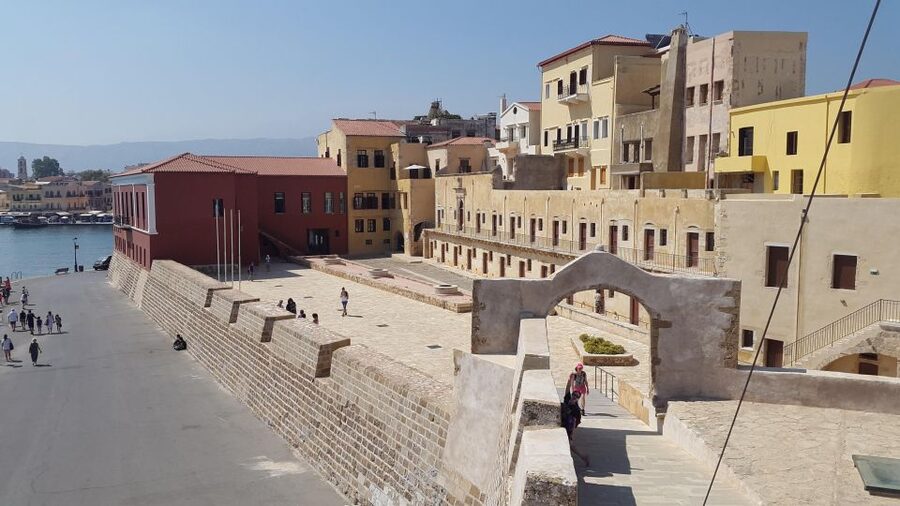
I would recommend this experience to you if you want a strong first look at Chania and prefer explanations to a checklist of photo stops. It suits history fans, architecture lovers, curious families, and anyone who wants help understanding how religion, customs, and daily life shaped the city.
It is also a good choice for a group with mixed interests. One person can ask about Venetian buildings, another about Ottoman history, and someone else about restaurants or shopping. A private guide can adjust the conversation without holding up a large party.
You may want something else if your main goal is food tasting, nightlife, or a quick introduction before heading straight to the beach. Four hours is a substantial commitment, and the tour covers a wide span of time. It rewards attention more than casual sightseeing.
The heat is another factor. July conditions can make a long walk demanding, even with a break. Start early or choose a cooler time if the schedule allows, and use the guide’s flexibility rather than trying to cover every street without rest.
Booking details that matter
You can cancel up to 24 hours in advance for a full refund, and you can reserve now and pay later. That is helpful if your Cretan schedule may shift, though you should still check available starting times before choosing your day.
The tour is a private group experience for up to eight people. A local guide and coffee or a soft drink are included. Food, souvenirs, and gifts are not included.
The meeting point is in front of the Agora, the Municipal Market, in central Chania. Since the market is under renovation, confirm the exact meeting instructions close to the date of the tour.
Should you book the Chania Old City Walking Tour?
Book it if you want Chania explained as a layered city, not just photographed as a pretty harbor. The strongest reasons are the four-hour length, private format, attention to Christian, Muslim, and Jewish neighborhoods, and the chance to ask detailed questions about history, religion, customs, restaurants, and local life.
The value is best when six to eight people share the $495 cost. Solo visitors and couples should compare the price with shorter alternatives. If you have mobility concerns, contact the provider first because the accessibility information is mixed.
For a group that wants a thoughtful introduction, this is a practical way to get oriented early in a Chania stay. You leave with more than a list of monuments. You gain a framework for understanding the streets you will keep exploring on your own.
FAQ
How long does the Chania Old City Walking Tour last?
The tour lasts four hours. A guide may allow extra time when the group needs a break, but you should plan around the stated four-hour duration.
How much does the tour cost?
The price is $495 for a private group of up to eight people. The per-person cost becomes lower as more people share the group price.
Where do I meet the guide?
The suggested meeting point is directly in front of the Agora, Chania’s Municipal Market, in the city center. The market is currently under renovation, so confirm the exact meeting details before the tour.
Which languages are available?
The tour is offered with a live guide in Greek, English, or Turkish. Select or request your preferred language when booking.
Is coffee included?
Yes. Coffee or a soft drink is included. Food, souvenirs, and gifts are not included, and local delicacies may cost extra.
Is the tour private?
Yes. It is a private group experience with a maximum group size of eight people.
Can I cancel or pay later?
You can cancel up to 24 hours in advance for a full refund. Reserve now and pay later is also available, so you do not have to pay at the time of booking.
Just added around Chania
- Cooking Class & Greek Night Experience★ 5.0 · 3 reviews
- Chania: Private Guided Food and Wine Walking Tour with Lunch★ 5.0 · 3 reviews
- Chania: Knossos Palace – Archaeological museum!★ 3.4 · 3 reviews
- Chania Highlights:Venizelos, Stavros, Agia Triada & Marathi★ 5.0 · 3 reviews
- Chania: Private Tour to Balos Lagoon★ 5.0 · 3 reviews
- Your Tailored Samaria Tour That Nobody Will Believe. From Chania.★ 5.0 · 3 reviews
- Sips of Crete: Flavors, Legends & Hidden Gems★ 5.0 · 3 reviews
- Elafonisi Beach Tour★ 3.3 · 3 reviews
City Tours, compared.
Day Trip To Heraklion City Center & Market & CretAquarium
Read our review →
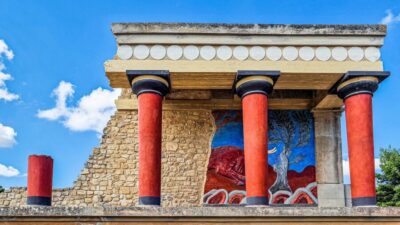
Knossos Palace, Heraklion City, Market Guided Tour
Read our review →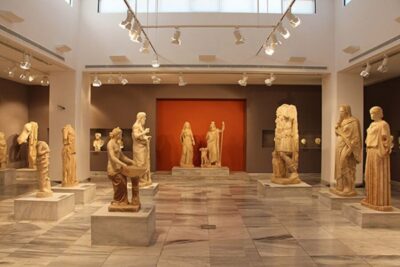
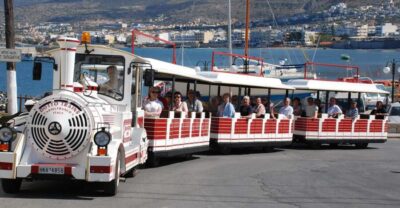
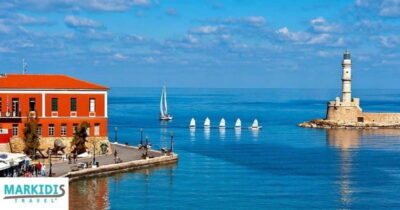
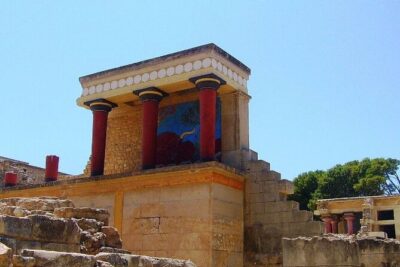
Knossos Palace, Museum & Rethymno city Private Tour from Chania
Read our review →Browse the lists this tour appears in