Reviewed · GUIDED
Hire a Licensed Tour Guide (Private Tour)
Knossos gives you the grand setting, while the Heraklion Archaeological Museum supplies the objects that make the ruins easier to understand. In about four hours, a private guide links palace rooms, storage areas, sanctuaries, and water systems with the art and tools of the Minoan world.
I like two things here: the small maximum of 12 people, which should make questions and conversation easier, and the guide’s role in keeping you focused among 27 museum galleries. The tour also works well for families, since the guide has been clear and engaging with children.
The main catch is price. At $260.69 per person, this is a serious outlay, and entrance tickets for both Knossos and the museum are extra. You are paying for private attention and a carefully chosen route, not a cheap introduction to Heraklion.
In This Review
- Key points to know before booking
- Why pair Knossos with the Heraklion museum
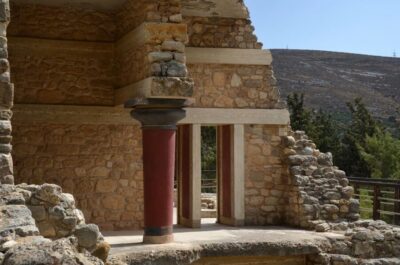
- At Knossos, picture a palace rather than a ruin
- Two hours inside 27 museum galleries
- What the private format changes
- The guide’s role, especially for children
- Price, tickets, and the real value
- Timing the four-hour visit
- What to bring and how to prepare
- Who should book this experience
- Should you book this Knossos and museum tour?
- FAQ
- How long does the tour last?
- What places are visited?
- Is this a private tour?
- Is a professional guide included?
- Are entrance tickets included?
- How much does the experience cost?
- When does the tour operate?
- Does the tour end at the meeting point?
- Is the tour suitable for children?
- Can I cancel for a full refund?
Key points to know before booking
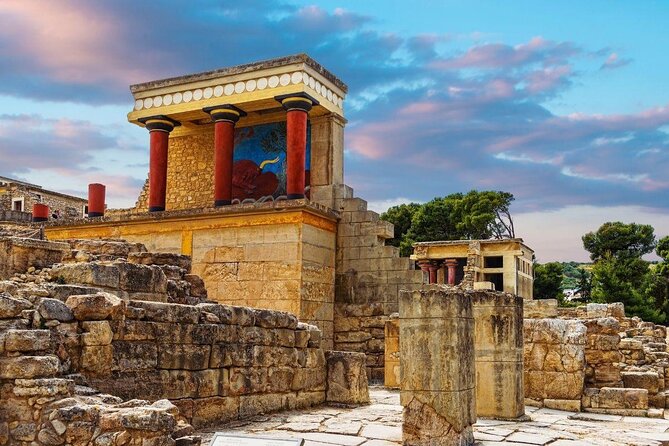
- Knossos and the museum belong together: The ruins show the place, while the museum helps explain the objects and culture connected to it.
- Your group can have up to 12 people: This is private, so only your own party participates.
- The tour lasts about four hours: The planned visits allow roughly 1 hour 30 minutes at Knossos and 2 hours in the museum.
- Admission is not included: You must pay separately for the adult entrance tickets to both attractions.
- The guide is especially useful for families: Clear explanations and an engaging style can help children follow the story.
- Tours run Monday through Saturday, 9 AM to 1 PM: The available schedule is worth checking carefully before you plan the rest of your day.
Why pair Knossos with the Heraklion museum
Knossos can be puzzling on its own. You walk through a large Bronze Age site, see walls and painted surfaces, and try to picture a palace that once had more than 1,500 connected rooms. Without context, the place can feel like a set of fragments.
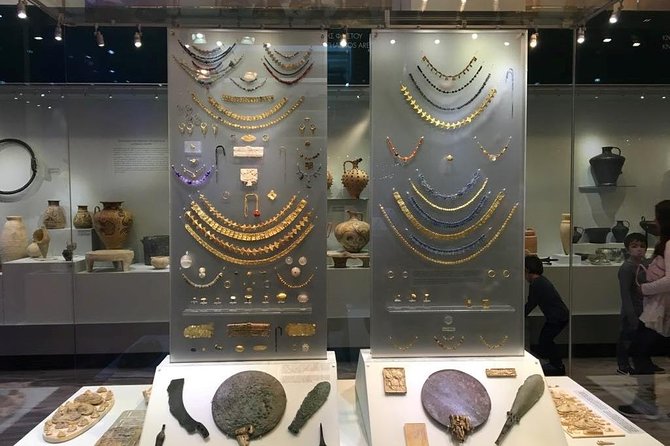
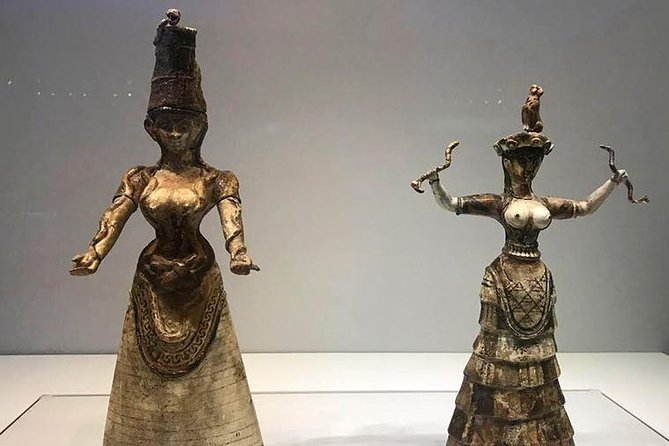
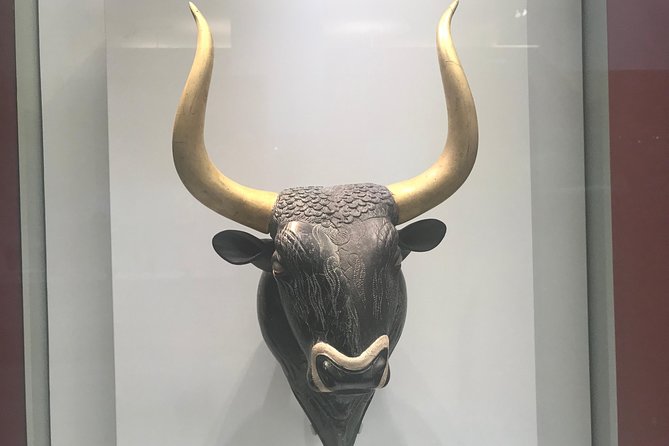
The museum supplies that context. Its collection covers about 5,000 years, from the Neolithic period through the Roman era, with particular attention to the Minoan civilization. The objects give shape to what you see at Knossos, making this more than a simple walk among old stones.
I like the pairing because it follows a sensible order of thought. First, you see the palace complex and its layout. Then, you examine objects from Crete’s early civilizations and place the site within a much wider story.
This is also where a guide earns the fee. A good guide can decide which parts deserve your time and which details you can safely skip. With 27 galleries in the museum, that kind of direction may save you from tiring yourself out before reaching the most important displays.
A few more Crete half-days to weigh up
- Knossos Palace Skip-the-Line Ticket & Private Guided Tour
★ 4.9 · 633 reviews - Heraklion: Private Half-Day Sailing Trip to Dia Island
★ 4.9 · 466 reviews - Private Full-Day Knossos-Lasithi Plateau-Cave of Zeus
★ 5.0 · 176 reviews
At Knossos, picture a palace rather than a ruin
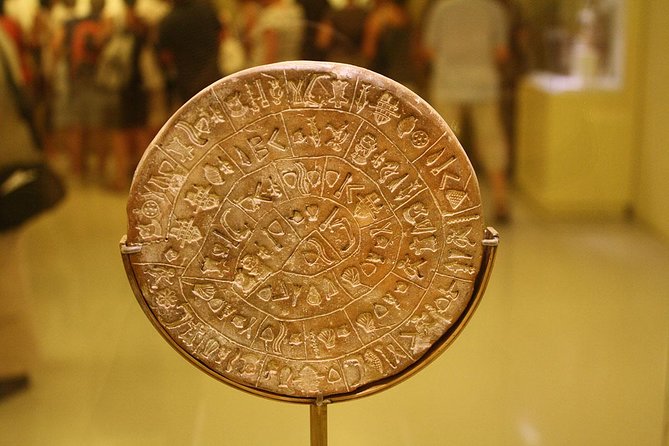
The first stop lasts about 1 hour 30 minutes. Admission to Knossos is not included, so factor that additional cost into your budget before booking.
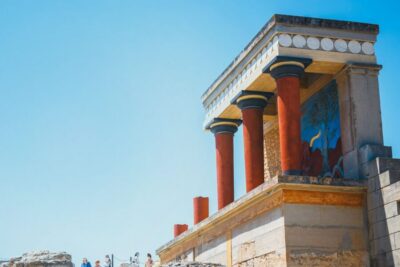
Knossos was built for a powerful Bronze Age king and grew into a complex of more than 1,500 interlocking rooms. The word palace can sound simple, but this was also a center for storage, administration, ritual, domestic life, and water management.
Your guide points out the main features listed for the visit:
- The original throne associated with Minos
- Sanctuaries used for religious activity
- Domestic rooms connected with the royal family
- Pantries that once held Crete’s supplies
- Water-management systems
The value of the visit is not just seeing each feature. It is learning how the parts might have worked together. A pantry tells you about food storage and control of resources. A water system suggests planning and engineering. A sanctuary points to beliefs that shaped daily life.
The palace’s maze-like arrangement can also be hard to follow without help. A guide gives you a route and a story, so you do not spend the visit studying a plan or wandering past important areas without knowing their purpose.
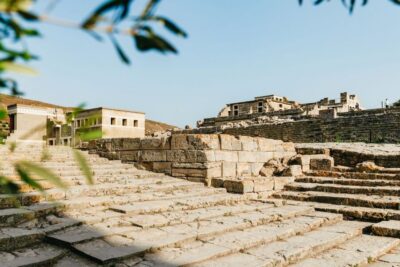
There is one limitation. Knossos is not a perfectly preserved palace. You will see remains, reconstructed sections, and open spaces rather than a complete Bronze Age building. The guide’s explanations matter because they help you imagine the original rooms from what survives.
A particularly useful approach is to treat the guide as your translator of absence. The missing walls and vanished contents are part of the challenge. Clear narration can help you picture the palace as it was, rather than judging the site only by the amount of stone left behind.
Two hours inside 27 museum galleries
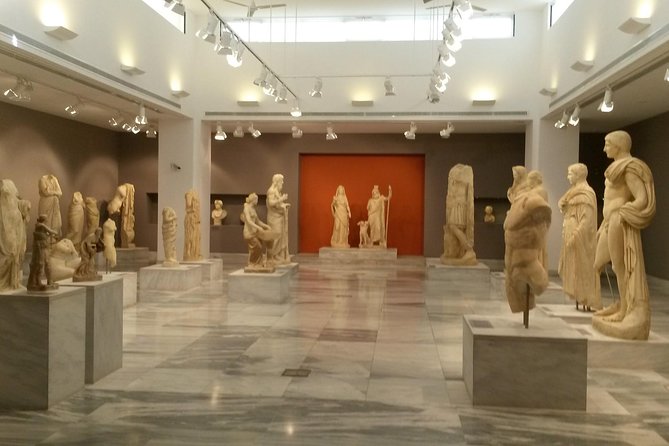
The second stop gives you about two hours in the Heraklion Archaeological Museum. Again, the adult admission ticket is not included.
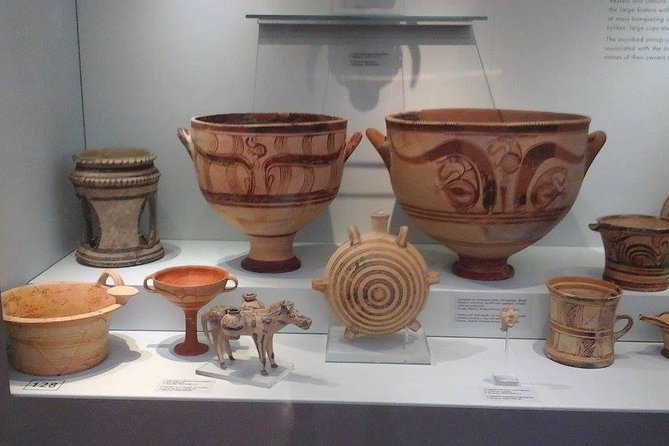
The museum holds material from the first European civilization, the Minoans, but the visit is not limited to one short period. The collection spans from the Neolithic era to Roman times, giving you a long view of Crete’s development.
Two hours is enough to make a serious visit with a guide, but not enough to study every object in detail. That is not a flaw if you want a focused introduction. It does mean you should not expect a slow, scholarly examination of all 27 galleries.
The guide’s job is to select the key displays and explain why they matter. You might spend more time on objects connected with Knossos, Minoan religious life, palace organization, and daily activity. The exact route can vary, since no individual guide or gallery sequence is specified.
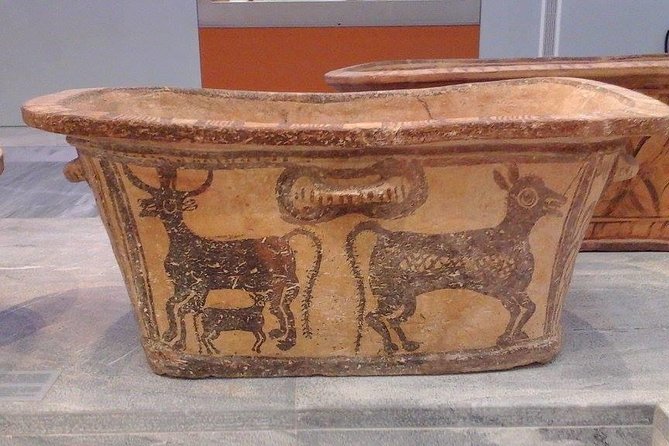
I like the museum portion because it corrects a common problem with archaeological sites. Ruins can make the past seem vague. Museum objects give you evidence you can look at closely. They show the skill, beliefs, and practical life behind the architecture.
The museum is also a good place to ask questions. At Knossos, you are dealing with a large site and broad impressions. In the galleries, a smaller object can lead to a more precise discussion about its use, age, or connection to the wider Minoan world.
Families may find the guided format especially helpful here. A clear explanation can keep younger visitors interested when a room contains objects that might otherwise blend together. The guide has been described as friendly, clear, and fairly engaging with children, which is one of the stronger reasons to consider this private option for a family group.
What the private format changes
This is a private activity, so only your group participates. The stated group limit is 12 people, and group discounts are available.
Private does not automatically mean luxurious, but it does give you control over the pace and conversation. You can ask for clarification, pause when a child has a question, or move on when a particular topic is not holding your attention. In a larger public tour, those choices are harder.
The guide can also adjust the balance between Knossos and the museum. The planned schedule gives 1 hour 30 minutes at the palace and two hours in the museum, but your interests may shape how much explanation you receive at each stop.
The small group also helps with sound and attention. Archaeological sites and galleries are poor places for a distant lecture. A limited group makes it easier to stay near the guide and hear the explanation.
Still, compare the price with your group size. At $260.69 per person, a couple pays far more per head than a larger group sharing the private format. The group discount may improve the calculation for families or friends, but the available information does not state the discount amount.
For one or two people, you should ask yourself how much a private guide matters. If you enjoy learning through questions and want someone to handle the route, the expense may be worthwhile. If you are comfortable reading signs and choosing your own highlights, a self-guided visit will cost less.
Same island, a completely different day out:
- From Kissamos Port: Boat Cruise to Balos Lagoon & Gramvousa
★ 4.2 · 6,755 reviews - Crete: Day Trip to Agios Nikolaos and Spinalonga Island
★ 4.6 · 4,416 reviews - From Chania: Full-Day Samaria Gorge Trek Excursion & Guide
★ 4.6 · 3,191 reviews - Agios Nikolaos: Boat Trip to Spinalonga with Swim Stop
★ 4.4 · 3,031 reviews
The guide’s role, especially for children
No guide name is provided, so you cannot choose a particular person in advance from the available details. You can expect a professional guide, but the exact guide and language arrangements should be confirmed when booking if those points matter to you.
The strongest indication about the guiding style is practical: the guide was friendly, clear, and able to keep children involved during an English-language visit. That suggests a calm, accessible approach rather than a dense lecture packed with specialist terms.
At Knossos, ask the guide to explain how the palace functioned as a whole. At the museum, ask which objects connect most directly with the site. These questions help you get more from the time you have.
If you have children, tell the guide what holds their attention. The private format makes that conversation easier. A child who is curious about kings, houses, water systems, or ancient technology may connect with the palace quickly, while another may respond better to objects in the museum.
The guide also helps prevent a common museum mistake: trying to see everything. Twenty-seven galleries can turn into a tiring march. A focused route lets you leave with a clear story instead of a blur of labels.
Price, tickets, and the real value
The listed price is $260.69 per person. That includes the professional guide, but not the adult entrance tickets for Knossos Palace or the Heraklion Archaeological Museum.
So the final cost is higher than the headline figure. Before booking, add both admission fees and consider the size of your group. The value improves if several people share the advantages of a private guide and qualify for a group discount.
What are you buying? You are buying time saved, a planned route, explanations at both sites, and the chance to ask questions without sharing the guide with strangers. You are not buying admission, a full-day tour, or a broad tour of Heraklion beyond these two main attractions.
I see this as a specialist history experience rather than a casual sightseeing walk. It suits someone who wants the Minoan story explained in a logical way and does not want to work out the museum’s layout alone.
The price is harder to justify if you only want a quick look at the palace and a few famous objects. In that case, the extra cost may feel heavy. It makes more sense for a family, a group of friends, or history fans who will use the guide’s attention fully.
Timing the four-hour visit
The activity runs Monday through Saturday from 9 AM to 1 PM. The tour ends back at the meeting point, though the exact meeting point is not specified in the available information.
The planned stops total about 3 hours 30 minutes, leaving some room within the approximate four-hour duration for movement and transitions. Do not schedule another fixed activity too tightly against the end time, since the actual pace can vary.
The morning window is useful for building the rest of your day around the tour. You will want to confirm the meeting location and the ticket arrangements before setting off, especially since entrance fees are handled separately.
Public transportation is nearby, which gives you a practical way to reach the area. The information does not specify a hotel pickup service, private vehicle, or transport between the two stops, so do not assume those services are included.
Most people can participate, according to the supplied details. If someone in your group has a particular mobility concern, ask the provider for current site-specific guidance before booking. The information confirms general participation, but it does not give detailed accessibility notes for the ruins or museum.
What to bring and how to prepare
Bring enough time for both sites, not just the guide’s speaking time. Knossos can be visually spread out, while the museum requires sustained attention across many galleries.
Plan for the separate admission tickets. This is the most important budget detail because the advertised price does not cover adult entry to either attraction.
If you are visiting with children, prepare them for two different kinds of sightseeing. Knossos asks them to imagine rooms and activities from partial remains. The museum offers objects that can be viewed more closely, but there are many galleries and a lot of information.
It also helps to decide what your group cares about before the tour begins. You might want more time on palace design, royal life, religious spaces, storage, water systems, or Minoan objects. A private guide can respond better when you arrive with a few clear interests.
The tour is offered in English at least in the experience reflected in the supplied information, but language availability should be confirmed for your booking. No guide name is supplied, and no full list of available languages is given.
Who should book this experience
I would recommend it most strongly to history fans, families, and small groups who want a guide to connect the palace with the museum. The combination is much more useful than visiting either place without context.
It also suits people who dislike museum guesswork. If you find large collections tiring or have trouble deciding what deserves attention, the guide can take you straight to the main points.
Families may get extra value from the private setting. The guide can explain the ruins in simple terms, answer questions, and keep the visit moving. The positive indication about clear explanations with children makes this a sensible option for parents who do not want to manage the entire history lesson themselves.
Independent visitors on a strict budget should think twice. The price is high, admission costs extra, and a self-guided visit may be enough if you enjoy setting your own route.
The tour is also less suitable if you want a full-day exploration of Crete. It focuses on Knossos and the Heraklion museum during a morning schedule. That focus is its strength, but it is not a general sightseeing program.
Should you book this Knossos and museum tour?
Book it if you want the Minoan story explained from palace ruins to museum objects, and if your group will make good use of private guiding. The guide’s clear, friendly style, especially with children, is a strong point.
Skip it if $260.69 per person feels too high before adding two admission tickets, or if you prefer to wander independently. For families and small history-minded groups, the private format can justify the cost. For budget-conscious couples, the numbers deserve a close look first.
FAQ
How long does the tour last?
The experience lasts approximately four hours. The planned itinerary allows about 1 hour 30 minutes at Knossos and two hours at the Heraklion Archaeological Museum.
What places are visited?
The tour visits the Palace of Knossos and the Heraklion Archaeological Museum in Crete.
Is this a private tour?
Yes. Only your group participates, with a stated limit of 12 people.
Is a professional guide included?
Yes. A professional guide is included in the price.
Are entrance tickets included?
No. Adult entrance tickets for Knossos Palace and the Heraklion Archaeological Museum are not included.
How much does the experience cost?
The listed price is $260.69 per person. Group discounts are available.
When does the tour operate?
The stated operating schedule is Monday through Saturday, from 9 AM to 1 PM.
Does the tour end at the meeting point?
Yes. The activity ends back at the meeting point.
Is the tour suitable for children?
Most people can participate, and the guide is described as clear and engaging with children during an English-language visit.
Can I cancel for a full refund?
Yes, if you cancel at least 24 hours before the experience start time. Cancellations made less than 24 hours in advance are not refunded, and changes within that period are not accepted.
Just added around Crete
- Crete: Knossos Palace & Heraklion City Tour★ 3.5 · 3 reviews
- Knossos palace (Last minute booking – Skip The Line Ticket)★ 4.5 · 3 reviews
- Cooking Class & Greek Night Experience★ 5.0 · 3 reviews
- Full-Day Tour:Lasithi Plateau -Mythology Park&Knossos Palace★ 3.0 · 3 reviews
- Chania: Private Guided Food and Wine Walking Tour with Lunch★ 5.0 · 3 reviews
- Knossos: Knossos Private Guided Tour★ 5.0 · 3 reviews
- Individual travel accompaniment East Crete★ 5.0 · 3 reviews
- Full-Day Hiking and Running Adventure in South Crete★ 5.0 · 3 reviews
Guided, compared.
Full-Day Samaria Gorge Trek Excursion & Guide
Read our review →
Knossos Palace Entry Ticket with Optional Audio Guide
Read our review →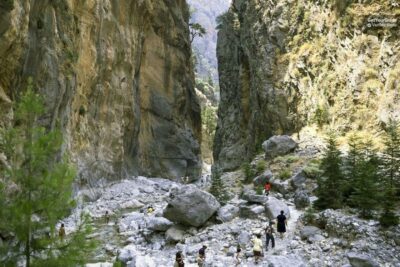
Knossos Palace Skip-the-Line Guided Walking Tour
Read our review →