
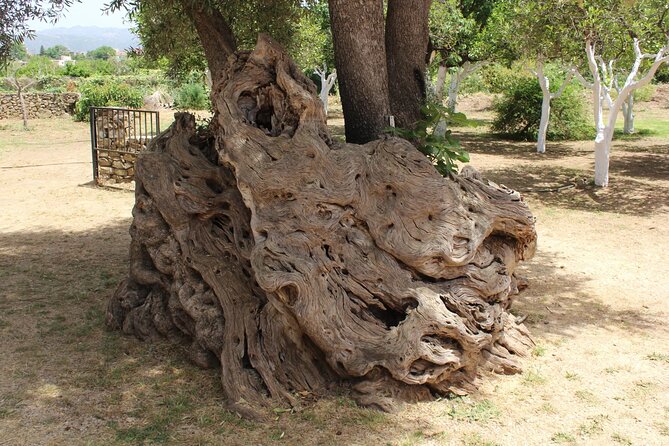
Reviewed · OLIVE OIL TOURS & TASTINGS
In Crete Discover the miracle of Olive Oil and Organic Fruits
The most striking part of this Chania day trip is its journey through three eras of olive-oil making. You see a modern factory, an old mill, and traditional farming practices before standing beside a huge olive tree said to be more than 2,500 years old, possibly among the oldest in the world.
I like the private format, since your group can move at its own pace and ask direct questions. I also like the mix of food, rural life, history, and mountain views. The main drawback is the length: six to seven hours on the road may feel like too much if you want a slow beach day or a long lunch.
In This Review
- Key points
- Why this olive-oil tour feels different
- 8:30 a.m. pickup and the road into rural Chania
- Vamos and the modern olive-oil factory
- Vryses and an old olive mill
- Kalyves and a working fruit farm
- Tsivaras and the ancient olive tree
- Apokoronas and olive oil at a monastery
- Vryses riverside break
- Malaxa and the Chania views
- What the private format is worth
- Who should book this day in Crete
- Booking, cancellation, and practical details
- Should you book the olive-oil tour?
- FAQ
- What time does the tour start?
- How long does the tour last?
- Is hotel pickup included?
- Can cruise passengers take this tour?
- Is lunch included?
- Is this a private tour?
Key points
- Three olive-oil periods in one day: See contemporary production, an old mill, and traditional farm work.
- A very old living tree: Visit a remote, undisclosed site with an olive tree described as more than 2,500 years old.
- Organic tasting and fruit picking: Sample Cretan extra virgin olive oil and collect fresh fruit from a private farm.
- Private transport from Chania: Hotel pickup and drop-off are included from central Chania areas.
- More than a food tour: The route adds villages, a monastery, valley views, and a riverside break.
- Useful for cruise passengers: Pickup is available from Chania and Souda cruise port areas.
Why this olive-oil tour feels different
Many food tours stop at a tasting table. This one gives you the full chain, from tree to bottle, and then places olive oil in its farming and cultural setting. You are not only tasting oil. You are seeing the machinery, meeting the people who work with the crop, and visiting places where olive production shaped daily life.
The tour runs as a private activity, so only your group takes part. That matters here. Olive oil has many small details that are easy to miss in a large group, including how olives are processed, what the byproducts are used for, and how older methods compare with modern equipment.
Your guide is described as both a professional farmer or olive-oil producer and a licensed historian authorized by the Greek Ministry of Tourism and Culture. That combination fits the day well. You get practical farming information alongside historical context, rather than a standard sightseeing drive with a quick tasting added at the end.
More Olive Oil Tours & Tastings in Chania
- Crete Wine and Olive Oil Tour
★ 5.0 · 272 reviews - Wine & Olive Oil Tour with Lunch at Milia Mountain Retreat
★ 5.0 · 194 reviews - Wine & Olive Oil Tour with Lunch – Semi Private Safari Tour
★ 5.0 · 156 reviews
8:30 a.m. pickup and the road into rural Chania
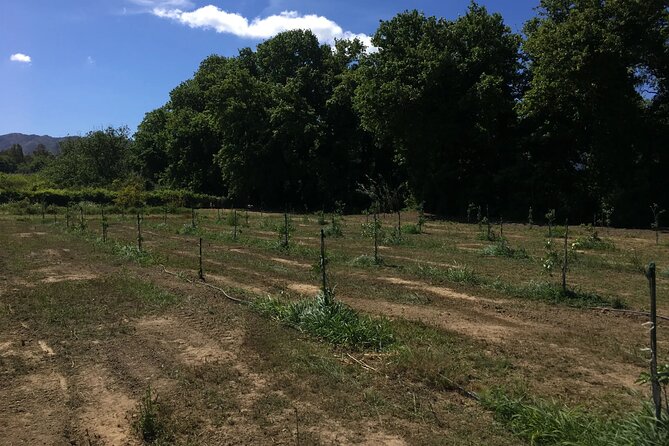
The day begins at 8:30 a.m., with pickup from central Chania areas. Hotel pickup and drop-off are included, and the tour can also work as a shore excursion for passengers arriving at Chania or Souda cruise port.
The exact driving time between stops is not provided, but the route covers several parts of the Chania mainland. You should expect a full day with repeated stops, short drives, and changing scenery. Wear shoes that can handle a farm visit, and bring water since drinks and lunch are not included.
The price is $179.43 per person. That is not a bargain for a short tasting, but the value is easier to see if you are traveling as a private group and would otherwise pay separately for transport, a guide, tastings, and rural sightseeing. The price includes the vehicle service, guide, factory visits, farm stop, tree visit, monastery stop, and viewpoints.
Vamos and the modern olive-oil factory
The first major stop is in Vamos, where you visit a modern olive-oil factory. The tour explains how olives are processed into extra virgin olive oil and covers the different qualities of oil and its byproducts.
This is the best place to build a basic understanding before visiting the older sites. You can see how contemporary production handles the fruit and learn what separates extra virgin olive oil from lower grades. The tasting of fresh organic extra virgin olive oil gives the lesson a practical finish.
I like that the factory visit comes first. It gives you a reference point for everything that follows. Once you have seen current machinery and modern production methods, the old mill becomes easier to understand.
The stop lasts about an hour, and admission is included. The available information does not specify the factory’s brand, equipment, or retail arrangements, so you should not book this expecting a shopping-focused visit. The point is learning how production works and tasting the oil.
Vryses and an old olive mill
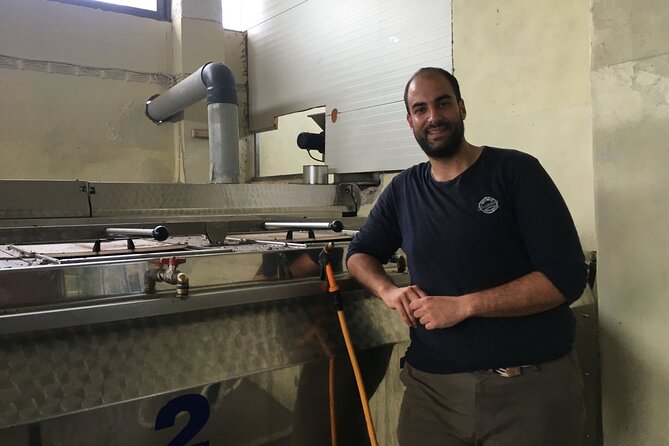
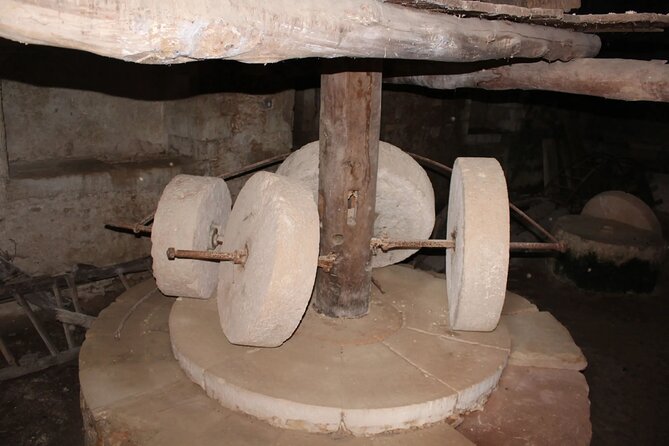
Next comes a 30-minute visit to a traditional olive-oil mill in Vryses. Here, the guide explains how oil was extracted in earlier centuries while you look at the old machinery.
This is a short stop, but it provides useful contrast. Older olive-oil production required more labor and time than modern processing. Seeing the equipment in person helps you grasp that difference better than a museum label or a spoken explanation alone.
The mill is part of the tour’s historical thread. Olive oil is not treated as a fashionable food product only. It is shown as a basic part of life in Crete, connected to work, food, trade, and local customs over many generations.
Because the stop lasts only half an hour, do not expect a long museum visit. It works best as one chapter in the day, not as a stand-alone attraction.
More olive oil tastings around Chania:
- Chania: Milia Mountain Tour w/Lunch Olive Oil/Wine Tastings
★ 4.9 · 97 reviews - Wine & Olive Oil Tour with lunch at the White Mountains
★ 5.0 · 71 reviews - From Chania Private half day Winery-Olive factory-Kournas lake
★ 5.0 · 50 reviews - Chania: Elafonisi & Falasarna Private Tour w/olive oil tasting
★ 5.0 · 46 reviews
Kalyves and a working fruit farm
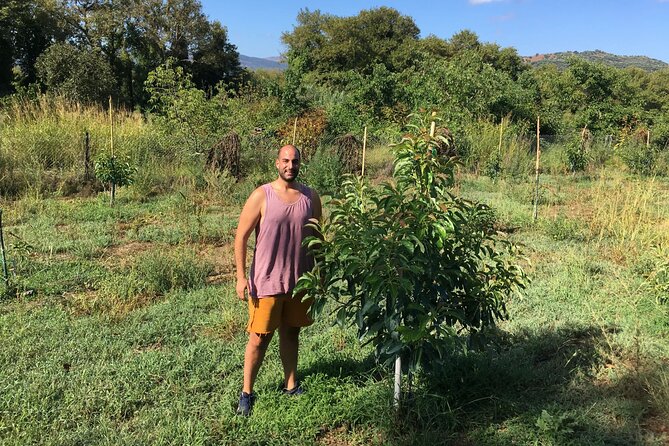
At a private fruit and olive-tree farm in Kalyves, a professional farmer explains the varieties of olive trees, the routine of farm work, and the daily demands of olive-oil production. You also collect fresh fruit directly from the trees.
This is one of the most personal parts of the outing. The factory shows production at an organized scale. The farm shows what it means to care for trees and crops day after day. You get a clearer sense of the work behind a bottle of oil.
The fruit picking adds a simple, hands-on moment. It is especially useful for families and anyone who prefers a rural activity over another formal sightseeing stop. The visit lasts about an hour, giving you enough time to listen, look around, and connect the crop with the food on your table.
The farm is private, and the details of available fruit can change with the season. The tour promises fresh fruit from the trees, but it does not name specific varieties or guarantee a particular harvest. Think of this as a chance to see how the farm operates rather than a planned agricultural workshop.
Tsivaras and the ancient olive tree
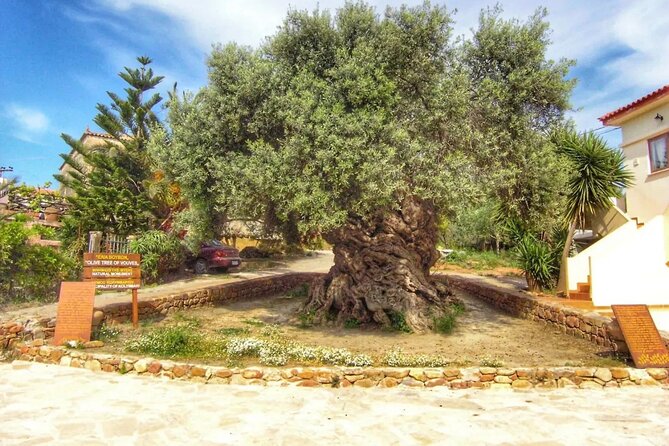
The most unusual stop is in Tsivaras, at an undisclosed location where you visit an olive tree described as possibly the oldest in the world. The supplied details describe it as a living tree more than 2,500 years old, while the tour’s inclusions refer to a 3,000-year-old tree.
That age claim should be treated with care. The wording is possibly and the exact site is kept private, so you are not being promised a formally verified world record. Still, the chance to touch a living olive tree that may have been growing for more than two millennia is a powerful reason to choose this tour.
The stop lasts about an hour. You can take in the tree’s size and unusual form while the guide explains its place in the area. This is not a quick roadside photo stop. It is given enough time to feel like a central part of the day.
For me, this is the tour’s strongest emotional moment. A factory explains a process. An ancient tree lets you feel time in a more direct way. If you enjoy unusual sites that are not part of every standard Chania route, this stop carries real weight.
Apokoronas and olive oil at a monastery
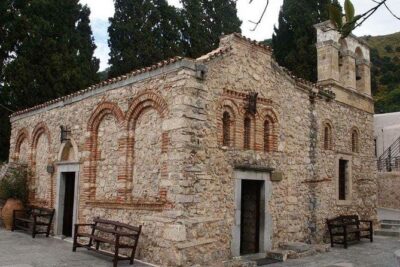
The route continues through Apokoronas, where you visit a monastery connected with olive-oil production. You see the monastery’s olive-oil factory and learn how important oil has been to local people through the years.
This stop adds a religious and community setting to the farming story. Olive oil was not only a commercial product. It played a role in food, household work, lighting, and the economic life of local institutions. The monastery visit gives that wider setting some shape.
The stop lasts about an hour, and admission is included. The details do not specify the monastery’s name, dress requirements, or visiting rules, so it is sensible to dress respectfully for a religious site. The main focus here is the olive-oil facility and its local importance, not a full monastery tour.
I like the order of the day. By this point, you have seen modern machinery, old equipment, and a working farm. The monastery adds another example of how olive oil was woven into local life.
Vryses riverside break
The second stop in Vryses is a 50-minute break in what is described as a romantic riverside village. This gives the day a change of pace after several olive-focused visits.
A pause like this matters on a six-to-seven-hour tour. You can stretch your legs, enjoy the setting, and take a breath before the final viewpoint. The information does not include lunch or drinks, and food at the stops is not included, so you should plan for this break accordingly.
You may be able to buy something locally, but that is not guaranteed by the tour details. If you need a proper meal, ask about the day’s timing when booking. Do not assume the 50-minute stop includes lunch.
Malaxa and the Chania views
The final sightseeing stop is in Malaxa, where you pause for views over the valleys, villages, and regions of Chania. The stop lasts about 45 minutes.
This is a good finishing point because it pulls the day’s separate pieces into one broad picture. From the lookout, you can see the rural setting that supports the olive groves, farms, villages, and monastery you visited earlier. Bring a phone or camera, since the stop is specifically designed for photos.
The views depend on weather and visibility, of course. The tour promises scenic views, but it does not provide a specific elevation, viewpoint name, or guarantee of clear conditions. Even so, a dedicated photo stop is welcome after a day spent mostly looking closely at machinery, trees, and farm life.
What the private format is worth
A private tour changes the feel of the day. You are not sharing the vehicle or schedule with other groups, and only your party participates. That makes it easier to ask about farming methods, request clarification during tastings, or spend a little longer at a place that interests you.
The private format is especially useful for families, couples, or small groups with different interests. Someone who loves food can focus on the oil. Someone interested in history can ask about older production methods. Someone who prefers scenery gets the villages and Malaxa viewpoint.
The trade-off is cost. At $179.43 per person, this is a premium day rather than a low-cost bus excursion. The value improves when several people share the private arrangement, especially because pickup and drop-off are included from central Chania areas.
Who should book this day in Crete
I would choose this tour if you want to understand one of Crete’s most important crops through several angles. It suits you if you enjoy local food, farm visits, history, quiet villages, and scenic drives more than major monuments or beach time.
It is also a strong choice for a first visit to Chania if you want to leave the city for a day without arranging a car. The guide combines driving, farming knowledge, and historical interpretation, which saves you from piecing together several separate activities.
Families may like the fruit picking and the large ancient tree. Couples may appreciate the private setting and the riverside village. Cruise passengers should pay close attention to the schedule and port pickup details, since the day begins at 8:30 a.m. and lasts most of the day.
I would think twice if your main goal is a relaxed meal, a short activity, or a tasting with no driving. Lunch and drinks are not included, and the route has many stops. You will get more from it if you are happy spending a full day moving through rural Chania.
Booking, cancellation, and practical details
Confirmation is provided when you book. The tour offers mobile tickets, group discounts, and pickup from central Chania areas. Most people can participate, and the route is also available for Chania and Souda cruise port pickups.
Free cancellation is available if you cancel at least 24 hours before the local start time. Cancellations or changes made less than 24 hours before departure are not accepted for a refund.
The tour has only four listed ratings, but the overall score is 5 out of 5. The strongest praise centers on the day exceeding expectations and feeling like an essential part of a Crete trip. That fits the tour’s design: it is not just a tasting, but a full look at the crop, the people, the tools, and the places tied to olive oil.
Should you book the olive-oil tour?
Book it if you want a private, full-day look at rural Crete and you enjoy learning through places, food, and conversation. The ancient tree, organic oil tasting, private farm, old mill, monastery, and Malaxa views give the day more range than a standard factory visit.
Skip it if you want a quick city activity or if you would rather spend the day at the coast. At $179.43 per person, the tour earns its price through its private transport, specialist guide, several distinct stops, and unusual access to rural sites. For the right kind of day, it is one of the more memorable ways to see Chania beyond the old harbor.
FAQ
What time does the tour start?
The tour starts at 8:30 a.m.
How long does the tour last?
The tour lasts approximately six to seven hours.
Is hotel pickup included?
Yes. Free hotel pickup and drop-off are included from all central Chania areas.
Can cruise passengers take this tour?
Yes. The tour is available as a shore excursion and covers Chania and Souda cruise port areas.
Is lunch included?
No. Lunch and drinks at the private tour stops are not included.
Is this a private tour?
Yes. Only your group participates in the activity.
Just added around Chania
- Cooking Class & Greek Night Experience★ 5.0 · 3 reviews
- Chania: Private Guided Food and Wine Walking Tour with Lunch★ 5.0 · 3 reviews
- Chania: Knossos Palace – Archaeological museum!★ 3.4 · 3 reviews
- Chania Highlights:Venizelos, Stavros, Agia Triada & Marathi★ 5.0 · 3 reviews
- Chania: Private Tour to Balos Lagoon★ 5.0 · 3 reviews
- Your Tailored Samaria Tour That Nobody Will Believe. From Chania.★ 5.0 · 3 reviews
- Sips of Crete: Flavors, Legends & Hidden Gems★ 5.0 · 3 reviews
- Elafonisi Beach Tour★ 3.3 · 3 reviews
Olive Oil Tours & Tastings, compared.
Zeus Cave -Old Traditional Villages-Olive Oil Factory
Read our review →
Olive Farm Tour with Tasting of Local Delicacies
Read our review →
Zeus Cave, Lassithi Plateau, Olive Oil Factory, Kritza, Pottery
Read our review →
Knossos, Lasithi, Lasinthos and Olive Farm Combo Tour
Read our review →Browse the lists this tour appears in