
Reviewed · TRADITIONAL VILLAGE TOURS
Koumoulia Ceramics / Ceramics courses
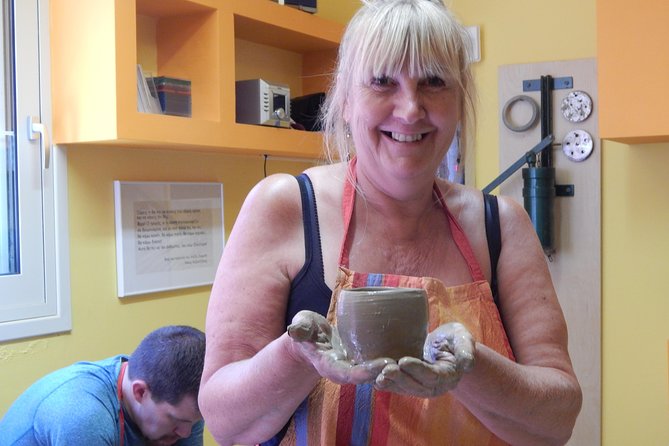
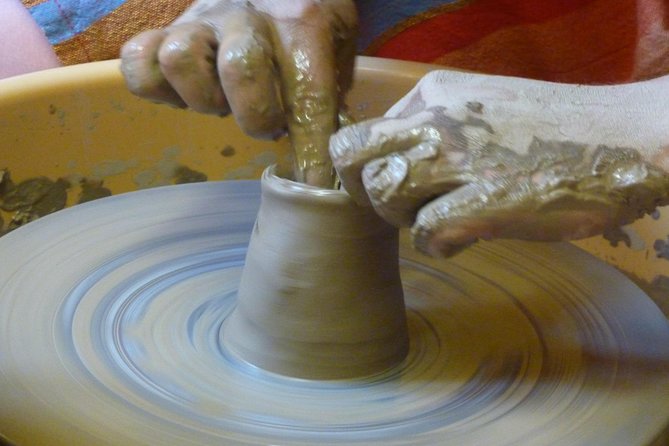
The best part of Koumoulia Ceramics is the chance to turn a shapeless lump of clay into something useful with your own hands. You begin with a short tour of the workshop, then learn basic hand-building and wheel techniques in a small group of no more than five people. It is a creative afternoon rather than a quick souvenir stop.
I like the clear look at the clay-making process, from raw material to fired object, and I like the friendly, practical teaching style described by participants. The main catch is the finished piece: it is not ready to take home at the end of the two-hour class. Drying, glazing, firing, and shipping can add both time and cost.
- Small class size: A maximum of five people allows hands-on attention.
- Two ways to create: Try hand-building or work on the potter’s wheel.
- Workshop tour first: You learn how clay changes before making your own object.
- Plan for several days: Pieces need three to four days to dry before the next stage.
- Extra firing cost: A second firing for glazed work is not included in the class price.
- Unusual itinerary details: Rouvas Gorge and the Palace of Knossos are listed, but their connection to this pottery class is not explained.
In This Review
- A Hands-On Pottery Class Near Heraklion
- Learning the Clay Process Before You Shape It
- What You Make Is Only the First Stage
- Pickup, Glazing, and the Cost of Shipping
- The Listed Meeting Point and a Possible Navigation Problem
- A Confusing Reference to Rouvas Gorge and Knossos
- Is $96.11 a Fair Price?
- Who Will Enjoy This Workshop Most?
- Booking Details Worth Checking First
- Should You Book Koumoulia Ceramics?
- FAQ
- How long does the Koumoulia Ceramics experience last?
- What time does the activity start?
- Where does the experience begin?
- Is the class offered in English?
- How many people can join the class?
- Can I use a pottery wheel during the class?
- Can I take my pottery home immediately?
- Is glazing and the second firing included in the price?
A Hands-On Pottery Class Near Heraklion
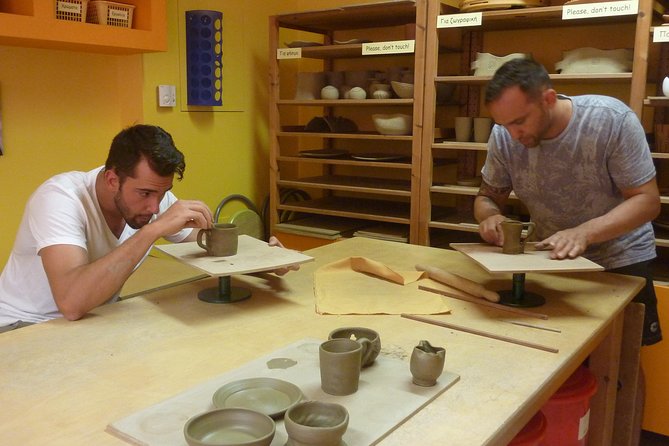
Koumoulia Ceramics offers a compact introduction to pottery in Crete. The class lasts about two hours and begins at 3:00 pm, making it easy to fit into a day of sightseeing around Heraklion. You do not simply watch a craft demonstration. You make your own pieces under instruction.
The class starts with a short guided tour of the workshop. You learn about the stages clay passes through before it becomes a finished object. That simple introduction matters because pottery is not only about shaping wet clay. Drying and firing are just as important, and this experience gives you a basic picture of the full process.
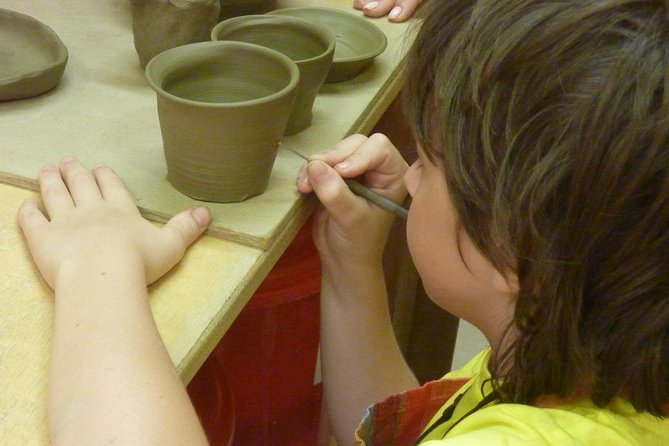
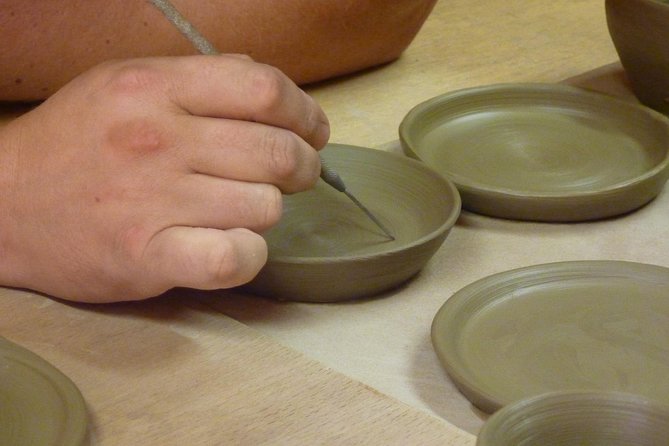
After the tour, the instructor demonstrates several ways to work with clay. You can create by hand or use the wheel. The exact result will depend on your technique, the form you choose, and how much help you want. The description does not promise a particular object, so you should expect an open-ended workshop rather than a class where everyone makes the same cup or bowl.
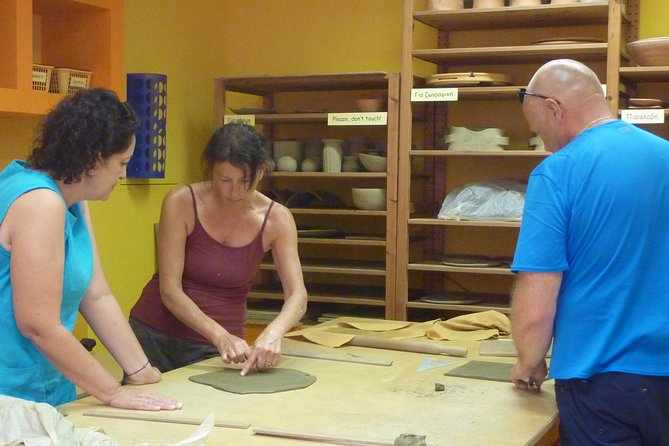
The small group limit is one of the strongest practical features. With up to five people, you have a better chance of receiving direct help when the clay collapses, sticks, cracks, or refuses to follow your plan. Pottery has a short learning curve and a long list of small mistakes. A close instructor can help you recover before your masterpiece becomes a clay pancake.
Learning the Clay Process Before You Shape It
The opening workshop tour gives the session useful context. You see where the work happens and learn how an amorphous mass becomes a useful object. That explanation helps you understand why a piece may need days of drying and more than one firing.
The class covers both hand-building and wheel work. Hand-building usually gives you more control over a simple form, while the wheel asks you to manage pressure, balance, and speed at the same time. The supplied details do not say how long you will spend on each technique, so the actual balance may depend on the group and the instructor.
For a first pottery lesson, that variety is valuable. You can compare the two methods instead of assuming the wheel is the only real form of pottery. If you prefer a more direct, tactile approach, hand-building may suit you. If you want to try the classic spinning-wheel experience, you can ask about using the wheel during the class.
The strongest praise centers on fun, learning, and friendly support. One participant described the lesson as a lot of fun and recommended it for learning about the art of pottery. Another highlighted the chance to get to know and try different techniques, along with the instructor’s kind assistance. Those details point to a relaxed class where the goal is participation, not perfect craftsmanship.
No instructor name is provided, so you should not expect a named artist-led session based on the information available. The experience is offered in English, which makes the instructions accessible to English-speaking bookers.
More mountain village days near Crete:
- Crete: Quad Safari, Olive Mill with Tasting & Ghost Village
★ 4.9 · 1,004 reviews - Agia Pelagia Quad Safari to Discover the Authentic Crete
★ 5.0 · 877 reviews - Elafonissi Beach Day Trip from Chania -Stop in Elos Village
★ 4.5 · 744 reviews
What You Make Is Only the First Stage
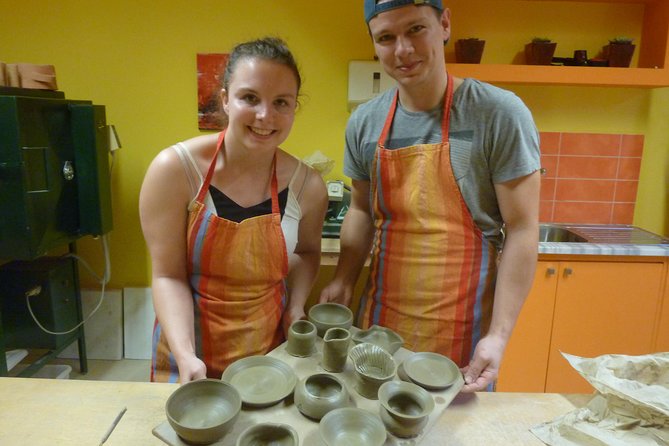
Your creations remain at the workshop after the class. They need about three to four days to dry, depending on the shape you make and the weather. That wait is normal for clay work, but it has a real effect on your plans.
If you live nearby or remain in Crete for several days, you may be able to return and collect the pieces. The information says you can pick them up once they are ready. It does not give a pickup schedule, so ask the workshop when you arrive for the exact collection arrangement.
You also have the option of glazing the pieces in a color you choose. Glazing is not immediate. After the glaze is applied, the work needs another firing, with about two more days before it is ready. The second firing is not part of the listed price.
That extra stage is important when you compare the class cost. The experience costs $96.11 per person, but that price does not cover every possible finishing step. You are paying for the workshop lesson and the chance to make your own objects. If you want glazed, fully fired pieces, budget for an added charge.
The supplied information does not state the exact price of the second firing. Ask before committing to glazing so you know the full cost. This is especially important if you are on a tight budget or have only one more day in Crete.
Pickup, Glazing, and the Cost of Shipping
Once fired, your pottery can be collected from the workshop. If you cannot return, the workshop can send it to an address you provide, but shipping is at your own expense.
Overseas shipping can be fairly expensive. The cost becomes a serious issue for anyone flying home to the United States or another distant country. A complaint about unfinished pieces came from someone who chose not to have them fired because of the shipping expense. The provider’s response made clear that firing and shipping can be arranged if you are willing to cover the cost.
That exchange gives you a useful planning lesson: decide before the class how you will handle the finished pottery. If you need to carry it home in your luggage, unfired pieces may not be suitable. If you are staying in the area, pickup is simpler. If you want a finished and glazed item sent abroad, ask for a shipping estimate and the second-firing price before you book.
You should also confirm how your pieces will be packaged. The supplied information does not describe packing methods, luggage handling, or delivery times, so do not assume that overseas shipping will be quick or cheap.
The class makes the most sense for someone who values the process as much as the souvenir. If you need a guaranteed finished object in your hands the moment the class ends, this is the wrong format. If you enjoy making something and can manage the later steps, the delayed result becomes part of the experience.
The Listed Meeting Point and a Possible Navigation Problem
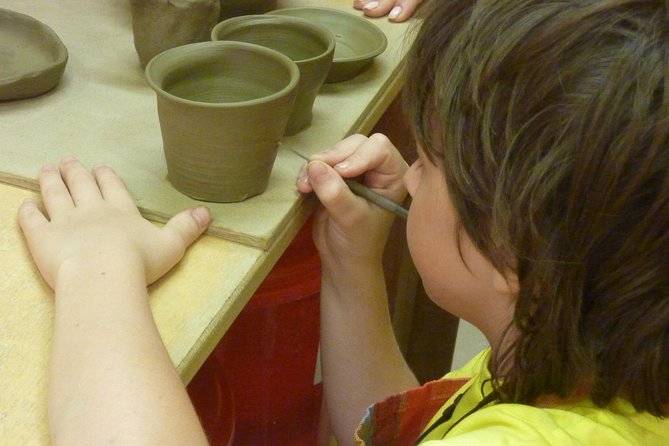
The meeting point is given as Unnamed Road, Iraklio 700 13, Greece. The activity starts and ends at that meeting point, and the scheduled start time is 3:00 pm. The details do not describe hotel pickup, public transportation, parking, or a transfer from central Heraklion.
That makes navigation worth taking seriously. One person had difficulty finding the location and felt the directions should have been clearer. The provider replied that detailed directions were supplied, but the practical point remains: an unnamed road can be awkward to locate, especially if you are relying on a phone map or arriving close to the start time.
I would confirm the exact meeting instructions before setting out. Allow extra time, and do not plan to arrive at 3:00 pm sharp after a complicated drive. Since the class is small, a late arrival could affect your hands-on time.
The information describes the location as being in Crete near Heraklion, but it does not say how far the workshop is from the city center or from the airport. You should check the route yourself before booking, especially if you are not driving.
Same island, a completely different day out:
- From Kissamos Port: Boat Cruise to Balos Lagoon & Gramvousa
★ 4.2 · 6,755 reviews - Crete: Day Trip to Agios Nikolaos and Spinalonga Island
★ 4.6 · 4,416 reviews - From Chania: Full-Day Samaria Gorge Trek Excursion & Guide
★ 4.6 · 3,191 reviews - Agios Nikolaos: Boat Trip to Spinalonga with Swim Stop
★ 4.4 · 3,031 reviews
A Confusing Reference to Rouvas Gorge and Knossos
The supplied itinerary lists Rouvas Gorge in the Agios Nikolaos area as Stop 1 and the Palace of Knossos as Stop 2. The pottery description itself explains a workshop class, not a sightseeing route, and it gives a single meeting point with the activity ending there.
That creates a clear inconsistency. No transport, walking route, visit duration, entrance arrangement, or connection between the ceramics class and these two places is provided. You should not assume that a visit to Rouvas Gorge or Knossos is included in the two-hour pottery session.
If those stops matter to your plans, contact the provider before booking and ask whether they belong to this experience or have been attached by mistake. Knossos is a major archaeological site, while Rouvas Gorge is a separate nature destination. Neither can be treated as a casual add-on without clear timing and transport information.
For now, the dependable part of the plan is the ceramics workshop. The two listed sightseeing stops should be considered unconfirmed until the provider explains them.
Is $96.11 a Fair Price?
At $96.11 per person, this is not a cheap craft class. The value depends on what you want from the afternoon.
The price is easier to justify if you care about individual instruction, a very small group, and the chance to create something yourself. A class limited to five people can offer more personal help than a large demonstration. You also receive an introduction to the complete clay process, not just a short make-and-take activity.
The value is weaker if you measure the price by the object you leave with. You do not take home a finished piece after two hours. Your work must dry for three to four days, and glazing plus the second firing costs extra. Shipping can add a large bill, particularly for overseas delivery.
The rating is 4.7 out of 5 from 33 ratings, and 94 percent of bookers recommend it. That strong overall response fits the parts of the class that are easiest to appreciate immediately: the fun lesson, the range of techniques, and the supportive instruction. It does not remove the need to plan for finishing and delivery.
I would compare this with the cost of other creative activities in Crete, but the most useful question is personal. Are you paying for a practical souvenir, or for two hours of making and learning? If it is the second, the price may feel reasonable. If it is the first, confirm every extra fee before you commit.
Who Will Enjoy This Workshop Most?
This experience suits you if you enjoy hands-on activities and do not need a polished result right away. It can work well for couples, friends, families, and solo bookers who like small-group instruction. Most people can participate, according to the supplied details.
It is also a good choice for a rainy afternoon or a break from archaeological sites and beach time, though the information does not specifically describe weather arrangements. The class gives you a focused activity with a clear start and end, rather than another stop where you simply take photographs.
You may want to skip it if your schedule is tight. The class itself takes about two hours, but the finished pottery requires several more days. If you leave Crete immediately afterward, you will need to pay for finishing and shipping or accept that you cannot bring home a completed object.
The same applies if you dislike uncertain results. Handmade pottery can be uneven, and the description does not promise that every piece will survive drying and firing. The appeal is making something unique, not receiving a factory-perfect keepsake.
Booking Details Worth Checking First
Confirmation is received when you book. The activity is offered in English and accepts most participants. The maximum group size is five.
The experience is non-refundable and cannot be changed for any reason. If your plans are uncertain, that strict rule matters. Check your transport, meeting point, and timing before paying, since cancellation or amendment will not produce a refund.
I would also ask four questions before the day:
- Is the exact location still listed as Unnamed Road, and what navigation instructions should you use?
- Are Rouvas Gorge and Knossos actually part of this booking?
- What is the cost of the second firing for glazed pieces?
- Can the workshop ship finished work to your home, and what is the estimated cost?
These questions do not spoil the creative surprise. They protect you from the practical surprises that matter most.
Should You Book Koumoulia Ceramics?
Book this class if you want a small, friendly pottery lesson and are happy to treat the finished piece as a later project. The chance to try both hand-building and wheel techniques, plus the workshop tour, gives the two hours more substance than a simple souvenir-making session.
Think twice if you need a completed object before you leave, if overseas shipping would strain your budget, or if you cannot confidently find the meeting point. Also clarify the unexplained references to Rouvas Gorge and Knossos before booking.
For the right person, Koumoulia Ceramics offers a pleasant change of pace in Crete: less sightseeing, more making. Just budget for the second firing, plan your pickup or shipping, and confirm the meeting details in advance.
FAQ
How long does the Koumoulia Ceramics experience last?
The ceramics class lasts approximately two hours.
What time does the activity start?
The scheduled start time is 3:00 pm.
Where does the experience begin?
It begins at Unnamed Road, Iraklio 700 13, Greece, and ends back at the meeting point.
Is the class offered in English?
Yes. The experience is offered in English.
How many people can join the class?
The activity has a maximum of five participants.
Can I use a pottery wheel during the class?
Yes. The instructor demonstrates hand-building and wheel techniques, allowing you to create items by hand or on the wheel.
Can I take my pottery home immediately?
No. Your creations need about three to four days to dry before they can continue to the next stage.
Is glazing and the second firing included in the price?
No. You can choose to glaze your work in a color you select, but the second firing is not included. Shipping, if needed, is also at your own expense.
Just added around Crete
- Crete: Knossos Palace & Heraklion City Tour★ 3.5 · 3 reviews
- Knossos palace (Last minute booking – Skip The Line Ticket)★ 4.5 · 3 reviews
- Cooking Class & Greek Night Experience★ 5.0 · 3 reviews
- Full-Day Tour:Lasithi Plateau -Mythology Park&Knossos Palace★ 3.0 · 3 reviews
- Chania: Private Guided Food and Wine Walking Tour with Lunch★ 5.0 · 3 reviews
- Knossos: Knossos Private Guided Tour★ 5.0 · 3 reviews
- Individual travel accompaniment East Crete★ 5.0 · 3 reviews
- Chania: Knossos Palace – Archaeological museum!★ 3.4 · 3 reviews
Traditional Village Tours, compared.



Elafonissi Beach Day Trip from Chania -Stop in Elos Village
Read our review →
Zeus Cave -Old Traditional Villages-Olive Oil Factory
Read our review →
Quad Off-Road Tour to Villages with Hotel Transfers
Read our review →
Zeus Cave, Lassithi Plateau, Olive Oil Factory, Kritza, Pottery
Read our review →
Chania Cooking Class-The Authentic Enjoy traditional Cretan meal
Read our review →
Browse the lists this tour appears in