
Reviewed · OLIVE OIL TOURS & TASTINGS
Pallada Semi-Private Olive Oil Tours in Sternes, Chania
The most interesting part of Pallada’s tour is that it connects the olive tree to the bottle. You begin among Greek olive varieties, herbs, flowers, and vegetables, then follow the fruit into a working mill before tasting the finished oil. That makes the experience feel more useful than a simple sampling stop.
I like the small maximum of eight people, which gives you room to ask questions without shouting across a crowd. I also like the tasting lesson, since you do not just sip four oils and move on. You learn how to notice their differences, a skill you can use at restaurants and shops for the rest of your time in Crete.
The main consideration is the short running time, about 90 minutes. That is enough for a focused introduction, but not a full agricultural day. If you want a broad food tour or a long visit in the countryside, this will feel compact.
In This Review
- Key points at a glance
- Starting among Crete’s olive trees
- Learning how Cretan olives are grown
- Inside the modern olive mill
- Tasting four extra virgin olive oils
- Ending with Cretan dakos
- What the $41.94 price means
- Guide style and group size
- Timing, access, and booking details
- Who should book this olive oil visit?
- Final decision: is Pallada worth your time?
- FAQ
- Where does the Pallada olive oil tour take place?
- How long is the experience?
- What language is the tour offered in?
- What is the maximum group size?
- What will I see at Pallada Kèpos?
- Will I visit an olive oil mill?
- How many olive oils will I taste?
- Is food included?
- Where does the tour end?
- Can I cancel for a full refund?
Key points at a glance
- A real olive-growing setting: Walk through Pallada Kèpos, a small botanical park set among olive groves.
- Four oils to compare: The tasting helps you identify differences among house-made extra virgin olive oils.
- A local guide’s perspective: Bill has led tours with clear explanations of olive growing, milling, and tasting.
- A modern production facility: See the equipment and learn the stages of olive oil production.
- A Cretan finish: The visit ends with dakos, a traditional starter made with Cretan products and the oil of your choice.
- Easy small-group format: The tour is in English, uses mobile tickets, and accepts no more than eight people.
Starting among Crete’s olive trees
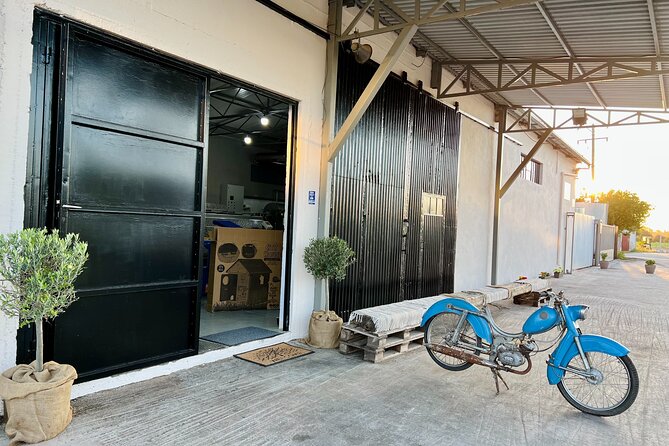
Pallada is in Sternes, in the Chania area of Crete. The meeting point is Pallada Olive Oil & Tours, and the activity returns there at the end. Since no pickup service is listed, you need to arrange your own way to Sternes, though the site is near public transportation.
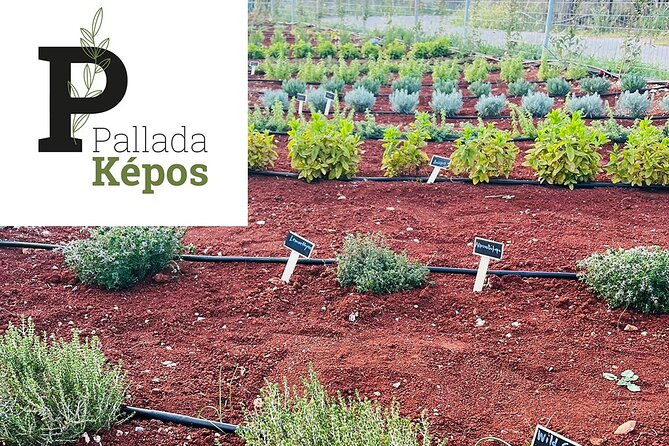
The visit begins at Pallada Kèpos, a small botanical park created within the olive groves. This is a useful opening because it puts the crop in context before you enter the factory. You see the trees as living plants, not just as a picture on an oil bottle.
The park includes several Greek olive tree varieties, native Cretan herbs and flowers, and a small vegetable garden. You can expect the guide to explain the trees, the olive fruit, and the basic rhythm of cultivation and harvest.
That setting gives the tour an authentic agricultural feel without asking you to commit to a half-day farm visit. You are not simply shown a polished tasting room. You start outdoors, among the plants that help explain why olive oil matters so much in Cretan cooking.
The visit is still structured and short. With about 90 minutes in total, the walk will be an introduction rather than an extensive botany lesson. If you have a strong interest in plant varieties, ask questions early, while you are still in the grove.
More olive oil tastings around Crete:
- Crete: Quad Safari, Olive Mill with Tasting & Ghost Village
★ 4.9 · 1,004 reviews - Knossos-Zeus Cave -Old Traditional Villages-Olive Oil Factory
★ 5.0 · 694 reviews - From Chania: Olive Oil, Wine, Cheese & Honey Tasting Tour
★ 4.6 · 490 reviews
Learning how Cretan olives are grown
The growing section covers cultivation and harvest. That may sound basic, but it answers questions you need in order to understand the oil later. The guide can connect the appearance of the fruit and tree to the work required before the oil reaches the mill.
This is also where the local setting matters. Olive cultivation is not an abstract topic in Crete. The grove around you gives the discussion a physical reference, and the different tree varieties provide something concrete to look at.
A guide such as Bill can make this part especially useful. His explanations have covered olive growing and harvesting, and he has answered questions directly during the visit. That personal contact is one of the advantages of the eight-person limit.
You should not expect a detailed farming workshop with every seasonal task explained. The supplied information promises a talk about cultivation and harvest, not hands-on picking or farm labor. Think of it as a clear foundation for the mill visit and tasting.
If you cook at home, this section may be more valuable than you expect. Understanding where the fruit comes from helps you see why freshness, handling, and production choices affect the final oil. The tour gives you a starting point for making better choices later.
Inside the modern olive mill
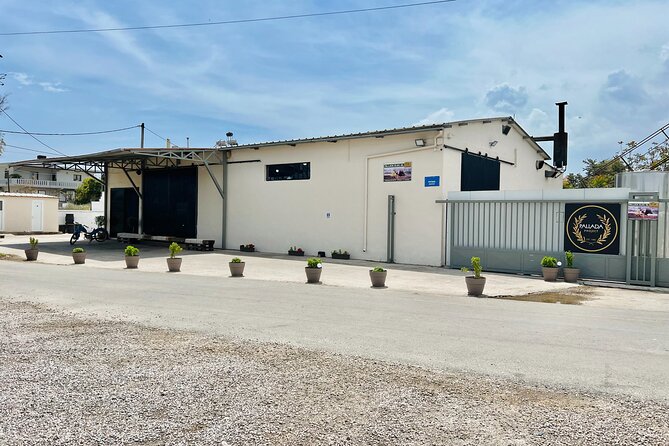
After the grove, you visit Pallada’s olive mill facilities. Here, the guide walks you among modern factory production equipment and explains the phases of olive oil production in detail.
The change from trees to machinery is one of the strongest parts of the itinerary. You have just seen the fruit in its natural setting. Now you see the practical systems used to turn that fruit into oil.
The information available does not specify every machine or technical stage by name, so you should not expect a specialized engineering tour. What you can expect is a guided explanation of the full production process and the role of the equipment.
That explanation gives the tasting more meaning. Instead of hearing only that one oil is smoother or more forceful, you have already learned how olives are grown, harvested, and processed. The factory section helps link those steps together.
The facility is described as a small olive oil factory. That matters if you prefer personal scale over a large industrial attraction. You are likely to spend less time looking at a production line from a distance and more time hearing how the process works from the person showing you around.
Still, this is a working production facility, not a museum display. The appeal comes from the explanation and the chance to see the equipment, rather than from elaborate visitor exhibits. If you need a highly theatrical attraction, this may seem plain. If you want to understand how olive oil is made, the plainness is part of the value.
Tasting four extra virgin olive oils
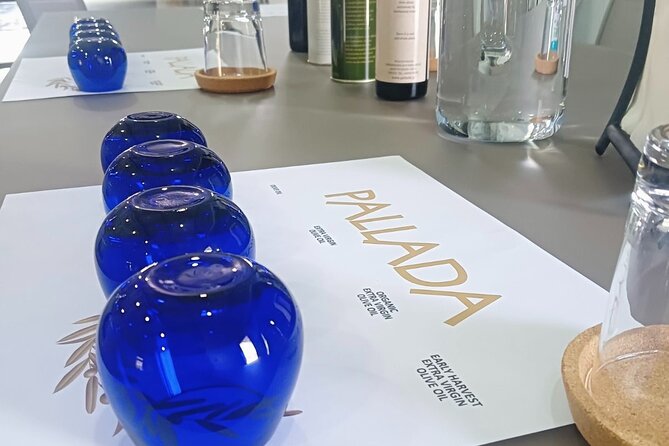
The tasting is the part that turns information into a practical skill. You taste four different extra virgin olive oils made in-house and learn how to distinguish their differences.
You are not expected to arrive as an oil expert. The guide teaches you how to taste an extra virgin olive oil, giving you a method for paying attention rather than asking you to rely on vague impressions.
That is important because olive oil tasting can seem mysterious at first. Color, aroma, flavor, texture, and finish can all influence what you notice, but the supplied details do not promise a formal certification session. This is an accessible lesson for ordinary food lovers.
The four oils give you a useful comparison. Tasting one oil alone can make it hard to know what you are noticing. Tasting several in the same setting lets you compare their character directly.
Some past participants found this educational enough to explain how to tell oils apart after the visit. One family also enjoyed the tasting as part of the wider tour, while a cooking-minded participant considered the visit a particularly good fit. That points to the tasting’s strongest audience: people who enjoy food and want practical knowledge, not just a souvenir sample.
You should take your time here and ask the guide to repeat any tasting step you do not understand. The small group helps. With no more than eight people, the guide can give more personal attention than at a large commercial tasting.
The tasting includes at least three oils in the tour description and specifies four in the detailed program. Plan on four. If the exact varieties change, the point remains the same: compare several house-made extra virgin oils under guidance.
A few more Crete half-days to weigh up
- Knossos Palace Skip-the-Line Ticket & Private Guided Tour
★ 4.9 · 633 reviews - Heraklion: Private Half-Day Sailing Trip to Dia Island
★ 4.9 · 466 reviews - Private Full-Day Knossos-Lasithi Plateau-Cave of Zeus
★ 5.0 · 176 reviews - Heraklion SUV Private Guided Wine Tour with Lunch
★ 5.0 · 165 reviews
Ending with Cretan dakos
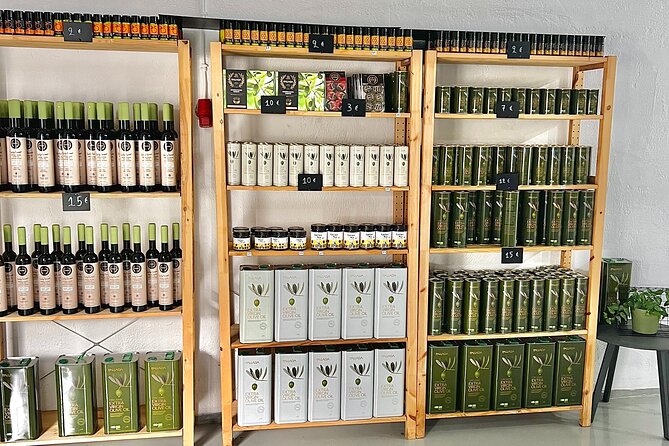
The traditional food portion ends the visit with Cretan products. The listed starter is dakos, served with the olive oil of your choice.
Dakos is a simple Cretan dish built around a crisp or dried bread base with toppings. The supplied menu does not give the full ingredient list, so you should not assume anything beyond the listed Cretan dakos starter. What matters for the tour is that you get to pair the dish with an oil you have just tasted.
This is a smart finish. You move from tasting oil on its own to using it with food, which is how most people will enjoy it at home. The dish also keeps the food element tied to Crete rather than adding a generic snack.
Do not book this expecting a full meal. The menu lists a starter, not lunch or dinner. If you are hungry, plan another meal before or after the 90-minute activity.
What the $41.94 price means
At $41.94 per person, Pallada is priced above a basic farm stop but below a full food tour. The value depends on how much you want from the visit.
You are paying for several linked parts: the botanical park walk, the olive-growing explanation, access to the mill facilities, a guided four-oil tasting, and a Cretan food sample. The small group also matters. A maximum of eight people gives the experience a more personal shape than a crowded tasting session.
I think the price is fair if you care about olive oil, cooking, or Cretan food traditions. The visit gives you information you can use, especially the tasting method. It is less compelling if you only want a quick sample or a large meal.
The short duration helps keep the cost manageable. You can fit the tour into a Chania-area day without giving up half your schedule. On the other hand, the limited time means you are paying for a concise introduction rather than a long farm experience.
Book this for the quality of the explanation and the chance to compare oils, not for quantity. The food is a pleasant finish, but it is not the main event.
Guide style and group size
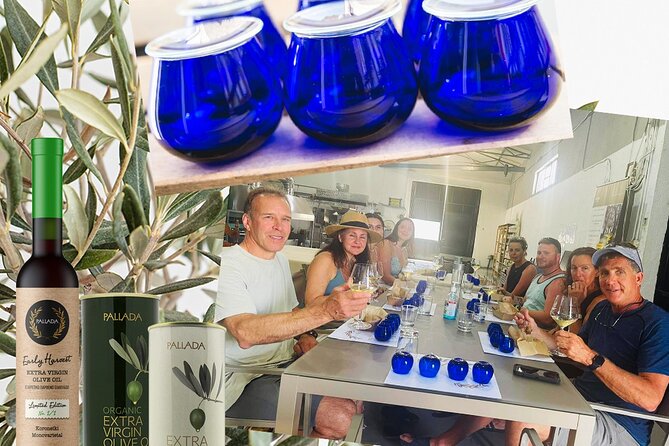
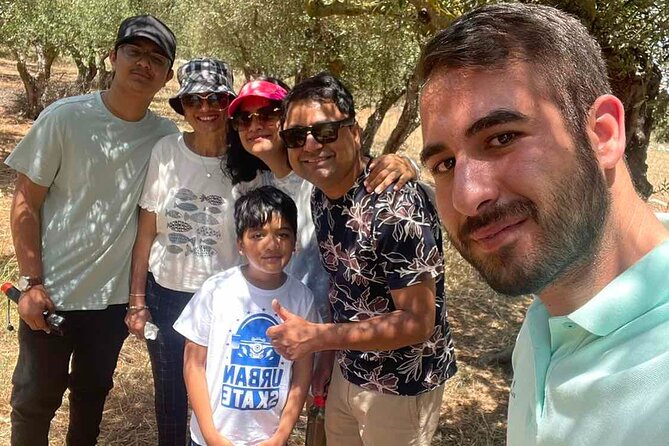
The guide is central to the experience. Bill has led tours covering the production process and tasting, and the available comments describe him as friendly, clear, and willing to answer many questions. That is exactly the kind of guide this format needs.
The tour is offered in English. Since the subject includes cultivation, milling, and sensory details, clear explanations matter more here than a fast-moving sightseeing script.
With a maximum of eight people, you should have a better chance to ask about subjects that interest you. You might want to discuss cooking with olive oil, the difference between oils, or the harvest process. The group limit makes those questions practical.
The format also suits families. One family enjoyed the overview and tasting together, and most people can participate. The activity does not list a demanding physical component. Service animals are allowed.
The exact guide for your date is not guaranteed in the supplied information, so treat Bill as a guide associated with the experience rather than a promise that he will lead every departure. Whoever leads it, the useful qualities to look for are a willingness to explain and time for questions.
Timing, access, and booking details
The tour lasts about one hour and 30 minutes. That makes it easy to pair with other plans in the Chania area, but you should leave enough time to reach Sternes and find the meeting point at Pallada Olive Oil & Tours.
Mobile tickets are accepted, and the tour is offered in English. Confirmation arrives within 48 hours of booking, subject to availability, so check your confirmation before setting your day around the visit.
The activity ends back at the starting point. No separate end location is provided, which simplifies planning once the tour is over.
It is near public transportation, but the supplied details do not list a route, stop, or transfer time. Check your own route before booking if you will not have a car.
Free cancellation is available up to 24 hours before the start time for a full refund. Changes or cancellations made less than 24 hours before the start time are not accepted for a refund, and the cut-off follows local time.
The average booking lead time is 21 days. That is a useful hint if your dates are fixed, especially since the group is capped at eight people. You do not need to book exactly three weeks ahead, but last-minute availability should not be assumed.
Who should book this olive oil visit?
I would choose Pallada if you want a compact, local food experience with a clear educational purpose. It suits cooks, food lovers, couples, families, and anyone who has wondered why one bottle of extra virgin olive oil tastes different from another.
It also works well for people who prefer a small group. You get a chance to talk with the guide, see the trees up close, and ask questions during the tasting.
The tour may be less suitable if you want extensive time outdoors, a full farm lunch, or a large selection of Cretan dishes. The botanical park is small, the food offering is limited to a traditional starter, and the full activity lasts only about 90 minutes.
I also would not choose it solely for sightseeing. The attraction is the subject itself: olive trees, production, and flavor. If that sounds dull, the machinery and tasting will not rescue the visit.
Final decision: is Pallada worth your time?
Book Pallada if you want to leave Crete with a better understanding of one of its most important foods. The combination of olive groves, a modern mill, four oils, and dakos gives you a complete little story from tree to table.
The strongest reason to go is the guided comparison. You do not simply buy a bottle because the label looks appealing. You learn how to taste, ask questions, and notice differences for yourself.
Keep your expectations in proportion. This is a focused 90-minute visit, not a full-day farm outing or a broad Cretan cooking class. At $41.94, it offers good value for a small group and a practical tasting lesson, especially if Bill or another attentive guide leads the session.
For food-focused time near Chania, I would book it. For a major sightseeing day with little interest in olive oil, use your time elsewhere.
FAQ
Where does the Pallada olive oil tour take place?
The tour takes place at Pallada Olive Oil & Tours in Sternes, Crete, Greece.
How long is the experience?
The activity lasts approximately one hour and 30 minutes.
What language is the tour offered in?
The tour is offered in English.
What is the maximum group size?
The tour has a maximum of eight travelers.
What will I see at Pallada Kèpos?
You will walk through a small botanical park among olive groves. The site includes native Cretan herbs and flowers, a small vegetable garden, and several Greek olive tree varieties.
Will I visit an olive oil mill?
Yes. The tour includes a visit to Pallada’s olive mill facilities, where the guide explains the phases of production while you walk among the modern equipment.
How many olive oils will I taste?
The detailed program includes a tasting of four different extra virgin olive oils made in-house.
Is food included?
Yes. The visit ends with a traditional Cretan treat. The listed starter is Cretan dakos, served with the olive oil of your choice.
Where does the tour end?
The activity ends back at the meeting point at Pallada Olive Oil & Tours.
Can I cancel for a full refund?
Yes. You can cancel at least 24 hours before the experience’s start time for a full refund. Cancellations or changes made less than 24 hours before the start time are not accepted for a refund.
Just added around Crete
- Crete: Knossos Palace & Heraklion City Tour★ 3.5 · 3 reviews
- Knossos palace (Last minute booking – Skip The Line Ticket)★ 4.5 · 3 reviews
- Cooking Class & Greek Night Experience★ 5.0 · 3 reviews
- Full-Day Tour:Lasithi Plateau -Mythology Park&Knossos Palace★ 3.0 · 3 reviews
- Chania: Private Guided Food and Wine Walking Tour with Lunch★ 5.0 · 3 reviews
- Knossos: Knossos Private Guided Tour★ 5.0 · 3 reviews
- Individual travel accompaniment East Crete★ 5.0 · 3 reviews
- Chania: Knossos Palace – Archaeological museum!★ 3.4 · 3 reviews
Olive Oil Tours & Tastings, compared.
Zeus Cave -Old Traditional Villages-Olive Oil Factory
Read our review →
Olive Farm Tour with Tasting of Local Delicacies
Read our review →
Zeus Cave, Lassithi Plateau, Olive Oil Factory, Kritza, Pottery
Read our review →
Knossos, Lasithi, Lasinthos and Olive Farm Combo Tour
Read our review →Browse the lists this tour appears in