Reviewed · OLIVE OIL TOURS & TASTINGS
Pottery – Honey & Olive Oil experience
The best part of this private Cretan day is the mix of working food producers, traditional pottery, and a major historic monastery. You move from olive oil mills and honey tasting to a hands-on ceramic session in Margarites, then finish at Arkadi Monastery, a place tied closely to Crete’s struggle for independence.
I especially like the small private format, which lets your group set a relaxed pace and add a lunch stop if time allows. The chance to make a ceramic piece at no extra charge is another strong point, since you are doing more than looking at shelves of souvenirs.
The main thing to understand is that your driver is not a tour guide. One traveler found the driver kind but quiet, while another praised the relaxed service and personal help from a driver named Antonius. If you want detailed commentary at every stop, arrange a licensed guide separately.
In This Review
- Key points to know before booking
- A Cretan day built around things people make
- Paraschakis Olive Oil in Melidoni
- Apithano Honey Museum and tasting
- Making pottery in Margarites
- Arkadi Monastery and the events of 1866
- Transportation, timing, and the pickup question
- Is $722.47 good value for your group?
- Who will enjoy this day most?
- Booking, weather, and practical details
- Should you book Pottery, Honey and Olive Oil?
- FAQ
- Where does pickup take place?
- How long does the experience last?
- How many people can join the private tour?
- Is lunch included?
- Is a tour guide included?
- Can I make my own pottery?
- What happens if bad weather cancels the tour?
Key points to know before booking
- Four very different stops: You visit an olive oil factory, honey museum, pottery studio, and historic monastery in one day.
- Free pottery session: At Tsikalario ceramics in Margarites, you can make your own ceramic sample.
- Private vehicle for up to seven: The $722.47 price is charged per group, not per person.
- Pickup is limited: Hotel, villa, cruise, and other pickup points are offered only in Heraklion city and Rethymno city.
- Food is not included: Lunch, coffee, and tea cost extra, though a lunch stop can be added.
- The driver is not a guide: You receive transportation and an English-speaking driver, but not a dedicated tour guide.
A Cretan day built around things people make
This outing works because it links four useful parts of Cretan culture. Olive oil and honey are not simply products for a tasting room. They are tied to the island’s plants, farming, family businesses, and everyday cooking. Pottery gives you a chance to work with your hands, while Arkadi Monastery adds a serious historical stop to what could otherwise be a day of tastings and shopping.
The tour lasts about five to seven hours. The four listed visits each take about an hour, leaving the rest of the day for driving between sites and possibly lunch. That broad time range matters. Roads, conversation, shopping, and a meal can make this a full day rather than a tightly timed chain of short stops.
You travel in a private air-conditioned vehicle with bottled water. Your group alone takes part, so you do not need to follow the pace of strangers. That is helpful for families, couples, or a group of friends who want to linger at the pottery studio or stop for lunch.
More Food Tours in Chania
- Walking “Food tasting tour” in the town of Chania
★ 5.0 · 297 reviews - The Delicious Chania Street Food Tour
★ 5.0 · 138 reviews - Sunset Craft Beer & Food Tour – Chania Old Port
★ 5.0 · 86 reviews
Paraschakis Olive Oil in Melidoni
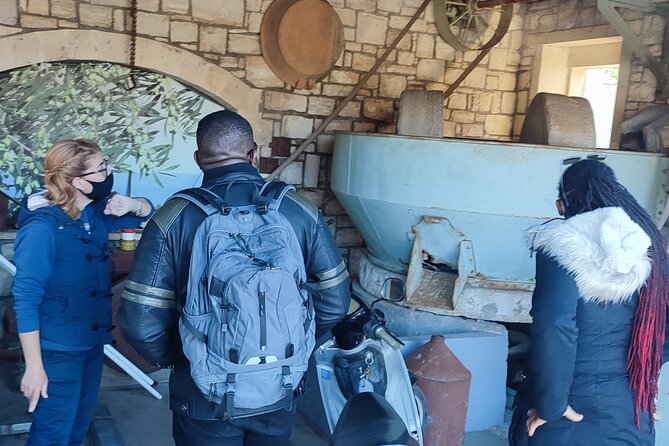
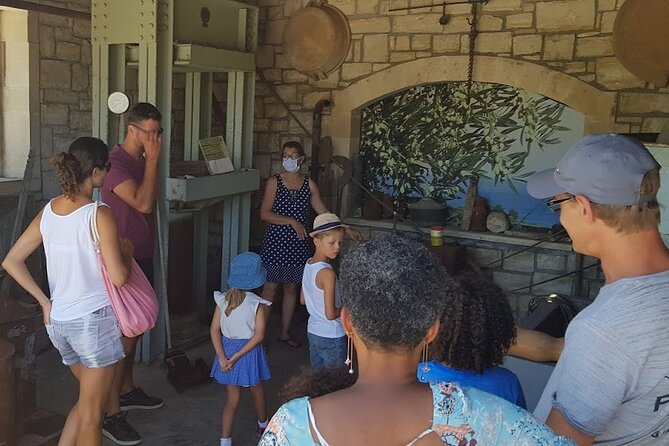
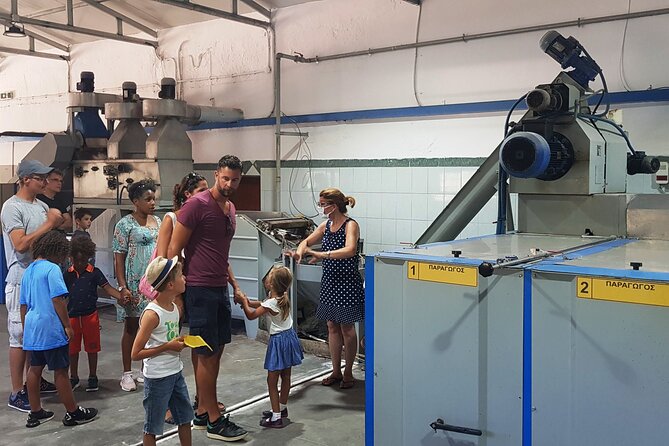
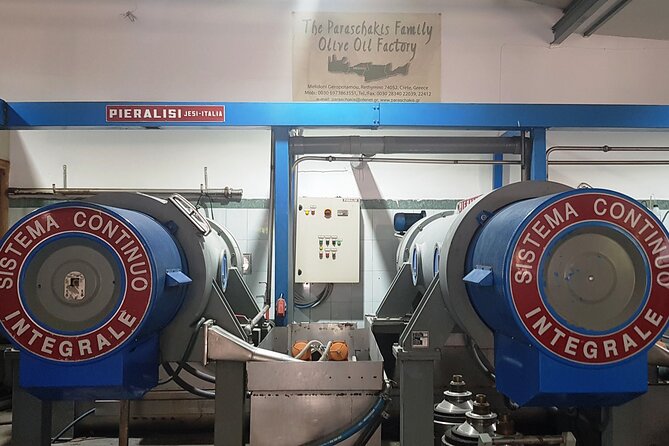
The first stop is Paraschakis Olive Oil in Melidoni, an olive oil factory with three separate mills. The visit is free, and the factory uses modern equipment along with strict production standards.
The three-mill setup gives you a useful sense of scale. You are not just standing in a shop with bottles on display. You can see that olive oil production depends on machinery, timing, and technical decisions before the oil reaches the table. The exact format of the visit can vary, so do not expect a long museum tour unless your host is willing to spend time explaining the process.
This is one place where your expectations should be clear. A short visit may suit you if you mainly want to learn the basics and buy or taste oil. It may feel thin if you want a detailed lesson about olive varieties, harvesting, pressing, storage, and regional differences.
One account of the day described the olive oil visit as rushed and lacking enthusiasm. That is useful information for setting your expectations. The factory has the ingredients for an interesting stop, but the quality of the explanation depends heavily on who is available to show you around.
I would ask questions as you go. Ask how the three mills differ, how the oil is handled after pressing, and what the factory considers a high-quality result. Since your driver is not there to provide a formal lecture, your own questions may determine how much you get from the stop.
Apithano Honey Museum and tasting
The Apithano Honey Museum offers a more focused look at bees and honey production in Crete. The visit includes time in the laboratory and an explanation of how honey is collected from selected areas of the island.
The museum presents honey as a product shaped by Crete’s plants and flowers. The island’s endemic vegetation gives different honeys their own aromas and flavors. That connection between bees and local plant life makes this more than a quick sweet tasting.
The visit lasts about an hour. You can expect an introduction to the bees, the production process, and the work done in the lab, followed by a tasting. One account found the tour brief but well done, with the tasting as the best part. That sounds like the right way to approach it: a compact stop with a clear theme, not a large museum requiring half a day.
I like this stop because it gives you something concrete to compare. Taste first, then ask what creates the differences in flavor. The tasting also makes a good contrast with the olive oil factory, where the focus is machinery and production standards rather than bees, flowers, and scent.
As with the olive oil visit, the depth may depend on the person leading the stop. If honey is a major interest, ask about the areas where the honey is collected and the role of Crete’s local vegetation. You will get more from the visit if you treat it as a conversation instead of waiting for a long formal presentation.
Making pottery in Margarites
For many people, Tsikalario ceramics in Margarites will be the highlight. Margarites is described as Crete’s best-known pottery center, with nearby clay deposits that helped support a long tradition of ceramic work.
Here you can make your own ceramic sample at no additional charge. The session is designed for individuals who want a single introduction rather than a full pottery course. That makes it a good fit for first-time visitors, families, and anyone who would rather take part than simply browse finished pieces.
The setting adds meaning to the activity. Margarites lies between two gorges with plants, herbs, trees, and flowers, and the local clay deposits help explain why pottery became such an important craft here. You are not being asked to learn an entire trade in one hour. You are getting a small, hands-on look at a craft linked to the village.
A personal connection can make this stop especially memorable. One account described meeting a ceramic maker whose family had practiced the craft for generations. Details like that are exactly what you should look for. Ask about the family workshop, the clay, and how the pieces are finished.
Allow room in your budget and luggage for purchases. The pottery visit can easily turn into a shopping stop, especially if you like useful handmade objects. One group even needed help finding an extra suitcase after buying so much. That is a cheerful warning, but a practical one: leave space in your bags, and remember that the tour price does not include purchases.
More Olive Oil Tours & Tastings in Chania
- Crete Wine and Olive Oil Tour
★ 5.0 · 272 reviews - Wine & Olive Oil Tour with Lunch at Milia Mountain Retreat
★ 5.0 · 194 reviews - Wine & Olive Oil Tour with Lunch – Semi Private Safari Tour
★ 5.0 · 156 reviews - Chania: Milia Mountain Tour w/Lunch Olive Oil/Wine Tastings
★ 4.9 · 97 reviews
Arkadi Monastery and the events of 1866
Arkadi Monastery changes the tone of the day. After food production and pottery, you visit one of the most important historic sites in Crete.
The monastery contains one of the island’s finest Venetian churches. Its importance is not only architectural. In 1866, tragic events at Arkadi made the monastery a national symbol of Crete’s struggle for independence. The visit gives you a chance to connect a beautiful building with the political and human story that made it so important.
Plan to give this stop your full hour. It deserves more than a quick photograph from the entrance. Look at the church, the monastery complex, and the setting, then take a moment to consider why Arkadi carries such weight in Greek history.
The tour information confirms admission is included, but it does not promise a dedicated historical guide. Your driver may offer basic help with timing and transport, but you should not assume you will receive a detailed explanation of the 1866 events. If the monastery is one of your main reasons for booking, a separate guide could make the visit much more rewarding.
Still, the stop works well even without a long lecture. The architecture and atmosphere give the day some balance. You are not spending every hour tasting products or handling pottery. Arkadi adds a place of memory and national importance.
Transportation, timing, and the pickup question

Private transportation is the practical backbone of this outing. You get an air-conditioned vehicle, bottled water, and an English-speaking driver. Pickup and drop-off are offered from hotels, villas, cruise points, or other locations in Heraklion city and Rethymno city.
The stated location is Chania, but the pickup details specifically limit service to Heraklion and Rethymno city. Do not assume pickup from Chania simply because Chania appears as the tour location. Confirm your exact pickup point before paying, especially if you are staying outside either city.
Pickup time is flexible within the operating hours, which are listed as 9:00 a.m. to 3:30 p.m. from Monday through Sunday. Since the experience lasts five to seven hours, clarify the proposed start time and expected return time. A late start could make the day feel hurried.
The private format is a real advantage. You can ask for a longer pottery session, spend more time at Arkadi, or add lunch if the schedule permits. One group added a lunch stop and found that the day became longer. That is exactly what you should expect: flexibility is useful, but extra stops take time.
The driver role needs careful attention. The included service is an English-speaking driver, not a tour guide. One account praised a relaxed and kind driver who went out of the way to help find another suitcase. Another found the driver too quiet and had to ask questions to get information.
Neither account cancels out the other. This is a private transfer-based tour with visits arranged along the route. It is not a fully narrated cultural tour. If you want a steady stream of facts while driving or detailed interpretation at Arkadi, budget for a separate guide.
Is $722.47 good value for your group?
The price is $722.47 per group of up to seven people. That makes the cost much easier to justify for a full group than for one or two people.
For seven people, the listed price works out to about $103.21 per person. For four people, it is about $180.62 per person. For two people, it is about $361.24 per person, before lunch, drinks, and purchases. The same private vehicle and stops can therefore feel like excellent value for a family or friend group, but expensive for a couple.
The price includes private transportation, bottled water, the air-conditioned vehicle, an English-speaking driver, and admission at the listed stops. It does not include lunch, coffee, tea, shopping, or a tour guide.
I see the strongest value in the combination of transport and access. You do not have to arrange four separate visits, navigate between them, or coordinate a rental car. You also get the freedom of a private group rather than a large coach.
The weaker value comes if you expect a polished, fully narrated tour. In that case, the absence of a guide matters. You are paying for a private route and driver service, not a specialist-led lesson in Cretan food, pottery, and history.
Who will enjoy this day most?
I would recommend this outing for a group that enjoys local products, small workshops, and a flexible day in the countryside. It is particularly well suited to families and friends who want a shared activity and may appreciate private transport.
It also works for shoppers. Olive oil, honey, and ceramics give you several chances to bring home something connected to Crete. Just plan your luggage carefully.
You may want a different format if your priority is intensive history, detailed food education, or a long pottery class. The visits are each about an hour, and the driver is not a guide. This is a sampler of several Cretan traditions, not a specialist course in any one of them.
The overall rating is 4.7 from nine ratings, but the individual experiences point to an important split. One person called it a favorite day in Greece and praised the people, ceramics, monastery, and attentive driver. Another found the pottery excellent but considered the olive oil and honey stops too brief and the driver too quiet.
That contrast gives you the clearest buying advice. Your enjoyment will depend on your interest in hands-on visits and your willingness to ask questions. The private setup lets you shape the mood, but it does not guarantee that every stop will receive the same level of explanation.
Booking, weather, and practical details
Confirmation is provided at booking. Service animals are allowed, and the activity is described as suitable for most people.
Free cancellation is available if you cancel at least 24 hours before the start time. Changes or cancellations inside that window are not accepted for a refund. The experience requires good weather, so a weather cancellation brings the choice of another date or a full refund.
Bring room for purchases, water for the road, and a plan for lunch. Bottled water is included, but coffee, tea, and lunch are not. Wear something comfortable for moving between a factory, museum, pottery studio, and monastery, though no special clothing requirements are provided.
Should you book Pottery, Honey and Olive Oil?
Book it if you want a private day that combines Cretan food production, a free pottery activity, shopping, and an important monastery. The pottery stop and the chance to meet working makers are the strongest reasons to go. A group of five to seven will get the best value from the flat price.
Before booking, confirm pickup in Heraklion or Rethymno, ask how much time is planned at each stop, and decide if you need a separate guide. If you approach the day as a flexible cultural sampler rather than a fully narrated tour, it can be a memorable and useful way to see several sides of Crete in one outing.
FAQ
Where does pickup take place?
Pickup and drop-off are offered from hotels, villas, cruise points, or other locations in Heraklion city and Rethymno city. The provided details do not confirm pickup from Chania city.
How long does the experience last?
The experience lasts approximately five to seven hours. Each of the four stops is scheduled for about one hour, with the remaining time used for transport and possible additional stops.
How many people can join the private tour?
The price covers one private group of up to seven people. Only your group participates in the activity.
Is lunch included?
No. Lunch, coffee, and tea are not included. A lunch stop may be added, but it can make the day longer.
Is a tour guide included?
No. The package includes an English-speaking driver, but not a tour guide. Arrange a separate guide if you want detailed commentary at the sites.
Can I make my own pottery?
Yes. At Tsikalario ceramics in Margarites, you can make your own ceramic sample during a free single-session workshop.
What happens if bad weather cancels the tour?
If poor weather causes cancellation, you will be offered another date or a full refund. You can also cancel for a full refund if you do so at least 24 hours before the start time.
More Olive Oil Tastings in Chania
- Wine & Olive Oil Tour with lunch at the White Mountains
★ 5.0 · 71 reviews - From Chania Private half day Winery-Olive factory-Kournas lake
★ 5.0 · 50 reviews - Chania: Elafonisi & Falasarna Private Tour w/olive oil tasting
★ 5.0 · 46 reviews - Discover Rethymno, Lake Kournas & the Secrets of Cretan Olive Oil
★ 5.0 · 10 reviews
More Traditional Village Tours in Chania
- Elafonissi Beach Day Trip from Chania -Stop in Elos Village
★ 4.5 · 744 reviews - The 7 Villages of Apokoronas Tour – Explore East Chania Mainland
★ 5.0 · 178 reviews - Elafonissi Beach Tour from Chania with stop in Elos Village
★ 4.5 · 168 reviews - From Chania: Imbros Gorge Guided Hike and Village Visit
★ 4.5 · 133 reviews
Just added around Chania
- Cooking Class & Greek Night Experience★ 5.0 · 3 reviews
- Chania: Private Guided Food and Wine Walking Tour with Lunch★ 5.0 · 3 reviews
- Chania: Knossos Palace – Archaeological museum!★ 3.4 · 3 reviews
- Chania Highlights:Venizelos, Stavros, Agia Triada & Marathi★ 5.0 · 3 reviews
- Chania: Private Tour to Balos Lagoon★ 5.0 · 3 reviews
- Your Tailored Samaria Tour That Nobody Will Believe. From Chania.★ 5.0 · 3 reviews
- Sips of Crete: Flavors, Legends & Hidden Gems★ 5.0 · 3 reviews
- Elafonisi Beach Tour★ 3.3 · 3 reviews
Olive Oil Tours & Tastings, compared.
Zeus Cave -Old Traditional Villages-Olive Oil Factory
Read our review →
Olive Farm Tour with Tasting of Local Delicacies
Read our review →
Zeus Cave, Lassithi Plateau, Olive Oil Factory, Kritza, Pottery
Read our review →