
Reviewed · TRADITIONAL VILLAGE TOURS
Traditional Villages of Kritsa and Kroustas
The best part of this six-hour Crete outing is its mix of village life and ancient ruins. You move from the painted Byzantine church of Panagia Kera to the hilltop remains of Lato, then slow down in Kritsa and Kroustas for narrow lanes, local crafts, food, wine, and a look at everyday Cretan life.
I like the small maximum of eight people, which makes the long drives more manageable and gives the driver room to adjust the day to your interests. I also like the food focus in Kroustas, where myzithropites, skioufihta, kalitsounia, local wine, and honey are more meaningful than a quick photo stop. The drawback is the amount of time spent getting to and from the villages, plus the extra cost of lunch and admission fees.
In This Review
- Key points
- Why this Crete village tour works
- Panagia Kera and Crete’s painted churches
- Ancient Lato on the saddle between two hills
- Walking the narrow lanes of Kritsa
- Kroustas, where the meal matters
- What the small group changes
- Price, extra costs, and overall value
- Timing, comfort, and what to bring
- Who should book this outing
- Should you book Traditional Villages of Kritsa and Kroustas?
- FAQ
- How long does the tour last?
- Where does the tour start?
- Where does the tour end?
- Is pickup available?
- How many people can join the tour?
- Are entrance fees included?
- Is lunch included?
- What drinks are included?
- Can service animals join?
- What happens if bad weather cancels the tour?
Key points
- Four very different stops: See Byzantine wall paintings, a Doric city, a textile-making village, and a food-centered mountain community in one day.
- Small-group transport: The van holds no more than eight people, a useful advantage on a route with narrow village streets.
- Kritsa is best for crafts and atmosphere: Look for lace, textiles, old buildings, coffee shops, and small folklore collections.
- Kroustas is the food stop: Local dishes include myzithropites, ftazymo bread, boiled goat, skioufihta, and kalitsounia.
- Ancient Lato requires a modest extra fee: Allow €3 for Lato and €3 for Panagia Kera.
- The schedule is flexible in spirit: A small group can make it easier to tailor stops to shared interests, depending on the driver and the day.
Why this Crete village tour works
This excursion gives you a useful cross-section of eastern Crete without asking you to organize several separate trips. You see sacred art, ancient civic ruins, village crafts, local food, and countryside views in one outing.
That variety matters. Kritsa alone could fill an afternoon, but pairing it with Kroustas gives you two different kinds of village experience. Kritsa is the better place for shopping and old streets. Kroustas is the better place to sit down and eat.
The tour begins at Andrea Papandreou 36 in Schisma Elountas and returns there at the end. Pickup is offered, and the transport is by a small vehicle. The route can involve about one to one and a half hours of transfer time to or from the sites, depending on traffic, so you should think of this as a full half-day road outing rather than a cluster of attractions close together.
More mountain village days near Crete:
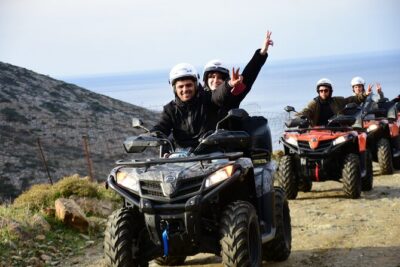
- Crete: Quad Safari, Olive Mill with Tasting & Ghost Village
★ 4.9 · 1,004 reviews - Agia Pelagia Quad Safari to Discover the Authentic Crete
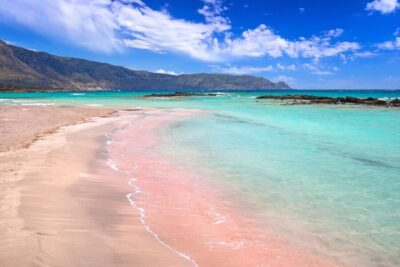
★ 5.0 · 877 reviews - Elafonissi Beach Day Trip from Chania -Stop in Elos Village
★ 4.5 · 744 reviews
Panagia Kera and Crete’s painted churches
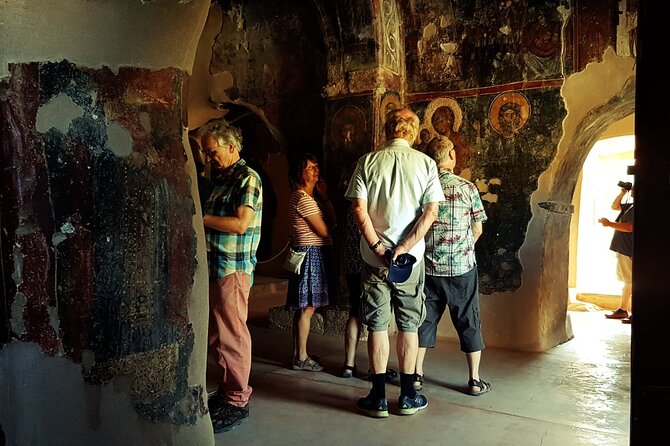
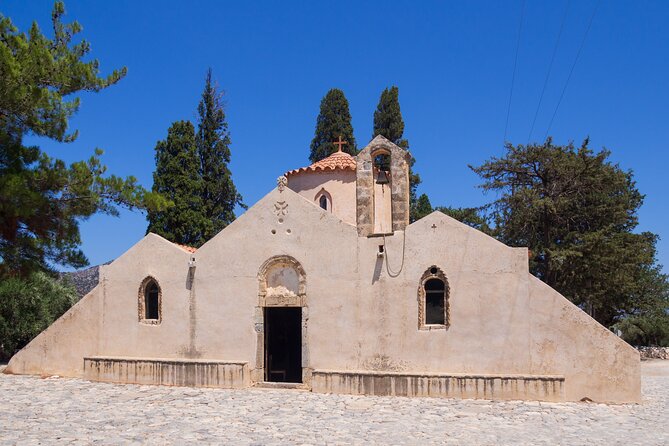
The first stop is Panagia Kera, about 500 meters south of Kritsa. This three-aisled church has barrel-vaulted sections and a dome over the nave, but the paintings inside are the main reason to visit.
The church contains extensive Byzantine wall paintings from different periods. They are well preserved and make this more than a quick religious stop. If you care about medieval art, this may be the most rewarding enclosed site on the route.
You get about 30 minutes here. That is enough for a focused visit, but not for a slow study of every image. Keep the timing in mind if you like to linger in churches or read detailed information.
Admission is listed as an extra €3. The church is near Kritsa, so the stop also helps you understand the setting of the village before you begin walking through its lanes. Dress and behave respectfully inside, as you would at any active place of worship.
Ancient Lato on the saddle between two hills
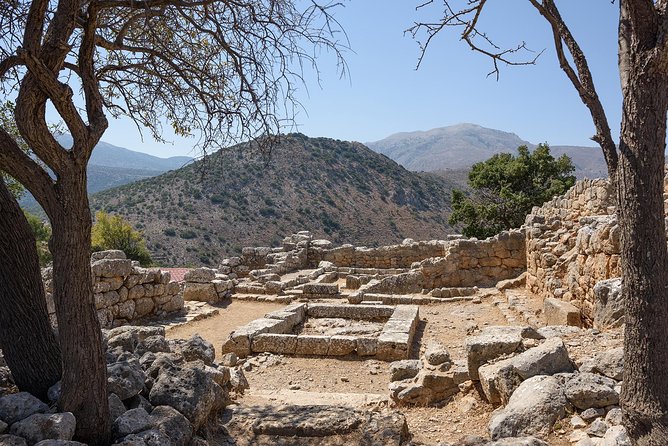
Lato is the tour’s main ancient site. This Doric city-state was built on a saddle between two hills, giving it both protection and wide views toward Mirambello Bay. The position explains why the site feels open and defensive at the same time.
Lato was named for Leto, the mother of Apollo and Artemis. The city’s main goddess was Eileithyia, and she appeared on coins made by the city. Lato was also the birthplace of Nearchos, an admiral of Alexander the Great.
The city’s harbor was Lato pros Kamara, modern Agios Nikolaos. By the middle of the second century AD, that harbor had grown so important that the administrative center moved there. Lato was later abandoned.
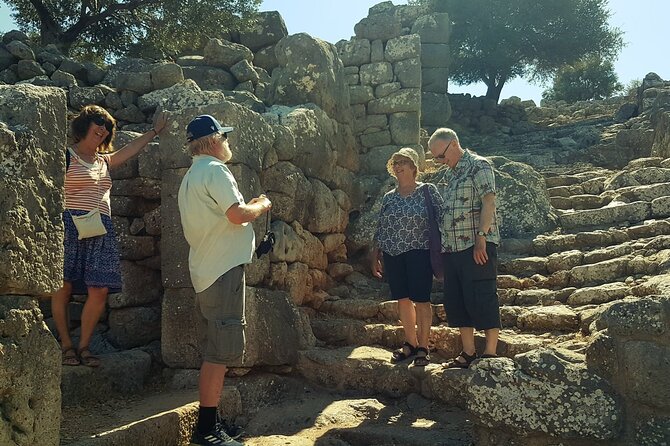
You have about 50 minutes at the ruins. That is enough to see the layout and appreciate the views, but the uneven hilltop setting may feel rushed if you want a detailed archaeological visit. Wear shoes that are comfortable on rough ground and bring water, even though bottled water is supplied.
The entrance fee is another €3. That is a small addition, but you should count both site fees when comparing the tour price. Lato is the stop most dependent on your interest in archaeology. If ancient sites are your priority, you may wish the schedule allowed more time. If you prefer villages and food, 50 minutes gives you a useful introduction without taking over the day.
Walking the narrow lanes of Kritsa
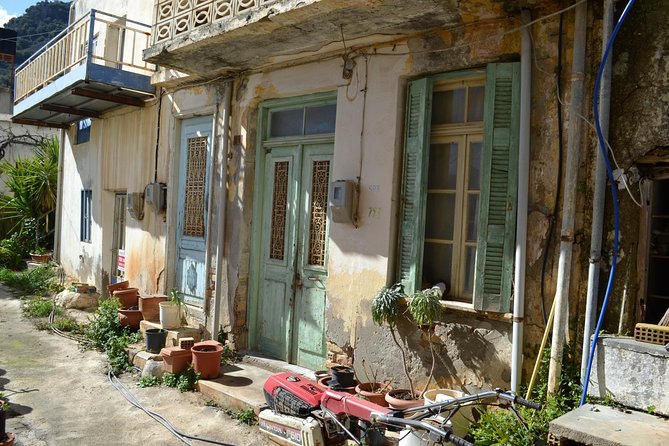
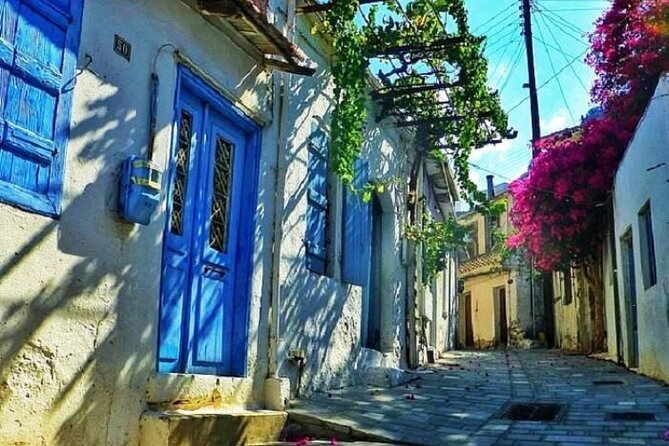
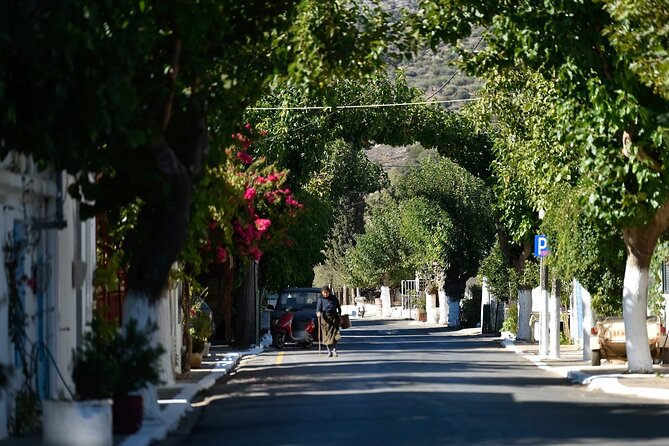
Kritsa is the most visual stop. Its narrow streets pass old buildings, flowering yards, textile shops, traditional coffee shops, Byzantine churches, and small folklore collections.
The village is known for lace making and handicrafts. That gives the visit a practical purpose beyond sightseeing. You can look at local textiles, browse small shops, and see how traditional work is presented to visitors.
Kritsa has been described as an open folklore and historical museum, but you should not expect a polished museum complex. Its appeal comes from moving through a lived-in settlement, where attractive houses and carefully kept yards sit beside abandoned buildings. That mixture is part of the honest picture.
You get about an hour and a half here. That is a good amount of time for a walk, a little shopping, and a coffee stop if the schedule permits. It is not enough to inspect every lane, shop, church, and collection in detail.
A practical tip: do not assume the village will be crowded simply because it appears in many Crete guides. At the end of August, the streets have sometimes been quiet. That can make the visit more pleasant, though opening hours and shop activity can vary.
The village includes narrow alleys, so the van will not take you from door to door once you begin exploring. Most travelers can participate, but anyone who has trouble walking or managing uneven streets should ask about the route before booking.
Same island, a completely different day out:
- From Kissamos Port: Boat Cruise to Balos Lagoon & Gramvousa
★ 4.2 · 6,755 reviews - Crete: Day Trip to Agios Nikolaos and Spinalonga Island
★ 4.6 · 4,416 reviews - From Chania: Full-Day Samaria Gorge Trek Excursion & Guide
★ 4.6 · 3,191 reviews - Agios Nikolaos: Boat Trip to Spinalonga with Swim Stop
★ 4.4 · 3,031 reviews
Kroustas, where the meal matters
Kroustas is smaller than Kritsa, with about 500 residents. Its stone houses, tight streets, and countryside setting offer a quieter look at Crete.
The village is especially useful for food. Local specialties include skioufihta, a traditional pasta dish, and kalitsounia, which may be sweet or savory. You may also find myzithropites, small pies made with local cheese, along with ftazymo bread and boiled goat.
Kroustas is also known for wine made from local grape varieties such as Liatiko and Mandilari. Beekeeping is well developed in the area, so honey is another local product to look for.
Lunch is not included, and that is worth treating as part of the budget rather than an unpleasant surprise. The advantage is choice. You can decide how much to spend and which local dishes appeal to you. The disadvantage is that the final price depends on what you order.
You have about one hour and 40 minutes in Kroustas, the longest individual stop. That suggests the village is intended as more than a quick photograph. The extra time lets you eat, walk, and take in the slower pace.
If you want an authentic meal, this is the moment to choose local specialties rather than familiar Greek basics. Ask what is prepared that day. The supplied drink allowance includes bottled water and soda, but wine and lunch are not listed as included.
What the small group changes
The maximum group size is eight. That is one of the strongest reasons to choose this outing instead of a large coach excursion.
A small van can handle the approach to traditional villages more easily, and you spend less time waiting for people to regroup. It also creates a better setting for questions during the drive. The route includes enough road time that this matters.
The small format may also allow some adjustment based on the group’s interests. That does not mean every stop or timing is guaranteed to change, but a group of six or eight is easier to manage than a full bus.
A driver named Christos has been specifically praised for explaining the sights along the way and creating a relaxed experience. Driver assignments can change, so I would treat his presence as a possibility rather than a promise. The important point is that this tour depends heavily on the person behind the wheel. A good explanation turns transfer time into part of the experience.
Price, extra costs, and overall value
At $69.46 per person, the tour is reasonably priced for a six-hour small-group outing, especially if you are staying in or near Elounda and want someone else to handle the route.
The advertised price does not cover everything. Add:
- €3 for Panagia Kera
- €3 for Lato
- Lunch in Kroustas
- Any wine, coffee, shopping, or additional food
That makes the true cost higher than the headline price, but the two admission fees are modest. The larger variable is lunch.
I see the best value here in the transport and range of stops. Planning Panagia Kera, Lato, Kritsa, and Kroustas independently would require a car, route planning, parking decisions, and more attention to timing. You pay to have those pieces connected.
The value is weaker if you want a long archaeological visit or a full day in one village. Lato receives less than an hour, and Kritsa has more streets and shops than you can cover in 90 minutes. This is a sampler, not a slow village stay.
Timing, comfort, and what to bring
The tour lasts about six hours, including road transfers. Traffic can affect the timing, and the transfer to or from the sites may take about one to one and a half hours.
Bring comfortable walking shoes, sun protection, and some extra money for lunch and the two admission fees. Bottled water and soda are included, but carrying a small personal bag will make it easier to keep your essentials with you during the village walks.
The weather matters. If poor weather causes cancellation, you are offered another date or a full refund. For your own planning, avoid placing this tour immediately before a fixed evening booking.
Free cancellation is available up to 24 hours before the start time. Cancellations or changes made less than 24 hours in advance are not refunded or accepted.
Who should book this outing
I would choose this tour if you want a broad introduction to eastern Crete and prefer local villages to a packed list of major attractions. It suits you if you enjoy short walks, traditional food, Byzantine art, ancient ruins, and small-group transport.
It is also a good fit if you are based around Elounda and do not want to rent a car. The route covers several places that are more convenient to connect by vehicle than by public transport.
You may want another option if you dislike village shopping stops, have difficulty walking on narrow or uneven streets, or want a full archaeological tour. Lato is interesting, but the 50-minute visit is brief. Kritsa and Kroustas reward curiosity, not speed.
Should you book Traditional Villages of Kritsa and Kroustas?
Book it if you want variety and a relaxed look at Crete beyond the coast. The strongest elements are the small group, the excellent mix of stops, the painted church, the views from Lato, and the chance to eat local food in Kroustas.
Go in with clear expectations. You are not getting a private archaeological study or a guaranteed gourmet meal. You are getting a well-shaped half-day route through eastern Crete, with enough time to taste village life and enough guidance to make the long transfers worthwhile.
FAQ
How long does the tour last?
The tour lasts approximately six hours, including transportation between the meeting point and the sites.
Where does the tour start?
It starts at Andrea Papandreou 36, Schisma Elountas 720 53, Greece.
Where does the tour end?
The activity ends back at the same meeting point.
Is pickup available?
Yes, pickup is offered.
How many people can join the tour?
The group has a maximum of eight people.
Are entrance fees included?
No. Panagia Kera costs €3 and Lato costs €3. These fees are paid separately.
Is lunch included?
No. Lunch in Kroustas is not included in the tour price.
What drinks are included?
Bottled water and soda are included.
Can service animals join?
Yes, service animals are allowed.
What happens if bad weather cancels the tour?
You will be offered a different date or a full refund if poor weather causes cancellation.
Just added around Crete
- Crete: Knossos Palace & Heraklion City Tour★ 3.5 · 3 reviews
- Knossos palace (Last minute booking – Skip The Line Ticket)★ 4.5 · 3 reviews
- Full-Day Tour:Lasithi Plateau -Mythology Park&Knossos Palace★ 3.0 · 3 reviews
- Cooking Class & Greek Night Experience★ 5.0 · 3 reviews
- Chania: Private Guided Food and Wine Walking Tour with Lunch★ 5.0 · 3 reviews
- Knossos: Knossos Private Guided Tour★ 5.0 · 3 reviews
- Individual travel accompaniment East Crete★ 5.0 · 3 reviews
- Chania: Knossos Palace – Archaeological museum!★ 3.4 · 3 reviews
Traditional Village Tours, compared.
Elafonissi Beach Day Trip from Chania -Stop in Elos Village
Read our review →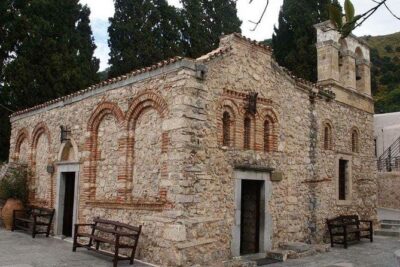
Zeus Cave -Old Traditional Villages-Olive Oil Factory
Read our review →
Quad Off-Road Tour to Villages with Hotel Transfers
Read our review →
Zeus Cave, Lassithi Plateau, Olive Oil Factory, Kritza, Pottery
Read our review →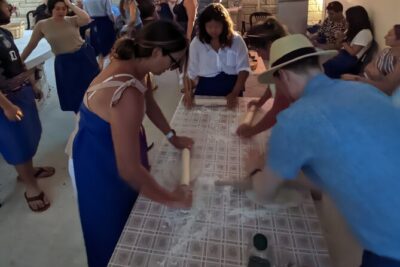
Chania Cooking Class-The Authentic Enjoy traditional Cretan meal
Read our review →
Browse the lists this tour appears in