Reviewed · TOURS
WWII – The Battle of Crete Day Tour
The most memorable part of the Battle of Crete is not a grand museum. It is standing at the actual places where the fighting unfolded, then looking across the ground with a guide who can explain how the German invasion, Allied defense, and Cretan resistance fit together. This six-hour trip links Maleme, Tavronitis Bridge, and two military cemeteries from Chania by air-conditioned minivan.
I like the small-group format, capped at 15 people, because it leaves room for questions and personal stories. I also like the human angle: guides such as Yannis, Babis, Giannis, and Ioannis are praised for clear English, warmth, and a strong grasp of both the battle and modern Crete. The main drawback is that the short schedule covers a lot, and one military-history enthusiast found it difficult to follow the battle’s full sequence from viewpoints and maps alone.
In This Review
- Key points to know before booking
- Why the Battle of Crete makes a strong day tour
- Pickup from Chania and the six-hour schedule
- Maleme: beginning where the story turned
- Tavronitis Bridge and the shape of the fighting
- The German Military Cemetery at Maleme
- Souda Bay War Cemetery and the Commonwealth story
- The private collection and the personal side of the tour
- The guides are a major part of the value
- Is $114.89 good value?
- Who should book this Crete WWII tour?
- Should you book it?
- FAQ
- How long does the WWII Battle of Crete tour last?
- Where does the tour start and finish?
- Which sites are included?
- Is transportation included?
- Is the tour offered in English?
- What is included besides transportation and entrance fees?
- How many people can join the tour?
- Can I cancel for a refund?
Key points to know before booking
- Maleme and Tavronitis Bridge put you at two central battle locations rather than keeping the story inside a museum.
- German and Commonwealth cemeteries add a quiet, respectful counterpoint to the battlefield stops.
- Yannis, Babis, Giannis, and Ioannis are among the guides praised for storytelling, empathy, and clear English.
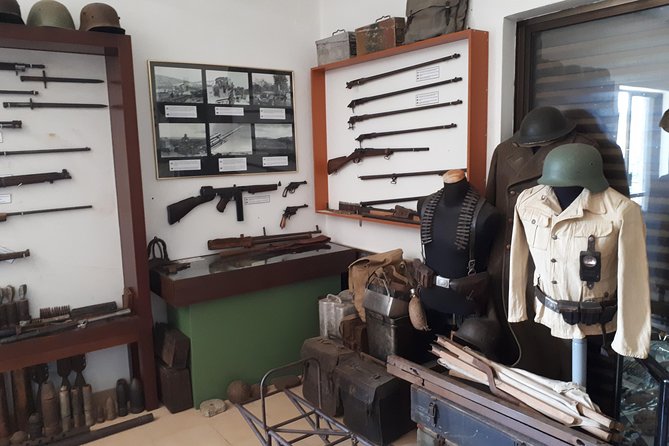
- A private wartime collection may be part of the day, with unusual artifacts and a personal connection to the battle.
- Hotel pickup, snacks, bottled water, and air conditioning make the tour practical during Crete’s hot season.
- The $114.89 price is strongest for visitors who value transport, local interpretation, and access to places that are awkward to reach alone.
Why the Battle of Crete makes a strong day tour
The German attack on Crete in 1941 was unusual because airborne forces played such a major role. The fighting drew in German troops, British Commonwealth units, Greek forces, and Cretan civilians. Resistance continued even after the island’s formal defeat, and the occupation brought severe hardship to local communities.
You do not need to arrive as a military specialist. The guides set the scene with background on Greece and Crete before explaining the invasion. That helps you understand why airfields, roads, bridges, ports, and high ground mattered so much.
If you have read about the battle beforehand, the tour can help place names and movements on real ground. One practical tip is to read a short account before you go, especially if you want to follow the first days of the battle in detail. The tour supplies context, but six hours is not enough to explain every unit and maneuver slowly.
I particularly value the way this experience connects military events with Cretan life. The guides do not focus only on German and Allied commanders. They also discuss the local resistance and the effect of the invasion on Cretan people. That makes the tour useful even if your interest is broader than weapons and troop movements.
Other Crete days people book alongside this one:
- From Kissamos Port: Boat Cruise to Balos Lagoon & Gramvousa
★ 4.2 · 6,755 reviews - Crete: Day Trip to Agios Nikolaos and Spinalonga Island
★ 4.6 · 4,416 reviews - From Chania: Full-Day Samaria Gorge Trek Excursion & Guide
★ 4.6 · 3,191 reviews
Pickup from Chania and the six-hour schedule
The tour starts at 9:00 a.m. and includes pickup and return from specific locations in the Chania region. You travel in an air-conditioned minivan or minibus, with groups limited to 15 people.
That transport is more important than it may first appear. The sites are spread across the Chania area, and arranging several battlefield stops by public transport would be awkward. With a local driver and escort, you can focus on the story instead of directions and parking.
The schedule lasts about six hours. It is long enough to create a clear day around the battle, but not so long that it takes over your entire visit to western Crete. You should expect a steady rhythm of driving, short walks, explanations, and time for photographs.
The small vehicle has another advantage: you can ask questions as the day develops. Several guides, including Yannis and Babis, are praised for answering questions about the battle, Crete, and local life. In a larger coach, that kind of exchange is usually harder.
The tour includes bottled water and snacks per person. That is a useful touch in warm weather, though you should not treat the listed refreshments as a full meal. Wear comfortable shoes and bring sun protection, since the experience involves outdoor historic sites and cemetery visits.
Maleme: beginning where the story turned
Maleme is the opening stop and one of the most important places connected with the invasion. The tour allows about 50 minutes here, with no separate admission charge.
This is where the guide begins turning dates and military terms into geography. You can hear how the area’s position shaped the battle and why control of the airfield mattered. The value of the stop is not a dramatic museum display. It is the explanation of what happened on this particular stretch of Crete and how events here affected the wider campaign.
Your guide may use maps or verbal descriptions to show how the battle developed. That can be very helpful if you have only a general idea of the invasion. At the same time, this is where the tour’s main limitation appears: the terrain does not automatically explain itself. You need to listen closely and ask questions if the movements become confusing.
For a military enthusiast, Maleme is likely to be the anchor of the day. For a newcomer, it provides the basic framework needed for the rest of the stops. I would pay close attention here, since later sites make more sense once you understand Maleme’s role.
Tavronitis Bridge and the shape of the fighting
The next stop is Tavronitis Bridge, visited for about 40 minutes. Admission is included.
A bridge may sound less impressive than a fortress or a large memorial, but that is exactly why this stop has value. It shows how ordinary pieces of infrastructure could become important in a fast-moving invasion. Your guide explains the military relevance of the bridge and the surrounding area, helping you see the battle as a contest for routes and access rather than a series of isolated monuments.
This stop also helps break up the cemetery visits. You are still dealing with serious subject matter, but the focus shifts back to movement, position, and battlefield decisions. If you enjoy understanding how military operations work, this is one of the places where a good guide can make the difference.
The tour does not promise a long walk across open battlefields. One person looking for a more detailed reconstruction found that viewing areas and maps did not fully show the flow of the three-day battle. Keep that in mind. This is a guided field study by minivan, not an extended hike with every position marked.
Same island, a completely different day out:
- Agios Nikolaos: Boat Trip to Spinalonga with Swim Stop
★ 4.4 · 3,031 reviews - Heraklion: Dia Island Sailboat Cruise with Swimming and Meal
★ 4.8 · 2,579 reviews - Crete: Knossos Palace Entry Ticket with Optional Audio Guide
★ 3.9 · 2,251 reviews - Heraklion Area: CRETAquarium Admission Ticket
★ 4.4 · 2,055 reviews
The German Military Cemetery at Maleme
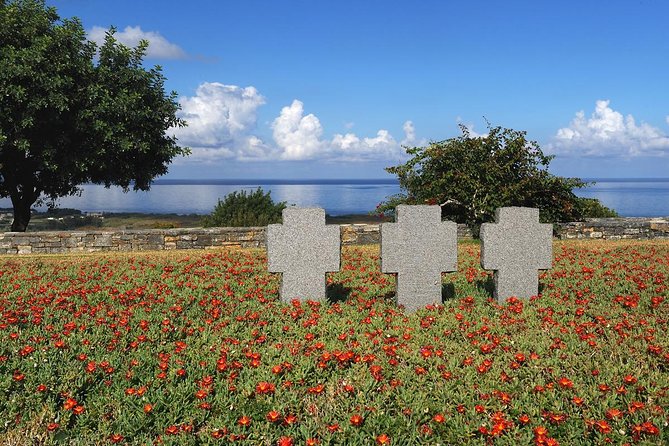
The German Military Cemetery is scheduled for about 30 minutes, and entrance is included.
This stop changes the mood. Instead of discussing tactics alone, you confront the human cost of the campaign and the German dead who were buried here. A cemetery visit requires a quieter pace, and the half-hour gives you time to listen, look around, and reflect without rushing through.
I consider this an essential part of the tour because it keeps the story from becoming a simple contest between opposing armies. The cemetery adds a direct reminder that the battle caused loss on every side. Your guide can also place the site within the wider story of the German invasion and occupation.
Photography may be possible, but this is a place where restraint matters. Follow the guide’s lead and treat the grounds as a memorial rather than a sightseeing backdrop.
Souda Bay War Cemetery and the Commonwealth story
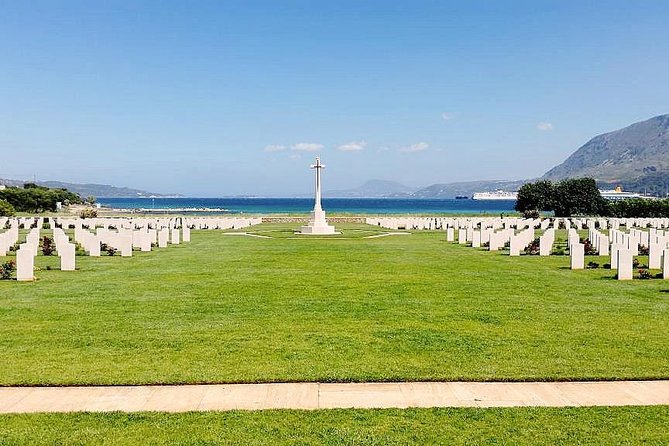
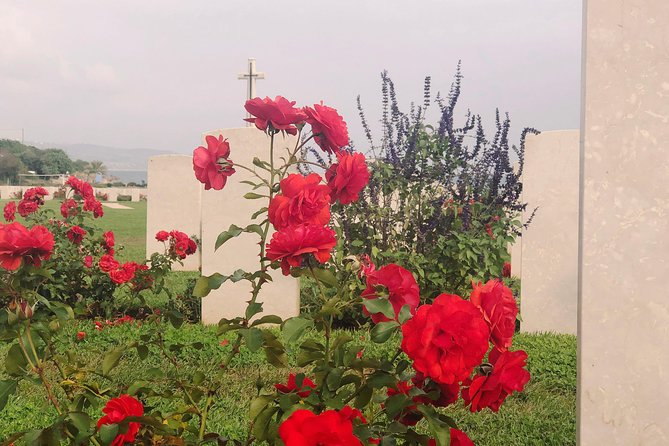
The final listed stop is Souda Bay War Cemetery, where you spend about 30 minutes visiting the British Commonwealth cemetery. Admission is included.
This visit broadens the story beyond the German assault and the fighting around Maleme. The Commonwealth forces came from several parts of the former British Empire, and the cemetery helps you grasp the scale of that international effort. Guides also explain the role of Allied troops and the difficult evacuation from Crete.
For some visitors, Souda Bay carries a personal family connection. The tour has helped people understand where relatives served, were captured, or escaped from the island. One particularly meaningful connection involved a grandfather who reached a ship at Souda Bay and survived evacuation. You cannot know in advance what personal discoveries the stop may bring, but the setting can make family research feel more concrete.
A special flypast by Greek Air Force fighters was arranged for one group, but that was clearly an exceptional coincidence, not a scheduled feature. Do not book expecting it. The cemetery itself is the reason to come.
The private collection and the personal side of the tour
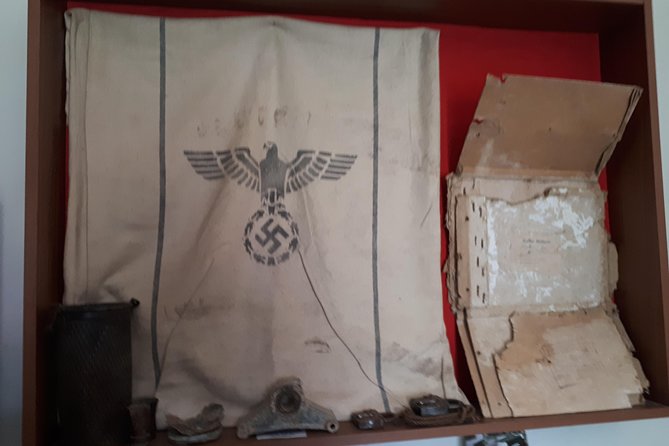
Several accounts describe a visit to a private collection of WWII memorabilia, sometimes at a collector’s home. This is one of the most distinctive elements associated with the experience, though it is not listed among the four formal stops in the basic itinerary.
When included, it adds something a public memorial cannot. You may see battlefield artifacts and hear a personal account of how the collection was assembled. Past visitors have described handling Lee Enfield rifles with bayonets and Tommy guns, an unusual opportunity that gives physical scale to the equipment discussed during the day.
Treat this as a possible addition rather than a guaranteed promise unless the operator confirms it for your date. It may depend on the day’s arrangements and timing. Still, the recurring attention given to the collection suggests that it can become the emotional high point for people who want a closer connection to the material remains of the battle.
The collector’s knowledge also adds a local voice. The tour is not only about textbook facts. It can connect the major military story with objects found, preserved, and remembered in Crete.
The guides are a major part of the value
The experience depends heavily on the person leading it. Names that appear repeatedly in the feedback include Yannis or Giannis, Babis, Ioannis, Stelios, and Nicos. Spelling varies, but the pattern is clear: the operator uses local guides and drivers with different strengths.
Yannis is praised for passion, storytelling, and the ability to answer questions about both WWII and Crete today. Babis is described as engaging, humorous, and well informed about the events of 1941. Ioannis is praised for empathy and for making the invasion and resistance understandable.
Stelios and Nicos have also been singled out as a strong team, with Stelios explaining the battle and Nicos adding information about Crete during the war and the island’s natural setting. You may not be assigned a particular guide, so book for the format and subject rather than a guaranteed individual.
The best guides do more than recite dates. They explain the motivations and personalities of key figures, connect the battle to later events, and make room for questions. That matters because the Battle of Crete can quickly become a blur of place names. A clear storyteller gives the day a usable structure.
Is $114.89 good value?
At $114.89 per person, this is not the cheapest way to spend six hours in Crete. The price makes better sense when you add up what is included: regional pickup and drop-off, air-conditioned transport, an English-speaking local driver or escort, entrance fees, snacks, bottled water, and the time saved arranging the route yourself.
The strongest value comes from interpretation. You are paying to understand what you are seeing, not merely to be driven past it. If you already have a rental car and extensive knowledge of the battle, you may prefer to explore independently. But you would need to research the sites, plan the route, and build your own explanation of how they connect.
The group size also supports the price. With no more than 15 people, and sometimes a much smaller group, you get a more personal experience than a standard bus excursion. Small groups allow more questions and can make family connections easier to discuss.
The tour is booked on average 41 days in advance, so popular dates may fill early. Free cancellation is available up to 24 hours before the start time. Poor weather or failure to meet the minimum group size can lead to a rescheduled tour or full refund.
Who should book this Crete WWII tour?
You should consider it if you have a family connection to the Allied forces, German forces, or Cretan resistance. It is also a good fit for readers of WWII books who want to put the names and movements into a physical setting.
You do not need to be an expert. The tour works for beginners because the guides explain the background, and it works for serious military-history students because you can ask detailed questions. The best experience comes when you stay engaged and speak up if the timeline or geography is unclear.
It may be less suitable if you want a museum-heavy day, long walks over clearly marked combat positions, or a complete tactical reconstruction of every stage of the battle. The schedule covers key places, but the information is dense and some of the battlefield geography can be difficult to follow from viewpoints and maps.
Should you book it?
I would book this tour if you want the human story of Crete in WWII, not just a list of battle sites. The cemeteries, local resistance stories, family connections, and possible private collection visit give the day emotional weight.
Book it especially if you are staying in Chania and do not want to organize scattered sites yourself. Read a short account of the battle first, keep your questions ready, and treat the day as a guided introduction rather than the final word on every military detail.
If that sounds like your kind of history, the combination of local transport, small-group access, and passionate guides makes the $114.89 fare reasonable.
FAQ
How long does the WWII Battle of Crete tour last?
The tour lasts approximately six hours and begins at 9:00 a.m.
Where does the tour start and finish?
Pickup is available from specific places in the Chania region, and the activity returns to the meeting point at the end.
Which sites are included?
The listed stops are Maleme, Tavronitis Bridge, the German Military Cemetery, and Souda Bay War Cemetery.
Is transportation included?
Yes. Transport is provided in an air-conditioned minivan or minibus, with pickup and drop-off from specific Chania region locations.
Is the tour offered in English?
Yes. The tour includes an English-speaking local driver or escort.
What is included besides transportation and entrance fees?
The price includes all entrance fees, bottled water, snacks, taxes, fees, and handling charges.
How many people can join the tour?
The maximum group size is 15 people. Most people can participate, and the tour is near public transportation.
Can I cancel for a refund?
You can cancel up to 24 hours before the experience starts for a full refund. Cancellations or changes made less than 24 hours before the start time are not accepted for a refund.
Just added around Crete
- Crete: Knossos Palace & Heraklion City Tour★ 3.5 · 3 reviews
- Knossos palace (Last minute booking – Skip The Line Ticket)★ 4.5 · 3 reviews
- Cooking Class & Greek Night Experience★ 5.0 · 3 reviews
- Full-Day Tour:Lasithi Plateau -Mythology Park&Knossos Palace★ 3.0 · 3 reviews
- Chania: Private Guided Food and Wine Walking Tour with Lunch★ 5.0 · 3 reviews
- Knossos: Knossos Private Guided Tour★ 5.0 · 3 reviews
- Individual travel accompaniment East Crete★ 5.0 · 3 reviews
- Chania: Knossos Palace – Archaeological museum!★ 3.4 · 3 reviews
Tours, compared.
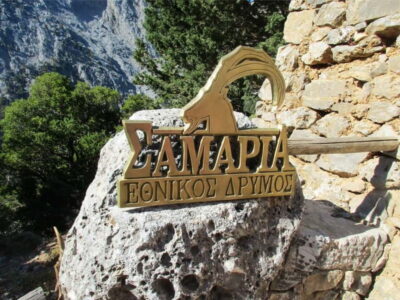
Full-Day Samaria Gorge Trek Excursion & Guide
Read our review →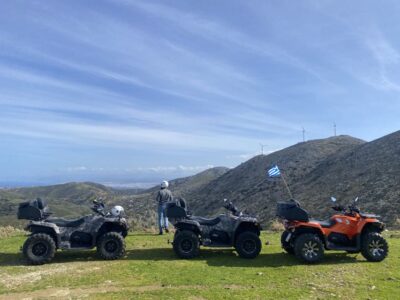
Agia Pelagia Crete Quad Bike authentic backland Tour
Read our review →
Knossos Palace Skip-the-Line Guided Walking Tour
Read our review →
Finikia Horse Riding Tour with Lunch or Dinner
Read our review →
Full-Day Small-Group Tour in Crete with Zeus Cave Visit
Read our review →