

Reviewed · CRETAN WINE TOURS
Gastronomy tour and wine tasting in traditional villages
The best part of this Chania food tour is that it takes you well beyond the city without asking you to rent a car. You move through small villages, old religious sites, family-run restaurants, and an olive oil mill while Yannis explains the food and customs of Crete. The traditional Greek coffee in Armeni and the sheep-milk ice cream in Fres give the day an unusual start.
I like the generous tasting menu and the personal feel. You get two full meals, four local wines, raki, snacks, and olive oil tastings, not just a few small samples. I also like the mix of food and place: Lake Kournas, a 500-year-old church, village streams, and country roads keep the day from becoming a string of restaurant visits. The main drawback is the sheer amount of food, plus the possibility of a cramped sedan if the group is full.
In This Review
- Key points to know before booking
- A food tour that shows you rural Crete
- Armeni and the slow ritual of Greek coffee
- Fres brings sheep-milk ice cream and carob
- A 500-year-old church and a garden of useful plants
- Georgioupolis explains how Cretan olive oil is made
- Lake Kournas turns dinner into a scenic event
- The second meal brings a different side of Cretan cooking
- What Yannis adds to the day
- Comfort, timing, and who should book
- Is this Chania gastronomy tour worth $216.25?
- Should you book it?
- FAQ
- Where does this gastronomy tour take place?
- How long does the tour last?
- Is pickup and drop-off included?
- What language is the tour offered in?
- How many people can join the tour?
- Are meals included?
- What drinks are included?
- Can I try traditional Cretan dishes?
- Does the tour include an olive oil visit?
- What is the cancellation policy?
Key points to know before booking
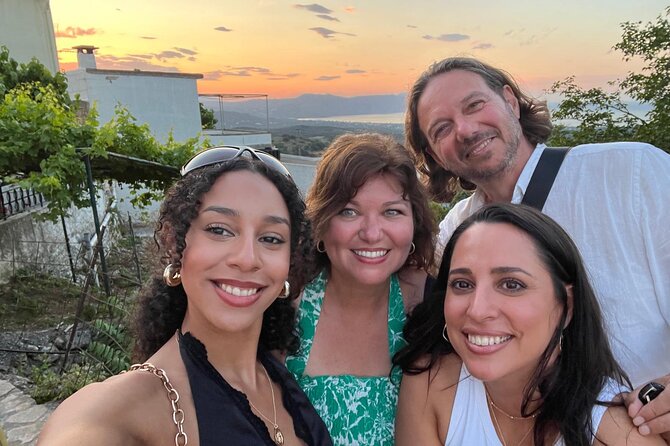
- Greek coffee cooked in hot sand: See a slow, traditional preparation in the village of Armeni, then drink the coffee beneath trees and beside streams.
- Distinctive Cretan tastes: Try sheep-milk ice cream, carob, graviera cheese, raki, olives, olive oil, lamb, stuffed vegetables, and local wine.
- Two full restaurant meals: Lunch and dinner are served at different family restaurants, with several shared dishes rather than one standard plate.
- A useful car-free day: Pickup and drop-off are offered, making it possible to reach villages around Chania without driving.
- A small-group format: The maximum is 12 people, though the vehicle may feel tight when the tour uses a sedan.
- Best for hungry food lovers: The extra appetite note is not a joke. Pace yourself early if you want to try everything.
A food tour that shows you rural Crete
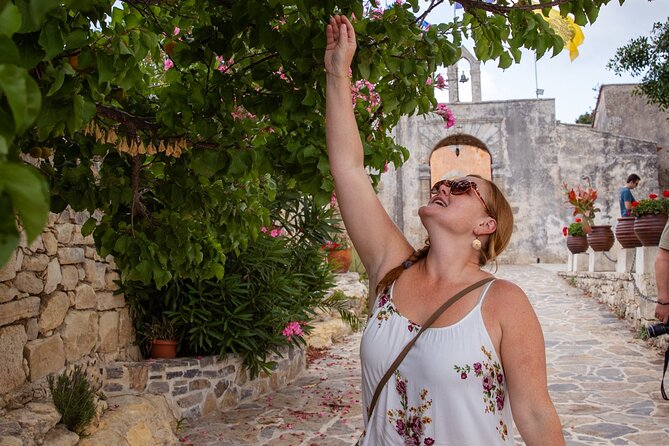
This experience costs $216.25 per person and lasts about five to six hours. That price is not low for a half-day outing, but it covers far more than a typical tasting walk. You are paying for transportation, a guide, two substantial meals, alcoholic drinks, snacks, village visits, an olive oil tour, and pickup and drop-off.
I see the value most clearly if you are staying in Chania without a rental car. A taxi or organized outing to several villages, Lake Kournas, an olive oil mill, and two restaurants would quickly become complicated. Here, the driving is handled for you, and Yannis provides the local connection that makes the stops feel linked rather than random.
The tour is offered in English and accepts a maximum of 12 people. In practice, the group can be smaller, and one solo visitor even had a day with Yannis alone. A small group makes conversation easier, but vehicle comfort depends on the actual number of people. Four passengers plus the guide have previously shared a sedan, and one person spent the ride in the middle seat.
You should also treat the schedule as food-focused. The listed stops add up to several hours, with the remaining time used for driving between villages. This is not a quick tasting route with a snack at every corner. It is a long, sociable meal day with sightseeing built around it.
More Food Tours in Chania
- Walking “Food tasting tour” in the town of Chania
★ 5.0 · 297 reviews - The Delicious Chania Street Food Tour
★ 5.0 · 138 reviews - Sunset Craft Beer & Food Tour – Chania Old Port
★ 5.0 · 86 reviews
Armeni and the slow ritual of Greek coffee
The first stop is Armeni, a village surrounded by trees and streams. Here you visit a traditional coffeehouse and see Greek coffee prepared in hot sand.
This method takes longer than pouring coffee from a machine, and that is the point. The coffee is cooked slowly, which gives it a fuller flavor. You get about 30 minutes at the stop, enough time to watch the preparation and enjoy the setting rather than rush in and out.
For me, this is a smart opening. Coffee gives the group time to meet, and the quiet village setting establishes the tone of the day. You are not starting with a sales pitch or a large meal. You are starting with one small Cretan custom.
Greek coffee is strong and usually served in a small cup. If you prefer a large morning coffee, this will not replace breakfast. Think of it as a local ritual and a gentle introduction to village life.
Fres brings sheep-milk ice cream and carob
In Fres, the food becomes more unusual. You can try ice cream made from sheep milk, a specialty associated with Chania, along with carob flavors and other local tastes.
The sheep-milk ice cream is one of the stops I would especially look forward to. It has a different character from standard dairy ice cream, and the carob flavor gives you a chance to taste a Cretan ingredient in a new form. One useful tip is to try the carob and cherry flavors if they are available.
You also sample graviera, a firm Cretan cheese used for saganaki. Saganaki is often served fried, but here the important point is the cheese itself and its place in local cooking. The shop owner may offer raki, the strong spirit commonly served in Crete.
Raki is included for adults, but you do not have to drink it. Alcoholic beverages are limited to people aged 18 and older. If you are not used to strong spirits, take a small taste or skip it. There is already plenty of food and drink ahead.
This stop is scheduled for 30 minutes. It works best as a short tasting break, not a full shopping visit. You may be able to buy local products, but the main purpose is to sample flavors that you might not come across in Chania’s central restaurants.
A 500-year-old church and a garden of useful plants
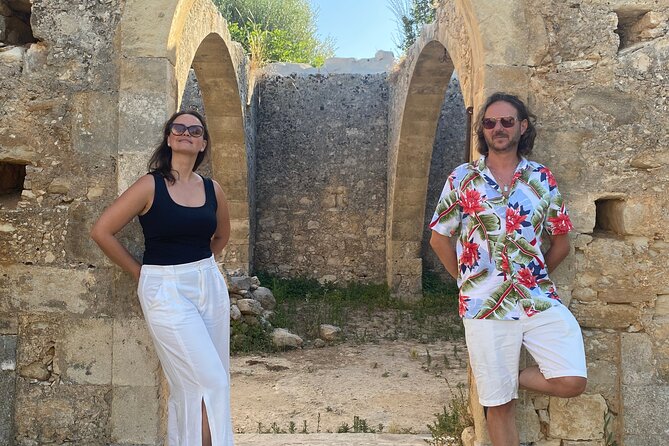
The next stop takes you to an old church in the Apokoronas area. It is at least 500 years old and has an attractive interior and exterior, along with a garden filled with flowers, herbs, and fruit trees.
The garden is part of what makes this stop worthwhile. You may see apricot, fig, banana, carob, walnut, and quince trees. These are not just decorative plants. They help explain the ingredients that appear in Cretan food and the close link between village gardens and the local table.
The church visit lasts about 45 minutes. You get a pause from eating and a chance to see a quieter side of the region. The building’s age gives the stop historical weight, but the experience is not presented as a formal museum visit. Expect a guided look at the site and its setting.
There is also a mention of an ancient olive oil mill connected with the church area. That detail helps connect the religious site to the working life of the village. Olive oil in Crete is not an abstract gourmet product. It is part of farming, family meals, preservation, and daily cooking.
A separate village stop includes a river passing through it. The exact length is not specified, so you should think of this as a scenic pause along the route rather than a major walking tour. The countryside views and village roads are one of the quieter pleasures of the day.
More Traditional Village Tours in Chania
- Elafonissi Beach Day Trip from Chania -Stop in Elos Village
★ 4.5 · 744 reviews - The 7 Villages of Apokoronas Tour – Explore East Chania Mainland
★ 5.0 · 178 reviews - Elafonissi Beach Tour from Chania with stop in Elos Village
★ 4.5 · 168 reviews - From Chania: Imbros Gorge Guided Hike and Village Visit
★ 4.5 · 133 reviews
Georgioupolis explains how Cretan olive oil is made
At Georgioupolis, you visit a modern olive oil mill. Antonis, the producer, guides you through the facility and explains the process of making olive oil. You can ask questions, then taste virgin olive oil and olives.
This is more useful than a simple tasting because it gives you context. You can compare the oil’s taste with the oil used in the meals later in the day, and you can ask how the product reaches the bottle. The guide’s connection with Antonis also gives the visit a personal, working-farm feel.
The stop lasts about 45 minutes. An exhibition area offers products such as olive oil, olives, handmade cooking pots, and other traditional goods. You can buy souvenirs, but there is no pressure in the description of the experience. If you already plan to take home olive oil, this is a practical place to compare products.
I like this stop because it answers a basic question many visitors have: why does olive oil matter so much in Cretan cooking? After tasting it on its own, you will notice it differently when it appears in vegetables, lamb, sauces, and stuffed leaves at the restaurants.
The combination of the old church and the modern mill also gives you two views of olive oil production. One connects it to earlier village life, while the other shows a current producer at work.
Lake Kournas turns dinner into a scenic event
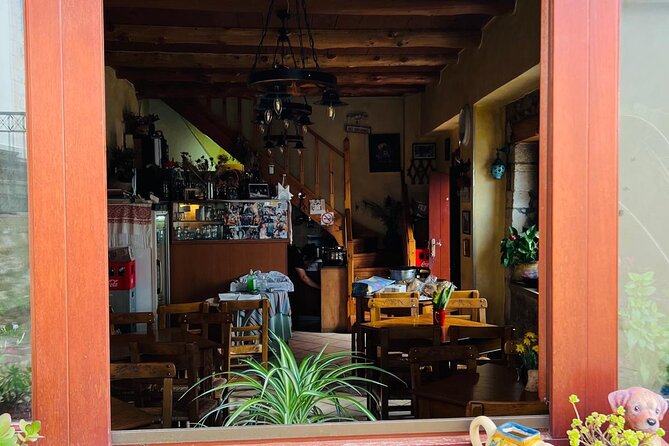
The first full meal takes place beside Lake Kournas, Crete’s largest lake according to the tour description. The setting gives you views of the lake, mountains, and sea, making this more than a standard restaurant stop.
The menu centers on traditional Cretan dishes. You may taste tsigariasto arni, lamb cooked with oil and wine; antikristo arni, lamb slowly cooked over a fire; dolmadakia, grape leaves stuffed with rice; kolokithoanthous, zucchini flowers stuffed with rice; and imam baildi, eggplant cooked with garlic, onion, fresh tomato sauce, cream cheese, and olive oil.
You also get four local wines. The wine is part of the meal rather than a separate tasting class, so do not expect a formal winery presentation. Instead, you can try several local pours alongside food and ask Yannis about what you are drinking.
This meal lasts about 1 hour and 15 minutes. Portions are generous, and several dishes are placed on the table for sharing. That is excellent if you want variety, but it can be difficult to pace yourself. You still have another full meal later.
If lamb is a priority, Sunday may be the best day to book. Antikristo and other lamb dishes can vary by restaurant and day, so the Sunday tip is worth keeping in mind. It is not a guarantee of one exact menu, but it may improve your chance of finding more lamb-centered cooking.
Vegetarian, vegan, and gluten-free choices are available. You should make your needs clear when booking or at the start of the tour, since the meal includes many meat dishes.
The second meal brings a different side of Cretan cooking
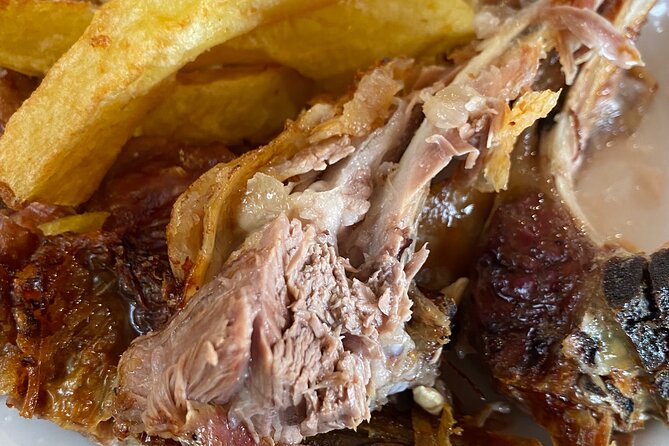
The final major stop is another family restaurant in Apokoronas. The menu is deliberately different from the lake meal, so you continue tasting rather than repeating the same lamb and vegetable dishes.
Possible dishes include chicken cooked with grape juice, pork with tomato sauce and peppers, smoked pork seasoned with oregano and sage, and mushrooms marinated with beer. The meal lasts another 1 hour and 15 minutes.
This second restaurant gives you a broader view of Cretan home-style food. Grape juice, herbs, beer, tomato, and slow cooking all appear in different forms. You are not simply getting the same meat platter twice.
Still, this is where the tour’s main weakness becomes clear. Two large meals in a five to six-hour experience can be too much, especially after coffee, ice cream, cheese, olive oil, wine, and raki. I would eat lightly before pickup and take small portions early in the day. Sharing is encouraged by the menu, so you do not need to finish every dish to get a fair taste.
There is also a practical food-waste concern. The restaurants may put several dishes on the table, and the portions can be larger than you expect. If you are full, say so and slow down. The point is to taste the range of food, not prove how much you can eat.
What Yannis adds to the day

The guide is Yannis, also spelled Yiannis in some references to the experience. His role is central. He drives, explains the food and customs, introduces you to producers and restaurant owners, and provides background on Cretan culture, history, and mythology.
The strongest personal feature of the tour is the way Yannis treats the day as a shared experience rather than a fixed script. He is described as friendly, professional, enthusiastic, and willing to talk about life in Crete as well as ask about your own background. He may also take photos for you with your phone, which is helpful when you are traveling alone.
Yannis’s wife may also be involved in hosting the experience. The important thing for you is the warm, family-linked atmosphere at the food stops. You are not being moved through anonymous venues. The guide knows the people serving the food and can explain why each place is part of the route.
That personal style suits visitors who want conversation and local context. If you prefer to eat privately or spend long periods exploring each site on your own, the steady schedule may feel less comfortable.
Comfort, timing, and who should book
Pickup and drop-off are offered from your designated spot, and the vehicle is air-conditioned. That matters in warmer months, since the route includes several drives between villages.
Vehicle size is the main comfort question. The group limit is 12, but previous outings have used a sedan for a smaller group. If you are tall or dislike tight back seats, ask about the vehicle when booking. This is a reasonable question, especially if the tour fills.
The experience is best for:
- People staying in Chania without a rental car
- Food lovers who want traditional dishes instead of a short city tasting
- Couples, families, and solo visitors who enjoy conversation
- Visitors curious about olive oil, village customs, and Cretan ingredients
- Adults who are comfortable with wine and strong spirits
It may not suit you if you want a light lunch, a strict sightseeing schedule, or a formal wine education. The wine is an important part of the meal, but the day is broader than wine tasting alone.
The tour is booked an average of 63 days in advance, so it is sensible to reserve early if your dates are fixed. Free cancellation is available up to 24 hours before the start time. After that point, the payment is not refunded, and changes are not accepted.
Is this Chania gastronomy tour worth $216.25?
For a simple meal, no. For transportation, guiding, two full restaurant meals, four wines, raki, snacks, tastings, village visits, an olive oil mill, and a historic church, the price is easier to justify.
I would compare it with the cost and effort of renting a car, finding the villages, arranging parking, choosing restaurants, and avoiding alcohol while driving. If you are already hiring a car and plan to visit Apokoronas and Lake Kournas yourself, the value is less clear. You would gain more control and could spread the meals over a full day.
But if your priority is access to local places without planning every detail, the package is strong. The best value comes from the guide’s local relationships and the number of food experiences packed into one outing. You are not only paying for calories. You are paying for access, driving, explanations, and a route that would be hard to reproduce on your own.
Should you book it?
Book this tour if you want to see rural areas around Chania, eat a large amount of traditional Cretan food, and let a local guide handle the driving. Come hungry, but pace yourself. The coffee, sheep-milk ice cream, carob, olive oil, lake views, lamb, wine, and village stops give you a broad taste of Crete in one day.
Skip it if two substantial meals sound excessive or if a cramped vehicle would spoil the outing. For most food-focused visitors, especially those without a car, this is a practical and memorable way to reach parts of Crete that are easy to miss from Chania.
FAQ
Where does this gastronomy tour take place?
The tour begins in the Chania area and visits traditional villages including Armeni, Fres, Georgioupolis, and parts of Apokoronas. It also includes Lake Kournas.
How long does the tour last?
The experience lasts approximately five to six hours. The remaining time in the schedule is used for travel between the stops.
Is pickup and drop-off included?
Yes. Pickup and drop-off are included from your designated spot.
What language is the tour offered in?
The tour is offered in English.
How many people can join the tour?
The maximum group size is 12 travelers.
Are meals included?
Yes. Lunch and dinner are included, with each meal served at a family restaurant. Vegetarian, vegan, and gluten-free food options are available.
What drinks are included?
The tour includes four local wines, raki, Greek coffee, and other tastings. Alcoholic beverages are available only to people aged 18 and older.
Can I try traditional Cretan dishes?
Yes. Possible dishes include lamb, stuffed grape leaves, stuffed zucchini flowers, eggplant, chicken, pork, smoked pork, mushrooms, and other local foods.
Does the tour include an olive oil visit?
Yes. You visit a modern olive oil mill in Georgioupolis, where Antonis explains the production process. You can taste virgin olive oil and olives.
What is the cancellation policy?
You can cancel up to 24 hours before the experience starts for a full refund. Cancellations or changes made less than 24 hours before the start time are not accepted for a refund.
More Wine Tours in Chania
- Crete Wine and Olive Oil Tour
★ 5.0 · 272 reviews - Wine & Olive Oil Tour with Lunch at Milia Mountain Retreat
★ 5.0 · 194 reviews - Wine & Olive Oil Tour with Lunch – Semi Private Safari Tour
★ 5.0 · 156 reviews - PRIVATE Walking Tour with Lunch and Wine Tasting by a Sommelier
★ 5.0 · 113 reviews
Just added around Chania
- Cooking Class & Greek Night Experience★ 5.0 · 3 reviews
- Chania: Private Guided Food and Wine Walking Tour with Lunch★ 5.0 · 3 reviews
- Chania: Knossos Palace – Archaeological museum!★ 3.4 · 3 reviews
- Chania Highlights:Venizelos, Stavros, Agia Triada & Marathi★ 5.0 · 3 reviews
- Chania: Private Tour to Balos Lagoon★ 5.0 · 3 reviews
- Your Tailored Samaria Tour That Nobody Will Believe. From Chania.★ 5.0 · 3 reviews
- Sips of Crete: Flavors, Legends & Hidden Gems★ 5.0 · 3 reviews
- Elafonisi Beach Tour★ 3.3 · 3 reviews
Cretan Wine Tours, compared.

Land Rover Safari with Sunset Viewing, Dinner, & Wine
Read our review →
Full-Day Cretan Wines, Olive Oil, Raki and Food Tour
Read our review →
Wine & Olive Oil Tour with Lunch at Milia Mountain Retreat
Read our review →
Heraklion SUV Private Guided Wine Tour with Lunch
Read our review →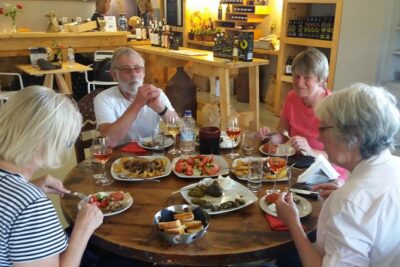
Wine & Olive Oil Tour with Lunch – Semi Private Safari Tour
Read our review →Browse the lists this tour appears in