
Reviewed · WORKSHOPS
Heraklion Crete: Cretan and Greek Dance Lesson at Arolithos
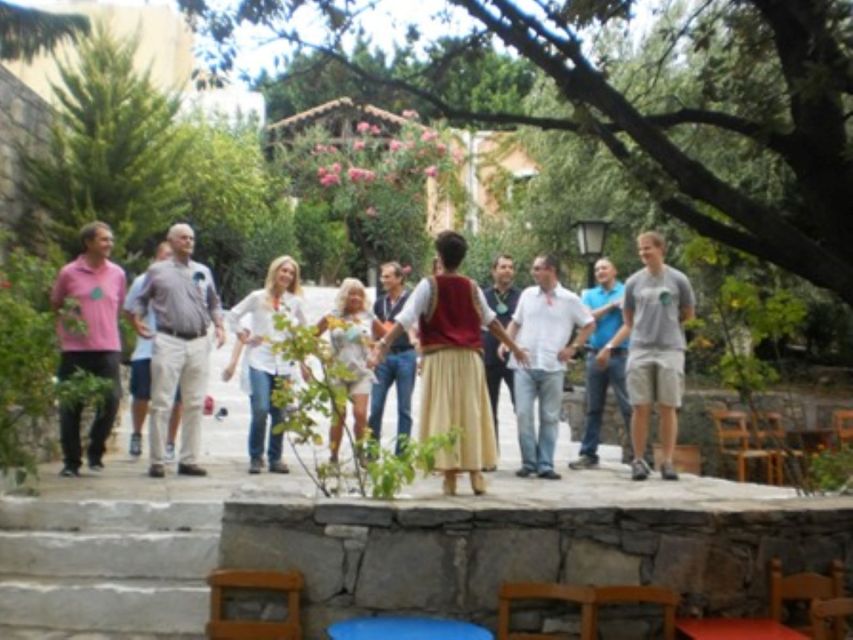
The best part of this experience is that you do not just watch Cretan culture, you learn its steps. At Arolithos Traditional Cretan Village, professional dancer Maria, or sometimes Evi, teaches you dances such as Sousta and Zorba the Greek, then shows you the village and its small Rural History and Folk Craft Museum.
I like the personal teaching and the setting. Maria leads a local dance group and teaches children and adults, while Evi is known in the Tilissos area for her Cretan dancing. I also like the little extras: a drink on the terrace, a complimentary music CD, and a dance certificate you can take home.
The main drawback is value. At $106 per person, this is not a cheap two-hour activity, and one account found the actual dancing lasted about an hour. Getting to Arolithos can also be awkward without clear directions or your own transport, since hotel pickup is not included.
In This Review
- Key points before you book
- Why a dance lesson works so well in Crete
- Arrival at Arolithos and the terrace welcome
- The museum and old village houses
- Learning Sousta, Zorba, and other Greek dances
- The small rewards at the end
- Is $106 per person fair value?
- Who will enjoy this experience most
- Booking details worth checking
- Should you book the Arolithos dance lesson?
- FAQ
- Where does the dance lesson take place?
- How long does the experience last?
- Who teaches the Cretan dances?
- Which dances can you learn?
- Is transportation included?
- What should you bring and wear?
- Is the activity suitable for everyone?
Key points before you book
- Learn four or more dances: Lessons can include Sousta, Zorba the Greek, and other Cretan and Greek dances, with steps adjusted to your level.
- Meet Maria or Evi: You are taught by a professional dancer in traditional dress, not by a general sightseeing guide.
- See Arolithos from the inside: The short tour includes old houses, village buildings, and the Rural History and Folk Craft Museum.
- Finish with local touches: You receive a drink, a Greek and Cretan music CD, and a dancing certificate.
- Plan your own way there: Arolithos is on the old Heraklion to Rethymnon road, and hotel transfers are not included.
- Best for active culture fans: Comfortable shoes are essential, and the lesson is not suitable for pregnant people, wheelchair users, or those with back problems.
Why a dance lesson works so well in Crete
Cretan dance is not just a staged performance for visitors. It is tied to village life, local celebrations, family gatherings, and regional identity. Even a basic lesson gives you a better sense of how music, posture, rhythm, and community fit together.
You will not become an expert in two hours. That is not the point. The reward is learning a few steps well enough to recognize them later, and perhaps joining a circle if you encounter live music during the rest of your trip.
The lesson takes place at Arolithos, a traditional Cretan village complex about 11 kilometers along the old road from Heraklion toward Rethymnon. The setting gives the activity more character than a dance studio in town. You are surrounded by old-style buildings and village details before the music even begins.
The group is private, which matters here. You can ask questions, repeat a difficult step, or slow down without worrying about a large class moving ahead. The teaching is also suitable for mixed ability levels. One family included a 70-year-old parent and children aged five and eight, and the instructor adapted the lesson to the group.
Other Crete days people book alongside this one:
- From Kissamos Port: Boat Cruise to Balos Lagoon & Gramvousa
★ 4.2 · 6,755 reviews - Crete: Day Trip to Agios Nikolaos and Spinalonga Island
★ 4.6 · 4,416 reviews - From Chania: Full-Day Samaria Gorge Trek Excursion & Guide
★ 4.6 · 3,191 reviews
Arrival at Arolithos and the terrace welcome
Your meeting point is Arolithos Traditional Cretan Village. Since there is no hotel pickup or drop-off, you need to arrange your own transportation and allow time to find the entrance. One person had trouble with GPS directions that led toward the top of a mountain before the location was found at the hotel complex, so do not rely blindly on the first route your phone suggests.
Once you arrive, the experience begins with a welcome drink on the terrace. The terrace has a panoramic view, and the pause gives you time to get oriented before the activity starts. Depending on the arrangement that day, you may receive orange juice, raki, or both. The setting is calm and open, a useful contrast if you have spent the morning in central Heraklion.
Arolithos is also a hotel and has a tavern and swimming pool. You can use your free time after the lesson to eat and relax there, but lunch and pool use are not listed as part of the activity price. Ask on arrival about current availability and any separate cost.
The village is quiet rather than lively. That will suit you if you want a slower cultural stop, but it may feel too still if you expect a busy town with shops, street life, and lots of activity.
The museum and old village houses
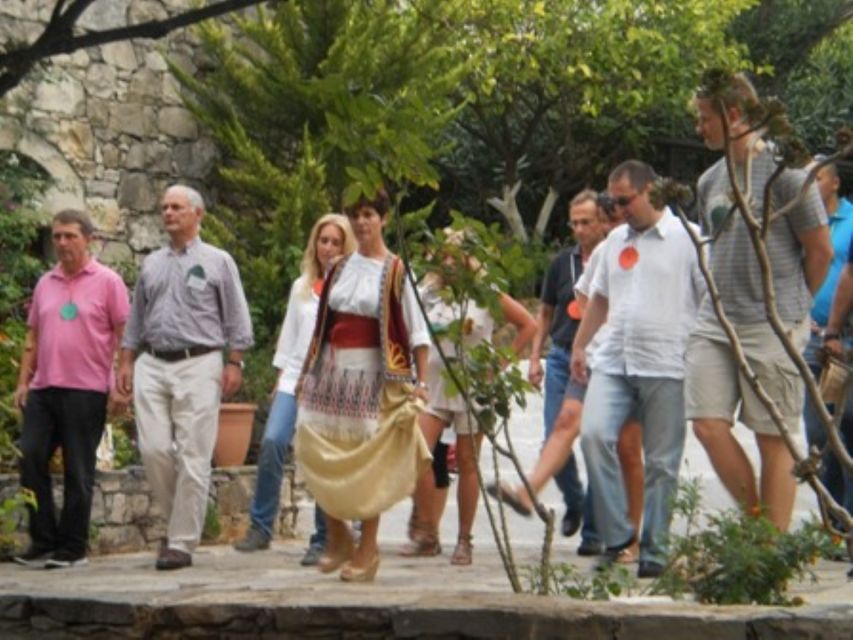
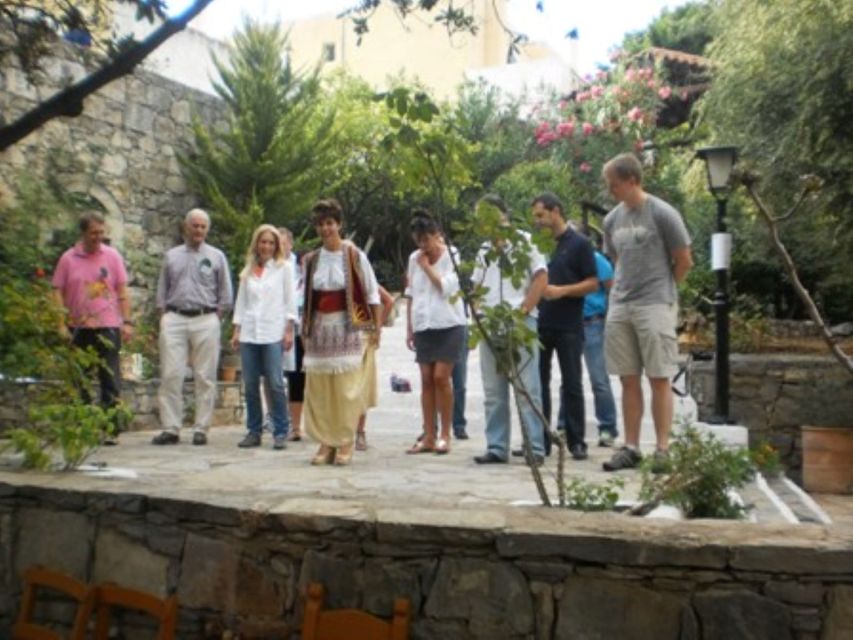
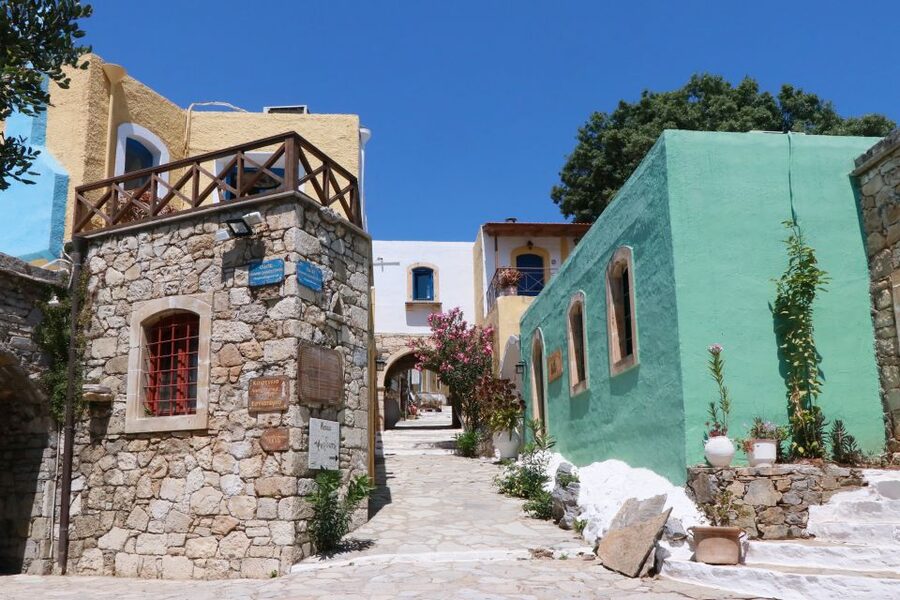
The short tour of Arolithos usually comes before the dance lesson, though part of it may take place afterward. You see the Rural History and Folk Craft Museum, old houses, and other parts of the village.
The museum is small, but it gives the lesson a useful setting. You are not learning isolated dance moves with no context. The displays and traditional interiors help explain the domestic world in which these dances developed. One tour included a look at original homes representing both wealthier and poorer households, which made the visit more revealing than a quick walk past decorative buildings.
Give yourself time to ask questions. When the group is small, the guide can respond to your interests instead of delivering a fixed speech and moving on. The museum is especially worthwhile if you want more than a photograph in traditional dress.
Arolithos has also served as a film location, adding a little visual interest to the stop. Still, keep your expectations in check. This is a compact village and a small museum, not a major archaeological site or a full-scale open-air museum. The attraction lies in how the buildings, museum, and dance lesson work together.
Learning Sousta, Zorba, and other Greek dances
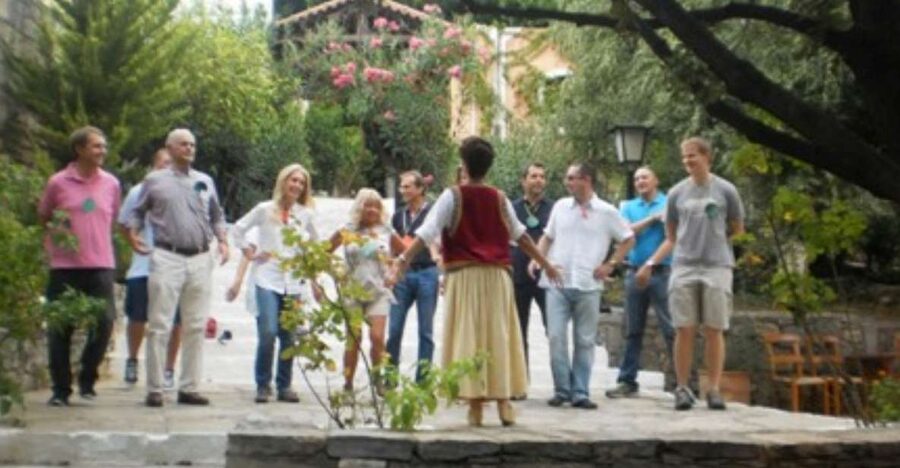
After the introduction, Maria or Evi leads the dancing session. Maria is a professional Cretan and Greek dancer, leader of the Arolithos dance group, and a teacher for children and adults through a local cultural association. Evi sometimes helps with the lessons and is also an experienced Cretan dancer from the Tilissos area.
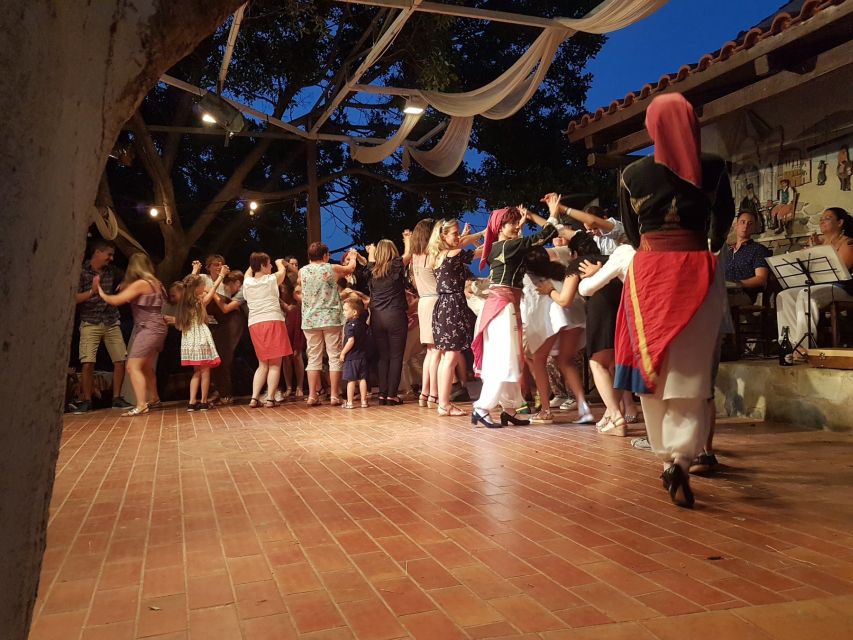
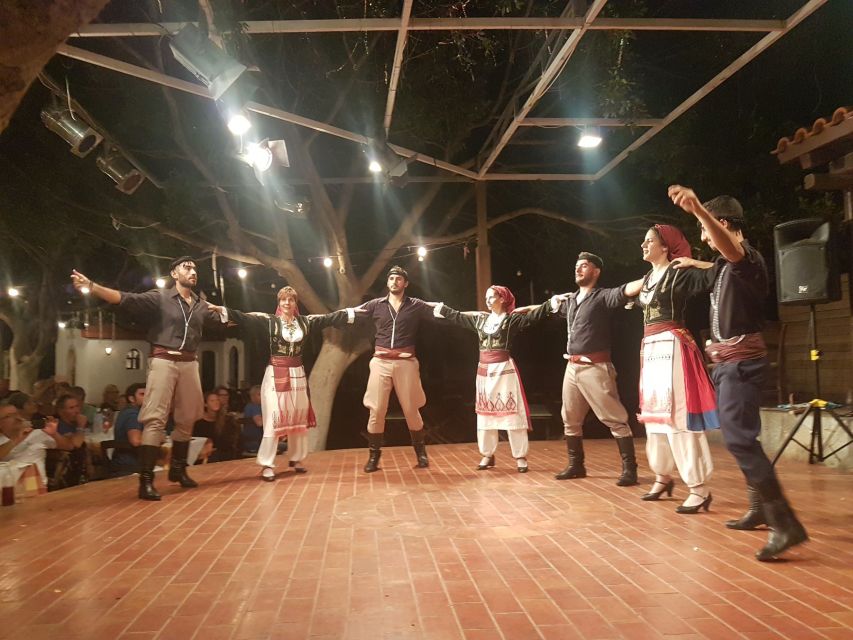
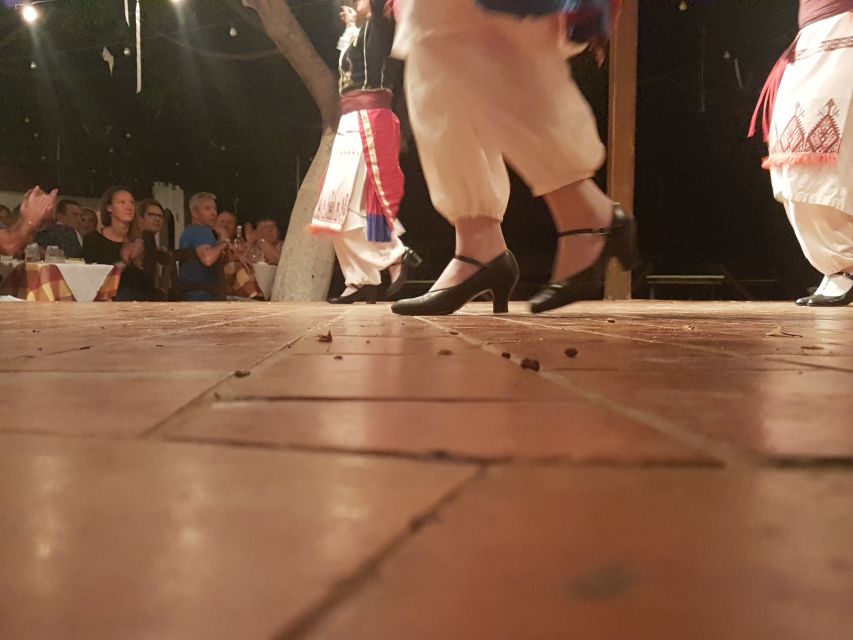
The instructors teach in traditional dress and begin with basic steps. The session can cover at least three or four dances, moving from easier patterns to more demanding ones. Sousta may be included, along with Zorba the Greek and other popular Cretan or Greek dances.
The teaching style is practical. You watch the footwork, copy it, and repeat until the sequence starts to make sense. You may also work on the handhold and group movement used in traditional dancing. Do not worry if you have two left feet. The point is not a polished performance, and the instructors can adjust the pace to your ability.
The strongest feature is the human side of the lesson. Evi has been described as patient and easy to follow, while another lesson was praised for making beginners feel comfortable. That matters more than the number of dances on the schedule. A teacher who can correct you kindly will make the hour far more useful than a fast demonstration followed by little practice.
The official duration is two hours for the full activity, including the village visit. One person found that the actual dance portion lasted about an hour and learned four dances. If dancing is your main reason for booking, ask at the beginning how much time will be spent on the tour and how much on dancing.
You should wear comfortable shoes. The lesson involves movement, and the experience is not recommended for anyone with back problems or for pregnant participants. It is not wheelchair accessible. Smart-casual clothing is requested, so pack something neat but loose enough for movement.
Same island, a completely different day out:
- Agios Nikolaos: Boat Trip to Spinalonga with Swim Stop
★ 4.4 · 3,031 reviews - Heraklion: Dia Island Sailboat Cruise with Swimming and Meal
★ 4.8 · 2,579 reviews - Crete: Knossos Palace Entry Ticket with Optional Audio Guide
★ 3.9 · 2,251 reviews - Heraklion Area: CRETAquarium Admission Ticket
★ 4.4 · 2,055 reviews
The small rewards at the end
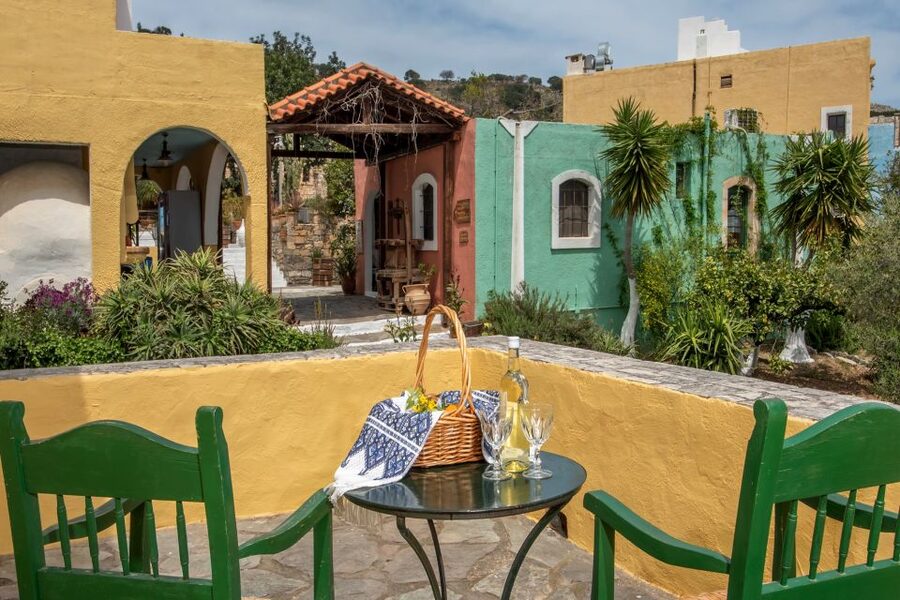
At the end, you receive a copy of a CD with Cretan and Greek music. This is a modest gift, but it has real use. You can listen to the music later and connect it with the steps you learned, rather than leaving the experience as a set of disconnected photographs.
You also receive a dancing certificate. It is a souvenir rather than a formal qualification, but children will likely enjoy it, and it gives families a tangible reminder of the lesson.
The closing drink adds another local touch. Orange juice and raki with nuts have been served outdoors at the hotel restaurant after the dancing. Raki is strong, so take the juice if you prefer not to drink alcohol, and do not treat the tasting as an obligation.
If you have extra time, the tavern and pool let you extend the visit. This makes the activity easier to fit into a relaxed day, especially if you are staying nearby. It is less convenient if you need to rush back to Heraklion for another timed attraction.
Is $106 per person fair value?
The stated price is $106 per person. That is a substantial amount for two hours, particularly if you measure value only by the time spent dancing. One person compared the cost with an 80-euro price and felt it was high, even while describing the activity as fun.
I would judge the price by what you want from the day. You are paying for a private-group lesson, a professional instructor, entrance to the museum, a guided village visit, a welcome drink, a CD, and a certificate. You are also paying for access to a local cultural setting rather than a basic dance class in a hotel meeting room.
The value improves for a family or small group that wants a tailored activity. Children and older adults can take part if they are comfortable moving, and the instructor can adapt the pace. The price feels harder to justify if you are a confident dancer seeking a long, technical workshop.
At this cost, I would confirm the planned timetable before booking. Ask how much of the two hours will be devoted to dancing, especially if your schedule is tight. If the activity is important to you, the personal instruction and cultural setting may make the price worthwhile. If you simply want to try one Greek dance, a local festival or evening performance may be cheaper, though it will not give you the same hands-on teaching.
Who will enjoy this experience most
I would choose this for you if you like cultural activities that ask you to participate. It suits couples, families, and small groups who want a memorable break from monuments and beaches.
It is also a good choice for first-time dancers. You do not need previous training, and the instructors are used to working with different levels. A family group can make it work across generations, as long as everyone is willing to move and the younger children can follow directions.
The activity is less suitable for anyone looking for a major museum, a long dance workshop, or a busy entertainment venue. Arolithos is quiet, and the museum is compact. If you dislike organized instruction or feel uncomfortable dancing in front of other people, even a private lesson may not appeal.
The location also favors people with independent transport or a clear taxi plan. Since pickup is not included, the journey needs attention before the day begins.
Booking details worth checking
You can cancel up to 24 hours before the activity for a full refund, and the reserve-now, pay-later option keeps you from paying at the time of booking. Availability determines the starting time, so check the schedule against your other plans.
The experience is offered in English and Greek. It is a private group, which gives you a better chance to ask questions and request more practice on a particular dance.
Bring a passport or ID card and wear comfortable shoes. Smart-casual dress is expected. The activity is not wheelchair accessible and is not suitable for pregnant women or people with back problems.
Should you book the Arolithos dance lesson?
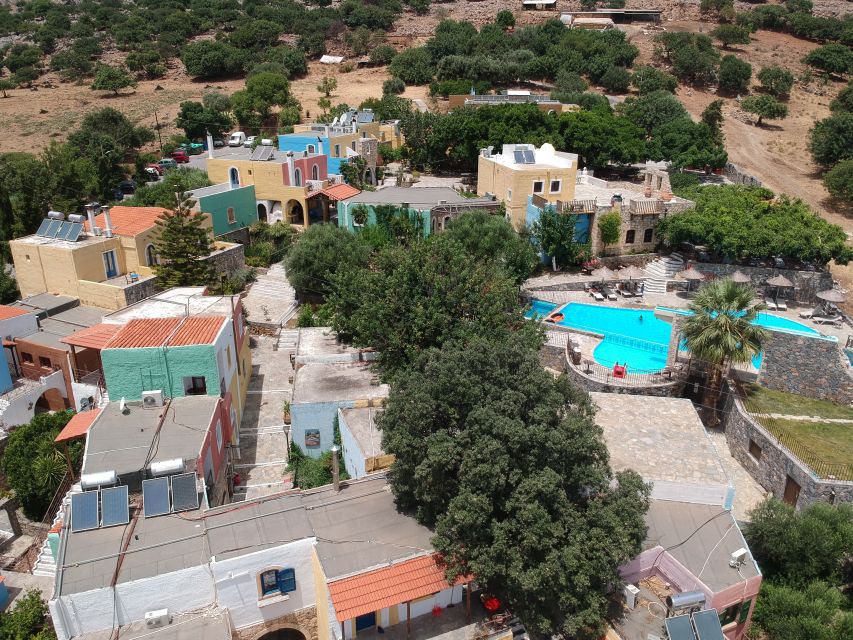
Book it if you want to take part in Cretan culture, not simply view it. The combination of a patient professional teacher, traditional village buildings, a small folk museum, music to take home, and the terrace drink creates a rounded two-hour outing.
I would be most likely to recommend it to families, first-time dancers, and anyone staying near Heraklion who has arranged reliable transport. I would hesitate if you have a strict budget, need a full two hours of dancing, or expect a large museum and a lively village atmosphere.
Before paying $106, confirm the balance between the museum tour and dance lesson. If the schedule gives you a solid lesson with Maria or Evi, the activity offers a personal way to meet Cretan traditions. If you want only a quick taste of Zorba, the price may feel steep.
FAQ
Where does the dance lesson take place?
It takes place at Arolithos Traditional Cretan Village, at the 11th kilometer of the old road from Heraklion to Rethymnon.
How long does the experience last?
The advertised duration is two hours. This includes the dance lesson and the visit to Arolithos Village and its museum.
Who teaches the Cretan dances?
Maria is the main professional dance teacher described for the experience. Evi, an experienced Cretan dancer from the Tilissos area, may also help or lead the lesson.
Which dances can you learn?
The lesson can include Sousta, Zorba the Greek, and other popular Cretan and Greek dances. The exact number depends on the group and its level.
Is transportation included?
No. Hotel pickup and drop-off are not included, so you must arrange your own way to and from Arolithos.
What should you bring and wear?
Bring a passport or ID card and wear comfortable shoes. Smart-casual clothing is requested.
Is the activity suitable for everyone?
It is not recommended for pregnant women or people with back problems, and it is not wheelchair accessible.
Just added around Crete
- Crete: Knossos Palace & Heraklion City Tour★ 3.5 · 3 reviews
- Knossos palace (Last minute booking – Skip The Line Ticket)★ 4.5 · 3 reviews
- Cooking Class & Greek Night Experience★ 5.0 · 3 reviews
- Full-Day Tour:Lasithi Plateau -Mythology Park&Knossos Palace★ 3.0 · 3 reviews
- Chania: Private Guided Food and Wine Walking Tour with Lunch★ 5.0 · 3 reviews
- Knossos: Knossos Private Guided Tour★ 5.0 · 3 reviews
- Individual travel accompaniment East Crete★ 5.0 · 3 reviews
- Chania: Knossos Palace – Archaeological museum!★ 3.4 · 3 reviews
Workshops, compared.
Authentic Cooking Class in the White Mountains
Read our review →
Beginner Scuba Diving Lesson with PADI Instructor
Read our review →
Chania Cooking Class-The Authentic Enjoy traditional Cretan meal
Read our review →
Moires: Cooking Class and Olive Oil Tasting at a Family Farm
Read our review →
Sightseeing Day Trip with Cooking Lesson and Lunch
Read our review →
Browse the lists this tour appears in