
Reviewed · WALKING TOURS
Rethymno: Old Town Walking Tour with Meal
Rethymno’s best food lesson may begin with a small cheese pie and end under a lemon tree. This four-hour walk links Old Town history with the food on your plate, moving from a Greek kafeneio to tastings, a famous phyllo workshop, and a full Cretan meal.
I like the slow pace and the chance to learn how locals judge honey, olive oil, and raki instead of simply sampling them. I also like the personal touch from guides such as Vincent, Maria, and Michael, who explain architecture, occupation, customs, and present-day life as you walk.
The main consideration is the price: $205 per person is a serious outlay for a four-hour experience. It makes better sense if you value a private or small-group setting, a full meal, several tastings, and practical food advice rather than a quick snack crawl.
In This Review
- Key points at a glance
- Why this Rethymno food walk works so well
- Starting at the kafeneio with Cretan breakfast
- Honey, olive oil, and raki with a local point of view
- The old lanes and Venetian houses
- Watching a master stretch paper-thin phyllo
- Lunch or dinner under the lemon trees
- What the guides add
- Is $205 per person good value?
- Who should book this experience?
- Should you book the Rethymno Old Town food tour?
- FAQ
- How long does the Rethymno Old Town walking tour last?
- Where does the tour start?
- What food is included?
- Is a vegetarian meal available?
- Which languages are available?
- Is hotel pickup included?
- Is this a private tour?
- Can I cancel for a full refund?
Key points at a glance
- Begin with sfakianopita: A traditional Cretan cheese pie arrives with handmade jam, coffee, or fresh juice.
- Learn to taste like a local: Honey, olive oil, and raki become subjects for comparison, not just quick samples.
- Watch phyllo made by hand: Yorgos Hatziparaschos has worked phyllo dough for more than 63 years.
- Walk through layered Rethymno: Venetian houses, Ottoman details, narrow lanes, and modern Cretan life all enter the conversation.
- Finish with a garden feast: A full lunch or dinner is served in an Ottoman-style inner garden beneath lemon trees.
- Best for food and culture: You get a useful introduction to Rethymno, but this is not a sightseeing tour built around major monuments.
Why this Rethymno food walk works so well
Many food tours rush from bite to bite. This one gives each stop room to breathe. You sit for breakfast, pause for tastings, watch a craft demonstration, and then spend about an hour and a half over a proper meal.
That rhythm matters in Crete. Food here is tied to family, land, hospitality, religion, occupation, and daily habits. A good guide can use a piece of pie or a spoonful of honey to explain far more than the dish itself. The strongest guides on this tour, including Vincent, Maria, and Michael, appear to take that role seriously.
The walk also gives you a useful first look at Rethymno. You pass through the Old Town’s tight streets and stone-built Venetian houses while hearing how different periods shaped the city. Several participants particularly valued the way guides connected architecture and food to the periods of Venetian and Ottoman rule, as well as to modern life on Crete.
I would book it early in your stay. You will get a map in your head, learn which places and foods deserve your attention, and gain a better sense of how to avoid mediocre tourist fare later. You may also want to eat a light breakfast first. The tour starts with food, and the final meal is described as generous.
More walking tours in Crete:
- Knossos: Knossos Palace Skip-the-Line Guided Walking Tour
★ 4.8 · 1,380 reviews - Heraklion: Food Tastings Walking Tour
★ 5.0 · 136 reviews - PRIVATE Walking Tour with Lunch and Wine Tasting by a Sommelier
★ 5.0 · 113 reviews
Starting at the kafeneio with Cretan breakfast
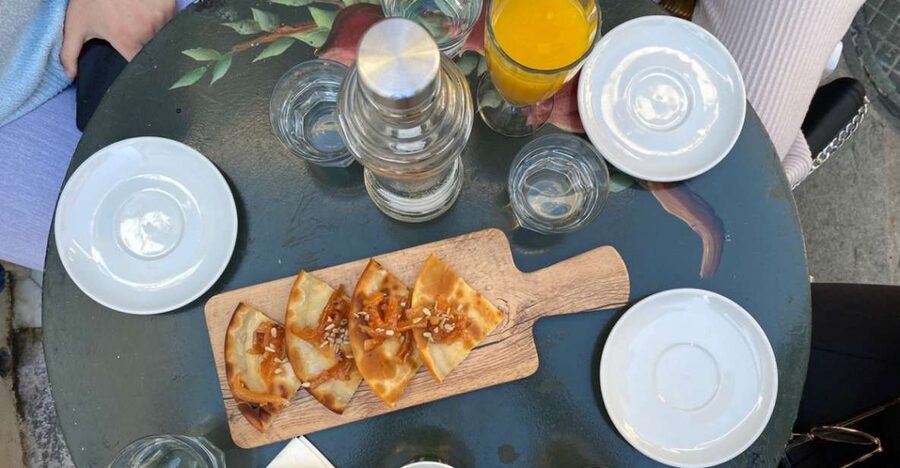
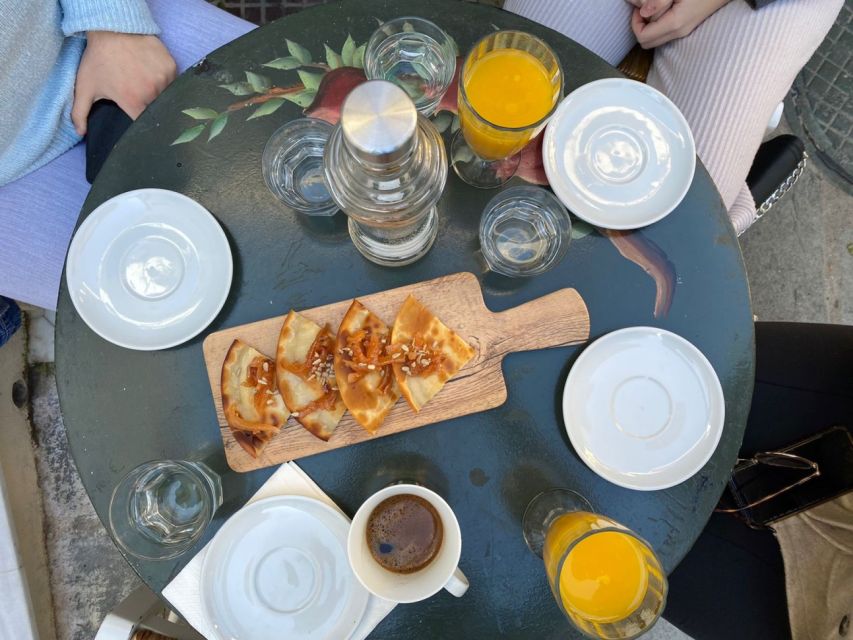
The meeting point is at Gerakari 4, where the walk begins at a Greek-style kafeneio in the center of Rethymno. This is not a grab-and-go coffee stop. You sit down and start with either traditional Greek coffee or fresh juice, along with sfakianopita.
Sfakianopita is a thin Cretan cheese pie, traditionally associated with the Sfakia area. Here it is served with a layer of handmade jam, giving you a sweet contrast to the salty cheese. It is a modest-looking start, but it introduces a key Cretan habit: simple ingredients treated with care.
Breakfast lasts about 40 minutes. That time allows your guide to explain local customs and how food fits into Cretan life. You can ask about dishes you see elsewhere, local eating habits, and the difference between food made for residents and food aimed mainly at visitors.
This is also where the tour’s social side begins. Guides have been praised for learning names, answering questions, and helping a group settle into an easy conversation. That can make a major difference on a food tour. You are not simply listening to a speech while walking behind someone. You are encouraged to discuss what you are tasting and connect it to the place around you.
Honey, olive oil, and raki with a local point of view
The next part focuses on three products that appear again and again in Cretan kitchens: honey, olive oil, and raki. The tasting is designed to show you how to distinguish higher and lower quality, rather than asking you to accept a guide’s opinion without explanation.
Olive oil is especially important. You learn to pay attention to flavor and quality instead of treating all bottles as interchangeable. The same goes for honey, where differences in taste and quality can be easy to miss if you have only sampled supermarket varieties.
Raki brings a different angle. It is a familiar Cretan spirit, often connected with hospitality and conversation. Tasting it in this setting gives you a cultural reference point before you encounter it at another meal or café.
The schedule lists a local bar and street food stop for about 40 minutes, followed by a local bakery and snack stop for around 20 minutes. The exact order may vary, but the point is clear: this is not one large meal padded with a single coffee. You sample food and drink in several settings.
One practical note: the supplied details describe the main meal as either lunch or dinner, while the itinerary labels the restaurant stop as lunch. Check the starting time when you book so you know how the meal fits your day.
The old lanes and Venetian houses
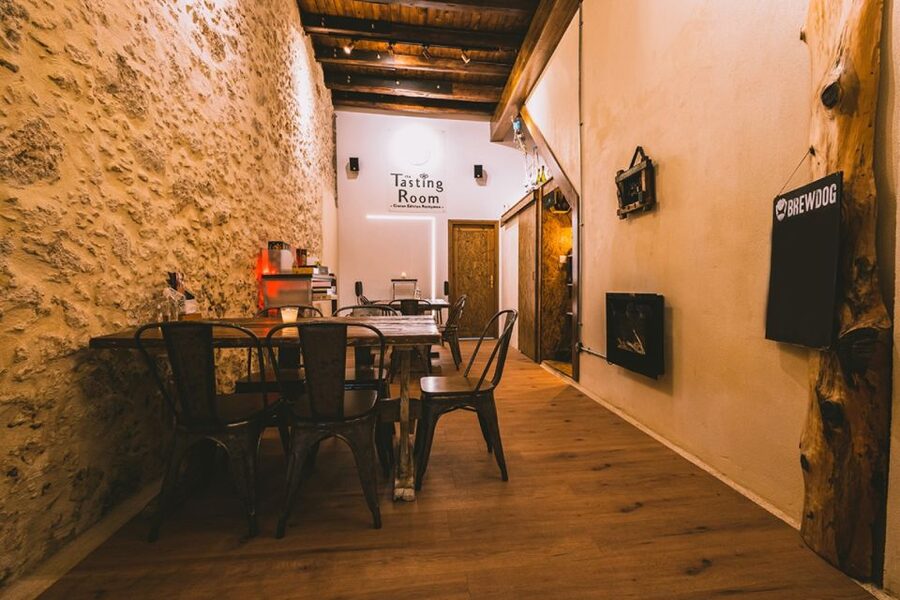
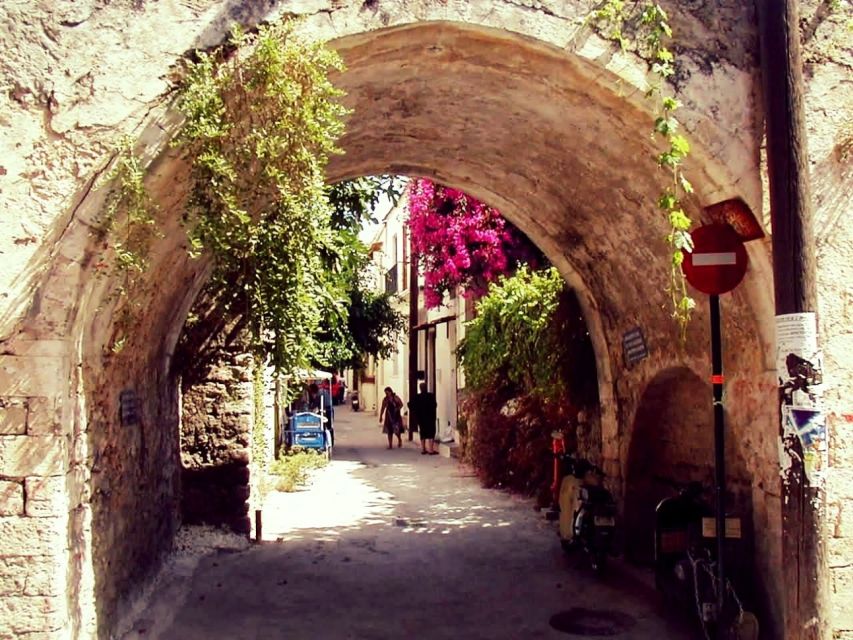
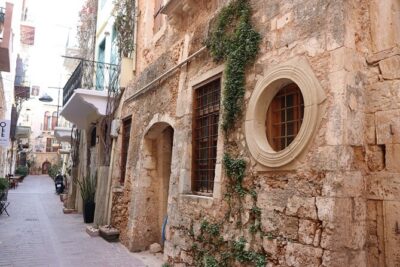
Between tastings, the guide leads you through Rethymno’s Old Town. Expect narrow streets, stone-built Venetian houses, and a mix of architectural styles. The walk is less about checking off monuments and more about reading the city as you move through it.
That approach suits Rethymno. The old center can be confusing at first, with lanes that twist and change character quickly. A local guide helps you get your bearings and points out how Venetian and Ottoman influences remain visible in the buildings and street plan.
The history is kept at a manageable level. You can ask for more detail, but the tour does not appear to be a lecture-heavy march through dates. Participants have especially valued the balance between history, food, and current Cretan life.
The architecture also gives you something to talk about while walking between stops. You may compare different facades, doorways, and building styles, as one guide encouraged a group to do. That makes the history feel connected to the street rather than separated from it.
Do not book this expecting a full archaeological or museum tour. The focus is the character of the Old Town, seen through food and local stories. If you want a detailed tour of every major sight, you will need another guide or a separate visit.
Same island, a completely different day out:
- From Kissamos Port: Boat Cruise to Balos Lagoon & Gramvousa
★ 4.2 · 6,755 reviews - Crete: Day Trip to Agios Nikolaos and Spinalonga Island
★ 4.6 · 4,416 reviews - From Chania: Full-Day Samaria Gorge Trek Excursion & Guide
★ 4.6 · 3,191 reviews - Agios Nikolaos: Boat Trip to Spinalonga with Swim Stop
★ 4.4 · 3,031 reviews
Watching a master stretch paper-thin phyllo
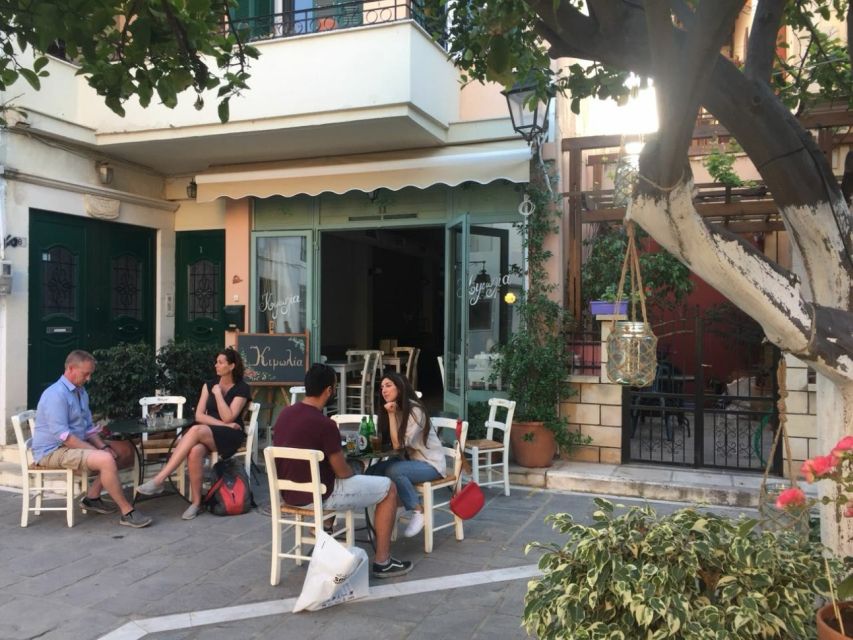
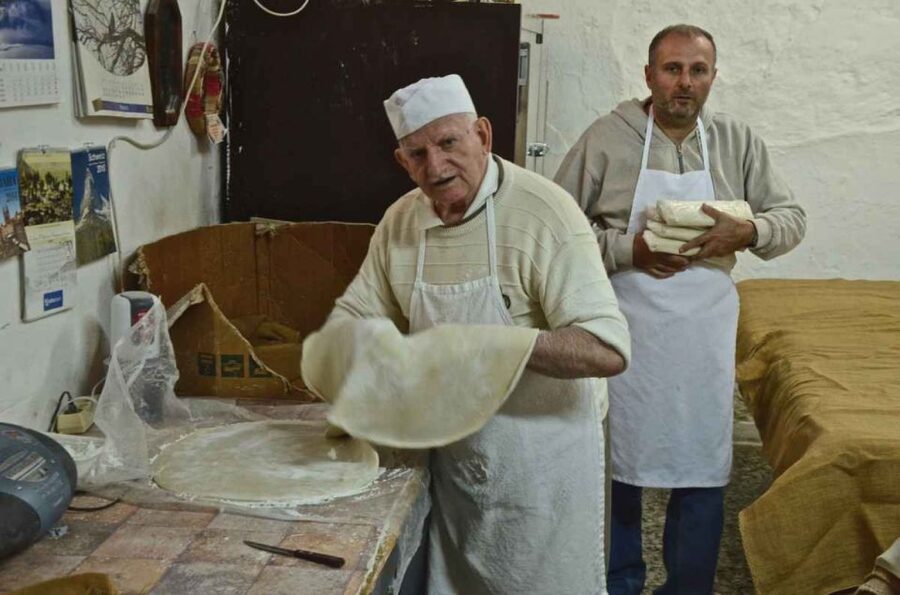
One of the tour’s most distinctive stops is a 17th-century Venetian mansion associated with Yorgos Hatziparaschos. He has made phyllo dough by hand for more than 63 years, and the demonstration shows how flour, water, and salt become the delicate pastry used in desserts such as baklava.
This is a useful reminder that Greek pastry is not magic from a packet. The dough must be worked and stretched with great control. Watching an experienced maker turn simple ingredients into paper-thin sheets gives you a better appreciation for the labor behind a dessert that can seem effortless on the plate.
The phyllo stop is also more than a bakery visit. It links craft, family tradition, and the old house itself. The setting in a Venetian mansion adds a sense of continuity, with a working food tradition taking place inside a building shaped by earlier periods of Rethymno’s story.
The demonstration is short enough to hold your attention but memorable enough to be a highlight. If you are especially interested in pastry, this may be the strongest reason to choose this tour over a standard food walk.
Lunch or dinner under the lemon trees
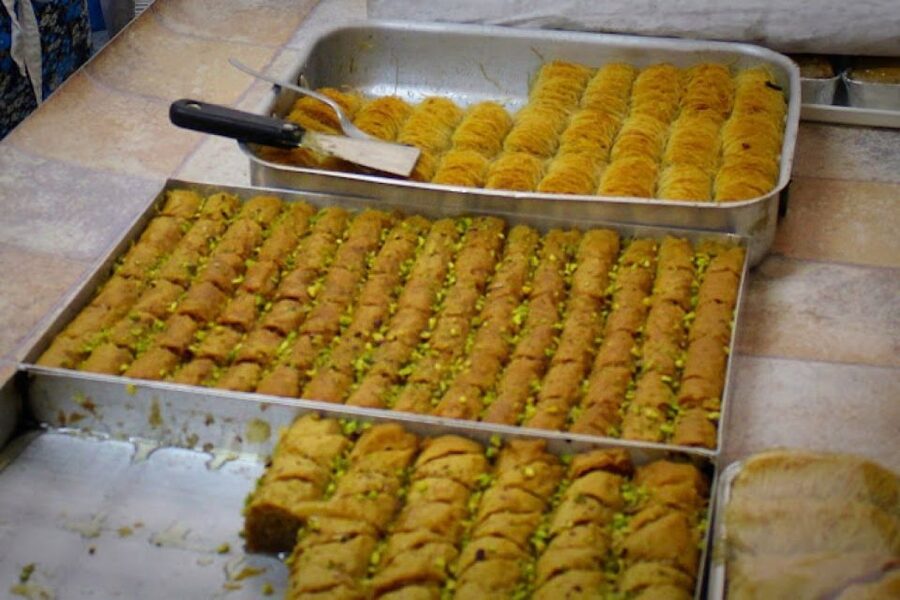
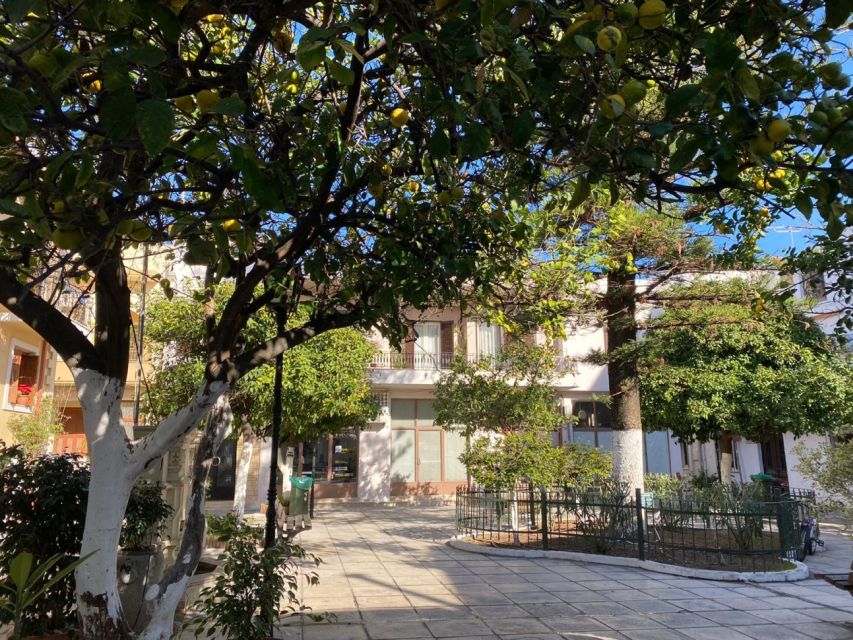
The final stop is a restaurant tucked into an Ottoman-style inner garden. You eat beneath lemon trees, with traditional Cretan dishes prepared from fresh local ingredients and presented in a modern style.
This meal is a full lunch or dinner, not simply another taste. You should arrive hungry, though perhaps not after a large breakfast. The meal is one of the reasons the $205 price can make sense, particularly if you would otherwise pay separately for a good restaurant meal, several tastings, and a private guide.
The setting changes the mood. After walking through tight lanes and stopping for small portions, you have time to sit, talk, and reflect on what you have learned. Guides use the meal to connect older customs with modern Cretan life, and the conversation can continue at your own pace.
A vegetarian and a non-vegetarian option are available. If you have other dietary restrictions, tell the provider before the tour. One guide handled dietary needs comfortably, but the supplied details do not promise every possible substitution.
The restaurant has made a strong impression on people who visited it during the tour, with some saying they would return independently. That is useful information for your own planning: take note of the restaurant name and location before the walk ends.
What the guides add
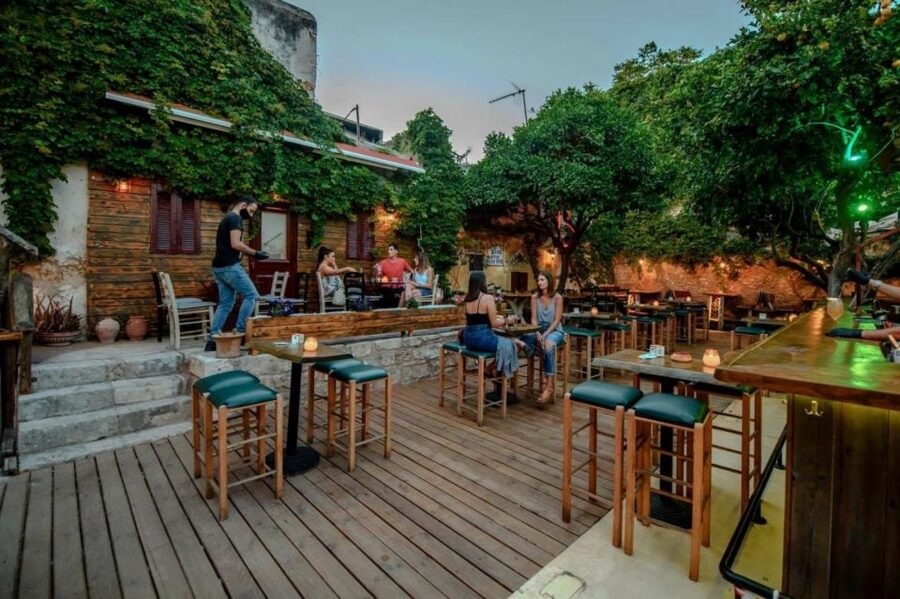
The guide can make or break a food tour, and this experience appears to rely heavily on the person leading it. Vincent is described as friendly, attentive, and good at tying food and drink to the history and culture of Crete. Maria has been praised for answering questions and offering useful suggestions about where to shop and eat.
Michael, also referred to as Michalis, has led relaxed walks with plenty of information about Cretan life, food, and history. He has also taken care of comfort on very hot days by staying in the shade and watching the group’s pace.
That flexibility is important in Rethymno, especially in summer. Four hours on foot, with food and conversation, can feel very different from four hours of nonstop sightseeing. The pace can be adjusted to the group, and one family managed the tour with a baby.
The advertised languages are English, French, and Spanish. The tour is offered as a private group experience, though the small groups described in the supplied details have included around six people. Ask how your booking will be organized if group size matters to you.
Is $205 per person good value?
At first glance, $205 is high for a four-hour walking tour. You are paying more than the cost of a basic Old Town walk or a casual food crawl.
The value improves when you count what is included: a guide, coffee or juice, breakfast, traditional snacks, honey, olive oil and raki tasting, the phyllo demonstration, and a full meal. You are also paying for the guide’s local advice and the time spent explaining how to understand the food rather than simply handing it to you.
I would consider it good value for a couple or small private group that wants a personal introduction to Rethymno and prefers quality over quantity. It is less compelling if your main goal is a cheap way to sample local dishes, or if you already have restaurant reservations and a separate history tour planned.
The full meal is a major factor. If you treat the final restaurant visit as a proper lunch or dinner, the package feels more reasonable. If you are not hungry or do not drink alcohol, part of the experience may be less useful, though the food and cultural discussion remain central.
Who should book this experience?
I recommend it for food-focused visitors, first-time visitors to Rethymno, couples, families, and anyone who prefers conversation to a formal lecture. It suits you especially well if you want practical advice on food shopping and restaurants for the rest of your stay.
It is also a good choice for people who like traditional food but want context. You learn why honey, olive oil, raki, cheese pies, and phyllo matter in Cretan life. The city becomes easier to read because the guide connects buildings, meals, and local customs.
You may want another option if you dislike long meals, have a very limited budget, or prefer a fast-paced tour with many tiny samples. You should also consider the heat and wear comfortable shoes, since the experience combines several hours of walking and sitting at food stops.
Free cancellation is available up to 24 hours before the start, and you can reserve now and pay later. Hotel pickup and drop-off are not included, so plan your own way to Gerakari 4.
Should you book the Rethymno Old Town food tour?
Book it if you want one well-paced introduction to Rethymno, with food doing as much of the explaining as the guide. The handmade phyllo demonstration, thoughtful tastings, and garden meal give it more character than a standard restaurant crawl.
I would book early in your Cretan holiday, preferably on your first full day in Rethymno. That timing lets you use the food tips, shopping advice, and Old Town orientation afterward.
Skip it if $205 feels too steep for a half-day outing or if you want a formal monument-by-monument tour. For everyone else, this is a warm, useful way to meet the city through its kitchens, crafts, streets, and conversation.
FAQ
How long does the Rethymno Old Town walking tour last?
The experience lasts four hours.
Where does the tour start?
The meeting point is at Gerakari 4 in Rethymno.
What food is included?
You receive a Cretan breakfast, traditional snacks, and a full lunch or dinner. Breakfast includes coffee or juice and sfakianopita with handmade jam.
Is a vegetarian meal available?
Yes. The full meal has both vegetarian and non-vegetarian options.
Which languages are available?
The tour can be provided in English, French, or Spanish.
Is hotel pickup included?
No. Hotel pickup and drop-off are not included.
Is this a private tour?
The experience is listed as a private group tour.
Can I cancel for a full refund?
Yes. You can cancel up to 24 hours in advance for a full refund. You can also reserve now and pay later.
Just added around Crete
- Crete: Knossos Palace & Heraklion City Tour★ 3.5 · 3 reviews
- Knossos palace (Last minute booking – Skip The Line Ticket)★ 4.5 · 3 reviews
- Cooking Class & Greek Night Experience★ 5.0 · 3 reviews
- Full-Day Tour:Lasithi Plateau -Mythology Park&Knossos Palace★ 3.0 · 3 reviews
- Chania: Private Guided Food and Wine Walking Tour with Lunch★ 5.0 · 3 reviews
- Knossos: Knossos Private Guided Tour★ 5.0 · 3 reviews
- Individual travel accompaniment East Crete★ 5.0 · 3 reviews
- Chania: Knossos Palace – Archaeological museum!★ 3.4 · 3 reviews
Walking Tours, compared.
Knossos Palace Skip-the-Line Guided Walking Tour
Read our review →

PRIVATE Walking Tour with Lunch and Wine Tasting by a Sommelier
Read our review →
Knossos Palace Guided Walking Tour (Without Tickets)
Read our review →
Heraklion Food Stories Walking Tour with 8 local-favorite stops
Read our review →Browse the lists this tour appears in