
Reviewed · WORKSHOPS
Rethymno: Traditional Arts & Workshops Tour.
Rethymno’s Old Town is more than pretty lanes and Venetian doorways. This walking tour takes you into four working family workshops, where wood, leather, recycled paper, and the Cretan lyra reveal how local traditions stay useful and alive. The best part is the contact with the makers themselves, not just looking at finished goods in a shop.
I like the hands-on papier-mâché activity, which gives you something personal to take home, and I like the small group size of 12 people or fewer. Guide Virginia also adds a warm human touch, and one especially nice detail is the chance to hear a lyra maker talk about his craft and family background.
The main thing to watch is the timing. The activity is described as lasting 1.5 hours in one place and 2 hours in another, so allow two hours and avoid booking anything immediately afterward. At $81 per person, it is not a cheap stroll, but the price includes four workshop visits, two handmade souvenirs, and active demonstrations rather than a simple Old Town walk.
In This Review
Key points at a glance
- Four crafts in one short walk: See wood carving, leatherwork, papier-mâché, and Cretan lyra making in family-run workshops.
- Make your own souvenir: Create a papier-mâché piece instead of only buying something made by someone else.
- Two gifts are included: You receive a small wooden souvenir and a personalized leather keepsake.
- A rare look at the Cretan lyra: The final workshop focuses on the instrument at the heart of traditional Cretan music.
- Small group contact: With a maximum of 12 people, you have a fair chance to ask questions and speak with the artisans.
- Guide Virginia leads in English: The tour begins and ends near the former Customs House, with the meeting point in front of the information centre.
Rethymno is easy to admire from the outside. You can stroll through the Old Town, photograph old buildings, and browse the shops without learning much about the people who keep local craft traditions going. This tour changes that by bringing you inside active workshops.
You move between four family-run businesses, each built around a different material and skill. That variety matters. Wood carving demands patience and a good eye for shape. Leatherwork depends on careful cutting and finishing. Papier-mâché turns humble recycled material into art. The Cretan lyra connects craft with music, memory, and local identity.
I find the family aspect especially valuable. You are not visiting a large production site or watching a polished stage demonstration. You are meeting craftspeople who learned techniques through generations and still make objects by hand. The scale makes it easier to ask how a craft is learned, why certain tools are used, and what keeps the work going in an age of mass production.
The tour is also a good choice if you want a cultural activity that does not require a full day. It fits neatly into a morning or afternoon in Rethymno, though you should allow up to two hours because the supplied timing is not fully consistent.
The meeting point is in front of the information centre near the former Customs House. That gives you a clear reference point in the Old Town, but it is still worth checking the exact starting time and finding the meeting place before the tour begins.
The route returns to the same area, so you do not need to plan for a separate pickup point at the end. Hotel pickup and drop-off are not included, and transportation is not provided if you need it. For most people already in central Rethymno, the walking format is the point of the activity.
Guide Virginia leads the tour in English. She is praised for being charming and encouraging, which matters here because the tour works best when you feel comfortable asking questions or trying a craft yourself. One participant had limited use of one hand, and Virginia stepped in to help finish the worry bead activity. That detail suggests a helpful approach during the practical parts, though the tour does not provide a formal accessibility description, so you should ask the provider about any specific mobility or participation needs.
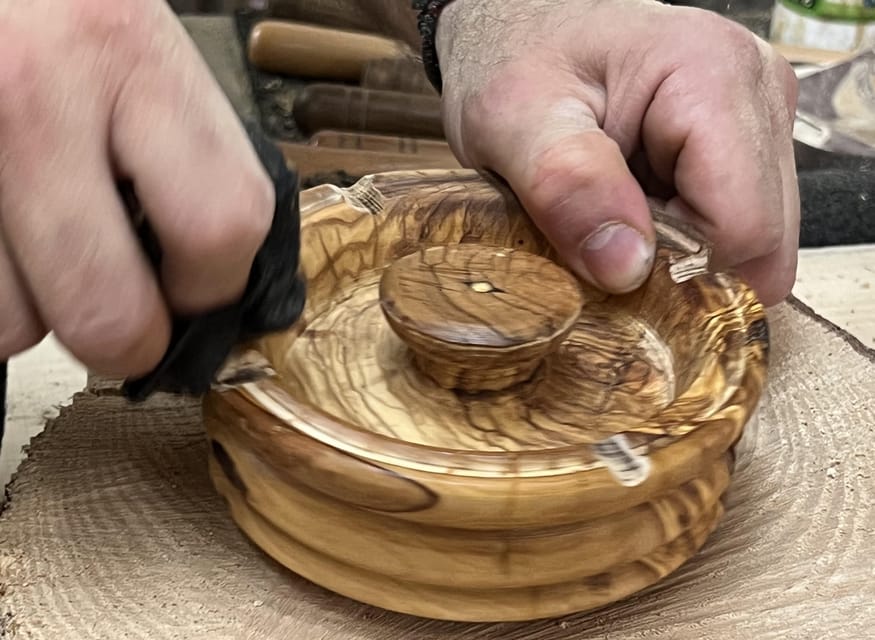
The first craft stop focuses on wood. You watch an artisan shape and carve a piece of timber with basic tools and a direct, hands-on method. The appeal is not a grand collection of finished objects. It is seeing how much skill can come from simple equipment and steady control.
This is a useful contrast with the mass-produced souvenirs found in many Greek resort shops. A small carved item may look modest, but you have seen the time, judgment, and manual work behind it. You receive a small wooden souvenir, so the first stop gives you a physical reminder of the demonstration.
Pay attention to the stages of the work rather than expecting a long lesson in woodworking. The tour moves through four workshops, so this is an introduction rather than a full class. If you enjoy tools, materials, and traditional methods, you will probably want to ask how the artisan selects the wood and how long different pieces take. The supplied details do not specify the exact object you take home, so expect a small handmade keepsake rather than a large carved item.
The leather workshop is run by a third-generation craftsman. That family connection gives the stop a clear sense of continuity: techniques have passed from grandfather to father to son, while the workshop continues to make leather goods in a traditional manner.
You can watch the process and learn how raw leather becomes a useful finished object. The attraction is the detail. Leatherwork leaves little room for careless cutting or weak finishing, and a craftsman’s experience shows in the way he handles the material.
A personalized leather keepsake is included. That is a stronger souvenir than a generic purchase because it connects directly with your visit and may carry a personal touch. Still, do not expect to select from a full retail collection or commission a large item during the short stop. The point is to see the craft and receive a small reminder of it.
This workshop is also one of the reasons the price makes more sense than a standard walking tour. You are not only paying for a guide to point out buildings. The fee includes access to a working family business and a handmade leather item.
The papier-mâché workshop is likely to be the most participatory part of the tour. You use recycled paper and cardboard to create your own small piece, then take it home. The activity links an old artistic method with reuse, which gives the craft a practical modern angle.
Papier-mâché is often associated with carnival floats, theatrical props, and decorative art. Here, you see how a material that looks ordinary at first can become something expressive and durable after careful work. The hands-on element also breaks up the demonstrations. You are not simply watching another person make something while standing at the edge of a room.
The final result may be simple. That is fine. The value is in learning how the material behaves and in having a souvenir you helped create. If you are traveling with children, note that those under five can join free but do not actively participate or receive souvenirs. Older children may enjoy the activity, but the supplied information does not give a specific minimum age for participation.
If you have limited hand mobility, tell Virginia or the provider in advance. One participant needed help finishing the worry bead activity, and Virginia assisted. That is encouraging, but it is not a substitute for confirming what support will be available for your particular needs.
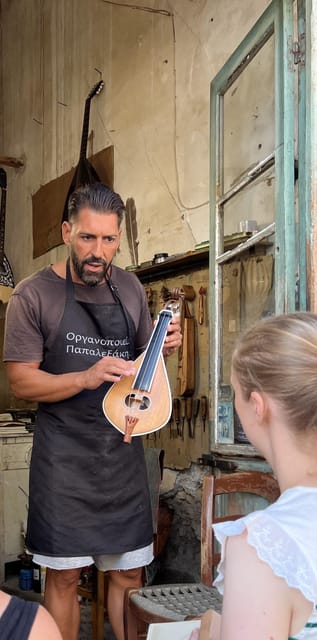
The final stop visits a workshop devoted to the Cretan lyra, the small bowed instrument closely tied to the island’s traditional music. This is not just another craft demonstration. The instrument carries sound, ceremony, and local memory, so the workshop adds a musical layer to the tour.
You hear from the master maker about how these instruments are built and why the work demands such care. The workshop has appeared in documentaries around the world, which gives you a sense of its reputation, but the personal conversation is the real draw. One particularly memorable connection involved the maker sharing that his mother was born in Scotland, a detail that created an unexpected link with a visitor whose wife was also Scottish.
That kind of exchange is what the tour does best. You may arrive expecting an explanation of an instrument and leave with a small story about the person who makes it. The information provided does not promise a live musical performance, so book this for the chance to understand the instrument and its maker, not on the assumption that you will attend a concert.
The lyra stop also helps explain why handmade objects matter in Crete. A traditional instrument is not merely decoration. It supports a living musical culture, and making one requires skills that could easily disappear if no younger generation learns them.
Between the workshops, you walk through the alleys of Rethymno’s Old Town. The route includes stops around Mitropoleos Square and Guora Gate, along with two workshop locations described as secret or lesser-known stops. These labels should not make you expect a major monument at every turn. The interest lies in combining familiar Old Town streets with businesses you might not enter on your own.
The walking distance is part of the lesson. You see how craft businesses fit into the fabric of the historic centre instead of treating tradition as something kept in a distant museum. Your guide shares stories about Rethymno and the artisans who live and work there, giving the streets a human focus.
Wear comfortable shoes. The supplied details do not describe the exact pavement or route conditions, but this is an Old Town walking tour through narrow lanes, so sensible footwear is a practical choice. You will also want enough room in your bag for the wood, leather, and papier-mâché souvenirs.
The group limit of 12 is important here. A much larger group would make workshop conversations awkward and could crowd small working spaces. With a smaller party, you have more opportunity to hear the artisan, watch the work at close range, and ask a question without turning the stop into a lecture.
The included souvenirs are a meaningful part of the package. You receive a small handcrafted wooden item, a personalized leather keepsake, and the papier-mâché piece you make yourself. The precise designs are not specified, so you should see them as personal mementos rather than valuable purchases or guaranteed examples shown in photographs.
I like the mix. The wood and leather items show what the artisans can do, while the papier-mâché piece records your own participation. Together, they tell the story of the tour better than a single shop-bought object.
You also learn the Greek word meráki, which refers to putting heart, soul, and creativity into your work. It is a useful idea for understanding the tour. The point is not only the finished product. It is the care placed in making it.
Do not expect food or drinks. This is a focused cultural walk, not a tasting tour, so have water with you if you need it and plan a café stop separately.
At $81 per person, this tour costs more than a basic guided walk through Rethymno. The comparison is not quite fair, since a standard city tour usually does not include four private workshop visits, hands-on making, a personalized leather item, and a wooden souvenir.
The value depends on how much you care about access and contact. If you only want the main sights of the Old Town, you can see many of them independently for far less. If you want to meet working artisans and leave with several handmade reminders, the price is easier to justify.
The small group improves the value. You are paying for a more personal format, and a maximum of 12 people gives the guide and makers room to interact with you. The short length also means you are not committing a full day to a single theme.
I would be less enthusiastic about the price if you dislike shopping-related stops or have no interest in crafts. Although this is not presented as a shopping excursion, each workshop naturally places you near handmade goods. The tour is best for people who value the making process, not only the sightseeing.
I would recommend it to culture-minded visitors who want something more personal than a monument checklist. It suits curious adults, couples, families with older children, and anyone who prefers meeting local makers to browsing anonymous souvenir shelves.
It is also a good fit for repeat visitors to Crete. If you have already seen Rethymno’s main streets and want another angle on the town, the workshops show you a working side that is easy to miss.
Music lovers should pay special attention to the lyra workshop. Art and design fans will get the most from the wood, leather, and papier-mâché stops. You do not need previous craft experience, since the tour is built around demonstrations and a simple practical activity.
I would choose another activity if you want a long, technical class in one craft, a food-focused outing, or a tour with hotel transportation. This is a compact introduction to several traditions, not a masterclass in any single one.
The tour is offered in English, and children under five may join free but do not participate or receive souvenirs. Free cancellation is available up to 24 hours before the start, and you can reserve while paying later, which helps if your Rethymno plans are still shifting.
Book this tour if you want to see how Cretan traditions are practiced today, speak with the people keeping them alive, and make a souvenir rather than simply buy one. The strongest parts are the direct contact with the craftspeople, Virginia’s friendly guidance, the hands-on papier-mâché work, and the unusual lyra workshop.
Skip it if your priority is a low-cost sightseeing walk or a major archaeological site. Also leave a two-hour window in your schedule because the stated duration varies between 1.5 and 2 hours. For the right audience, $81 buys a small, thoughtful look at Rethymno’s creative life, with tangible reminders to carry home.
FAQ
A few more Rethymno half-days to weigh up
- From Rethymno: Samaria Gorge Full-Day Trek, Pickup & Guide
★ 4.5 · 1,610 reviews - Rethymno: Sunset Catamaran Cruise – Sushi & Open Bar
★ 4.8 · 446 reviews - From Rethymno: Spili, Agia Galini, and Matala Tour
★ 4.7 · 391 reviews
Where does the tour begin?
The tour meets in front of the information centre near the former Customs House in Rethymno’s Old Town.
How long does the tour last?
The activity information gives both 1.5 hours and 2 hours. Plan for up to 2 hours so you are not rushed afterward.
How many workshops do you visit?
You visit four family-run workshops focused on wood, leather, papier-mâché, and the Cretan lyra.
Same island, a completely different day out:
- Rethymno: Sailing Catamaran Cruise with Meal & Drinks
★ 4.7 · 285 reviews - Full-Day Land Rover Safari from Rethymno with Lunch Swimming
★ 5.0 · 215 reviews - From Rethymno: Arkadi, Melidoni, and Margarites Tour
★ 4.9 · 211 reviews - From Rethymno: Samariá Gorge Full-Day Hike
★ 4.3 · 129 reviews
What souvenirs are included?
You receive a small handcrafted wooden souvenir, a personalized leather keepsake, and the papier-mâché piece you make during the tour.
Is the tour offered in English?
Yes. The live tour guide speaks English.
Can children under five join?
Children under five can join free, but they do not actively participate or receive souvenirs.
Just added around Rethymno
- From Crete: Private Day Trip to Balos and Gramvousa Island★ 5.0 · 3 reviews
- Crete: Taxi Transfers from Heraklion Airport to Rethymno City★ 5.0 · 3 reviews
- Day Boat Trip: Preveli-Triopetra- Agios Pavlos from Rethymno★ 3.5 · 3 reviews
- Rethymno | Safari Tour in Private★ 5.0 · 3 reviews
- Rethymno Scavenger Hunt: Pirates, Food, Alcohol & Treasures★ 5.0 · 3 reviews
- Rethymno: Private Catamaran Cruise with Lunch and Drinks★ 5.0 · 3 reviews
- From Chania & Rethymno: Kourtaliotiko, Preveli & Damnoni★ 4.7 · 3 reviews
- Rethymno: Falassarna Beach Day Trip with Transfer★ 5.0 · 4 reviews
Workshops, compared.
Authentic Cooking Class in the White Mountains
Read our review →
Beginner Scuba Diving Lesson with PADI Instructor
Read our review →
Chania Cooking Class-The Authentic Enjoy traditional Cretan meal
Read our review →
Moires: Cooking Class and Olive Oil Tasting at a Family Farm
Read our review →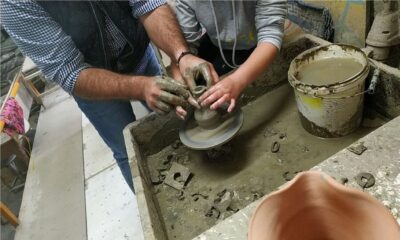
Sightseeing Day Trip with Cooking Lesson and Lunch
Read our review →
Browse the lists this tour appears in