
Reviewed · HISTORICAL TOURS
Chania: Battle of Crete and WW2 History Tour with Bunkers
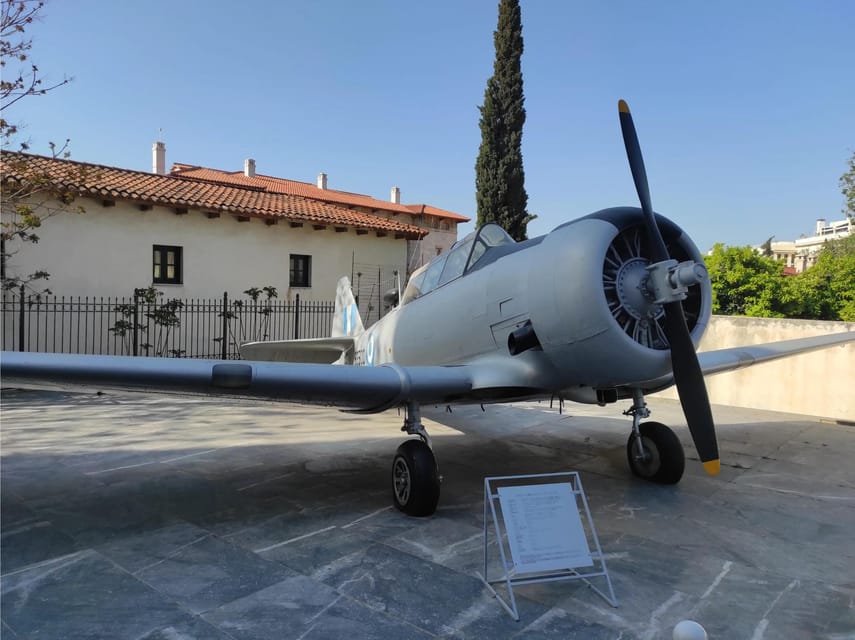
The most striking part of this private tour is how quickly the Battle of Crete moves from textbook history to real places. You visit Maleme airfield, Hill 107, wartime cemeteries, an old bridge, former military sites, and an abandoned German bunker system while historian-guide Apostolis uses original photographs to show what happened at each spot.
I like the flexible pace and the personal guiding. You can spend more time on the parts that interest you, and the tour can adapt if you have already visited somewhere such as Souda Bay Cemetery. I also like the mix of major sites and obscure military positions that are easy to miss on a standard sightseeing day.
The main drawback is that this is not a light sightseeing outing. You will walk at several stops, enter or inspect old military structures, and spend much of the day outdoors. The activity information gives mixed signals about wheelchair access, so anyone with mobility concerns should confirm the exact conditions before booking.
In This Review
- Key points about the Battle of Crete tour
- Why Maleme matters so much
- Hill 107 and the battlefields near Maleme
- Cemeteries that change the tone of the day
- Platanias and the abandoned German bunker
- Beyond the famous sites in Chania Regional Unit
- The value of having a historian as your guide
- What the six-and-a-half-hour schedule feels like
- Is $200 per person a fair price?
- Who should book this experience?
- Should you book the Battle of Crete tour?
- FAQ
- How long does the Battle of Crete tour last?
- Where does pickup take place?
- Which languages are available?
- Is this a private tour?
- What sites are included?
- Are meals and museum entry included?
- What should I bring?
Key points about the Battle of Crete tour
- Maleme airfield and Hill 107 bring the central German airborne assault into focus.
- Apostolis is both a historian and a licensed Greek Ministry of Tourism guide, with English and Greek guiding available.
- Original wartime photographs help you compare present-day Crete with scenes from May 1941.
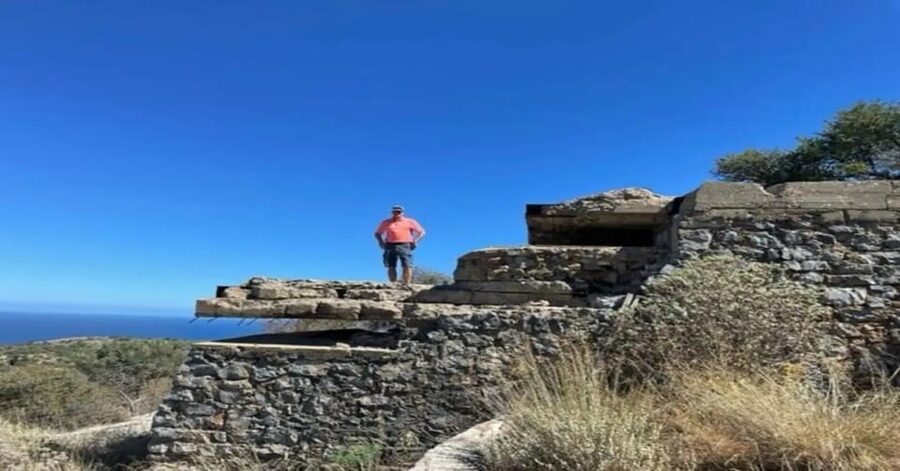
- An abandoned German bunker system provides the tour’s most unusual stop and a strong sense of place.
- Private transport and a private group let you set a comfortable pace with family or friends.
- The day includes both famous cemeteries and lesser-known sites, including lookouts, battlefields, and former military areas.
Why Maleme matters so much
The day begins with pickup in Chania and a drive toward Maleme, the key setting for the opening phase of the Battle of Crete. The airfield was central to Operation Mercury, the German airborne attack launched in May 1941.
At Maleme, you spend about an hour with a guided visit and time to take in the site. This is not simply a stop for a quick photograph. The airfield helps you understand why control of one small strip of ground could affect the entire battle. Once German forces secured the area, reinforcements could arrive by air, changing the course of the fighting.
Apostolis uses historical photographs and records during the tour. That makes a difference here. A modern airfield and surrounding roads do not immediately reveal the confusion of the 1941 assault, but a photograph placed beside the present view can make the location easier to read.
You should expect a serious history discussion rather than a dramatic performance. The emphasis is on when events happened, why Axis forces attacked Crete, how the fighting developed, and what remains visible today.
A few more Chania half-days to weigh up
- From Chania: Crete World War II History Tour
★ 4.9 · 65 reviews - Chania Battle of Crete Private Tour: WW2 Military History
★ 5.0 · 16 reviews - From Kissamos: Private Boat Cruise to Historic Pirate Island
★ 4.8 · 5 reviews
Hill 107 and the battlefields near Maleme
The next part of the tour focuses on the battlefields around Maleme, including Hill 107. The hill is important because its height gave control over the airfield and nearby approaches. It also provides a useful point for discussing how terrain affected the battle.
You will have a guided visit, a photo stop, and a walk in the Maleme area. Together, these sections take roughly another hour. The arrangement gives you time to look around rather than staying inside the vehicle for the whole morning.
I would wear proper walking shoes here. The advice to bring comfortable footwear is not a formality. This is a battlefield tour, and the experience depends partly on moving through places that were not designed as polished museum displays.
You may also visit a wartime bridge and an RAF memorial during the broader route. These locations add detail to the story, showing that the battle was not fought at one single point. German airborne troops, Allied forces, and local Cretan resistance groups were caught up in a fast-moving fight across roads, fields, villages, and defensive positions.
Cemeteries that change the tone of the day
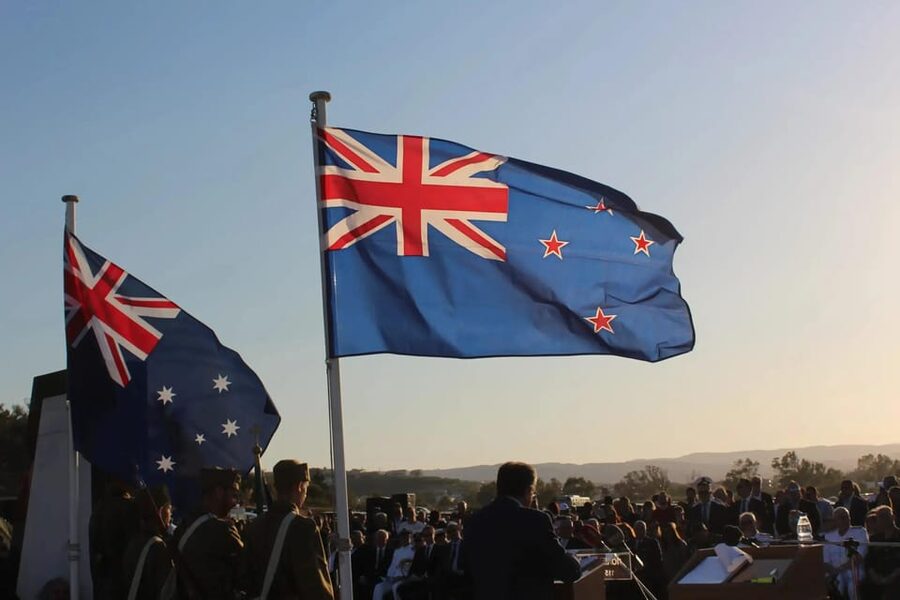
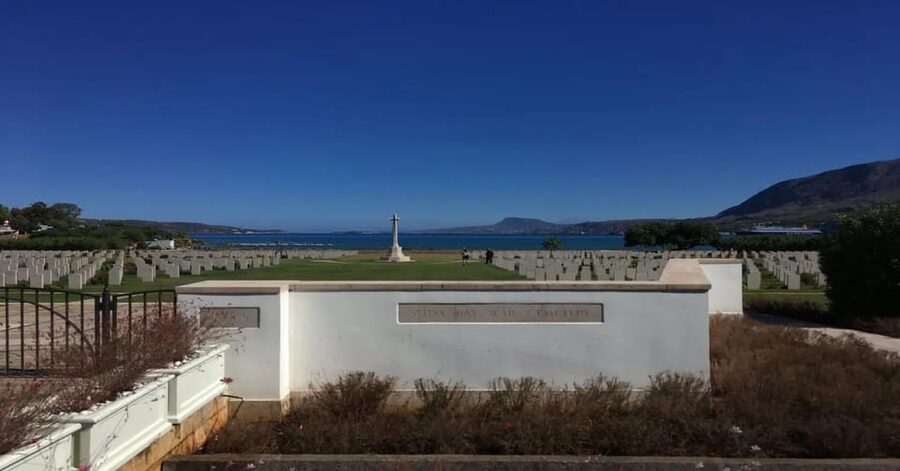
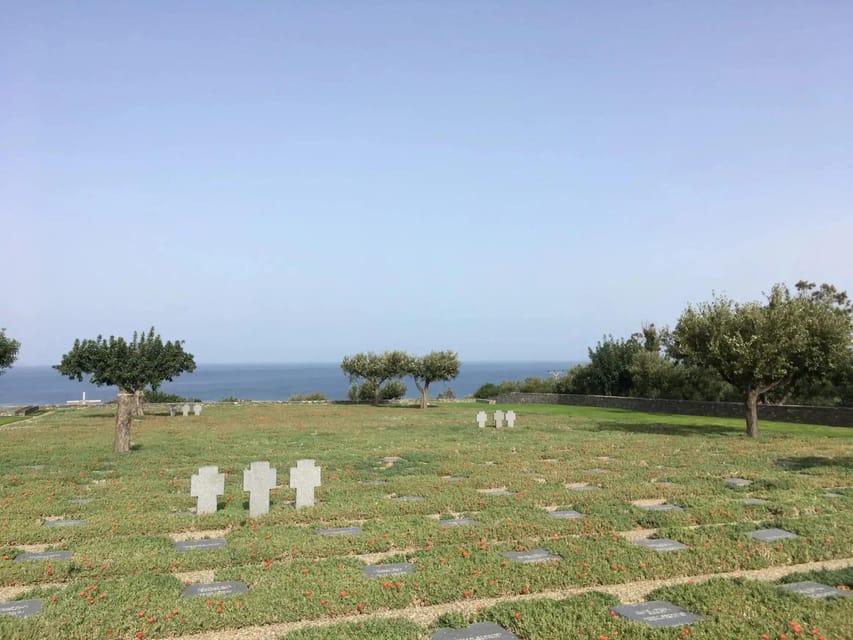
The tour includes the German War Cemetery and the Allied War Cemetery in Souda. These stops give the day a quieter rhythm after the battlefield visits.
The German cemetery helps you consider the human cost on the attacking side, while the Allied cemetery records the many nationalities involved in the defence of Crete. Together, the cemeteries make the battle feel less like a contest of military plans and more like a story of individual lives lost far from home.
Souda Bay Cemetery is included in the wider experience, but the route can be adjusted. If you have already been there, you may choose to spend more time elsewhere. That flexibility is one of the real advantages of a private tour, especially for visitors staying in Chania for several days.
The cemetery visits also suit people who prefer a thoughtful approach to military history. There is room to pause, read, and reflect. The day is not rushed from one photo stop to the next.
Platanias and the abandoned German bunker
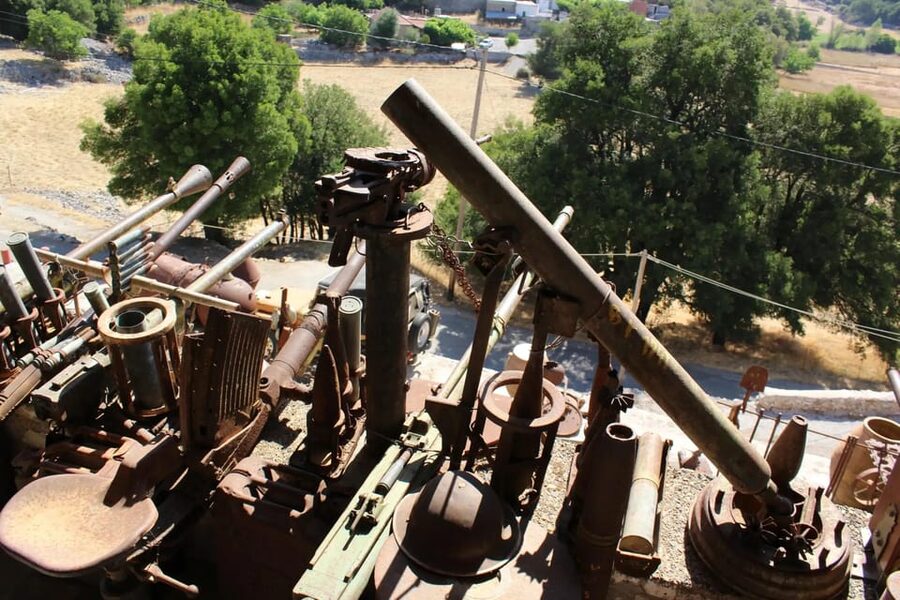
A stop in Platanias brings the tour into a different kind of wartime setting. You have about an hour here, with time for a visit, a self-guided portion, and scenic views along the way.
The main attraction is an abandoned German bunker system from the Battle of Crete era. The exact location is not publicly specified, which helps explain why this does not feel like a regular museum visit. Instead, you explore a former military installation with old defensive structures, wartime remains, views, and what is described as an open-air museum atmosphere.
This is likely to be the most memorable part of the day for anyone interested in fortifications. The bunker shows how the Third Reich built defensive installations in Greece and Crete after the invasion. It also helps connect the Battle of Crete with the wider German occupation and the military planning that followed.
Conditions at abandoned sites can vary. Bring water, sunscreen, a hat, and a camera, but do not treat the location as a fully developed attraction with every surface made easy to walk. The activity is not suitable for children under eight, and the walking involved may not work well for anyone with mobility impairments.
Same island, a completely different day out:
- From Kissamos Port: Boat Cruise to Balos Lagoon & Gramvousa
★ 4.2 · 6,755 reviews - From Chania: Full-Day Samaria Gorge Trek Excursion & Guide
★ 4.6 · 3,191 reviews - Cretan Safari – 4×4 Adventure to Preveli Beach with Lunch
★ 5.0 · 780 reviews - Elafonissi Beach Day Trip from Chania -Stop in Elos Village
★ 4.5 · 744 reviews
Beyond the famous sites in Chania Regional Unit
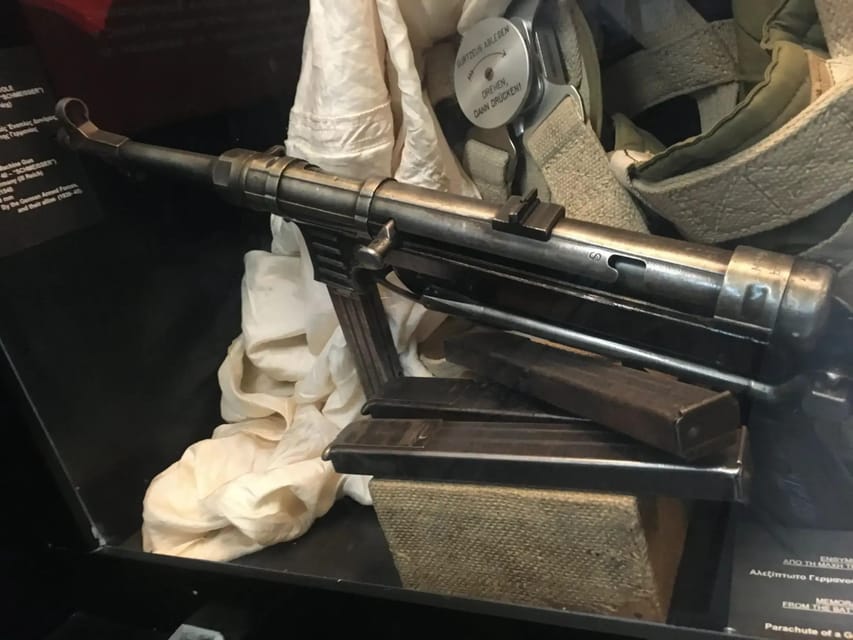
The route continues through the Chania Regional Unit to lesser-known wartime locations. These include former lookouts and observatories, battlefield areas, military installations, and a former prisoner-of-war camp.
This part is valuable because it expands the story beyond the best-known names. A standard visit to Crete might cover a cemetery or a war museum, but it may not explain how observation points and bunker systems fitted into the defensive network.
The guide’s use of rare historical documents is especially useful at these stops. You can compare an old image with the current view and consider what has changed, what has disappeared, and what remains. The contrast between a quiet Cretan setting today and its military role in 1941 is one of the tour’s strongest ideas.
The route may also touch on modern Crete, military service, and the reason NATO has a base in the area. These subjects broaden the discussion without abandoning the main theme. If you enjoy asking questions, a private tour gives you far more room to follow a subject than a large group outing would.
The value of having a historian as your guide
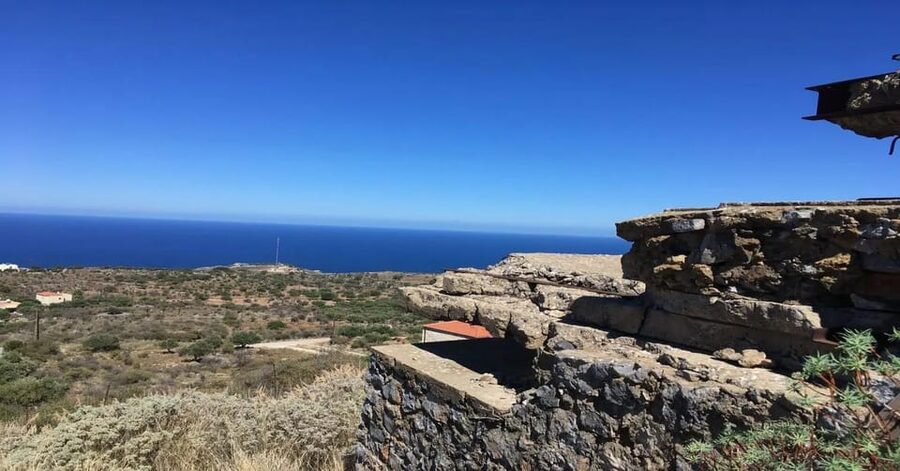
Apostolis is described as a professional historian and licensed tourist guide by the Greek Ministry of Tourism. His role is more than driving between sites. He explains the sequence of events, identifies the purpose of military positions, and uses photographs to connect the past with what you see in front of you.
The guiding style is relaxed and conversational. That matters during a six-and-a-half-hour day. Military history can become tiring when every stop is packed with dates and names, but a measured pace gives you time to absorb the information.
The tour also appears to adapt to your interests. You can choose to linger at a battlefield, ask about modern Cretan life, or skip a cemetery you have already visited. Apostolis is noted for giving people space to think rather than filling every moment with commentary.
If you are new to the Battle of Crete, you should come away with the basic framework: the German attack, the importance of Maleme, the Allied and local resistance, and the lasting military remains. If you already know the campaign well, the lesser-known installations and photographic comparisons may be the stronger reason to book.
What the six-and-a-half-hour schedule feels like
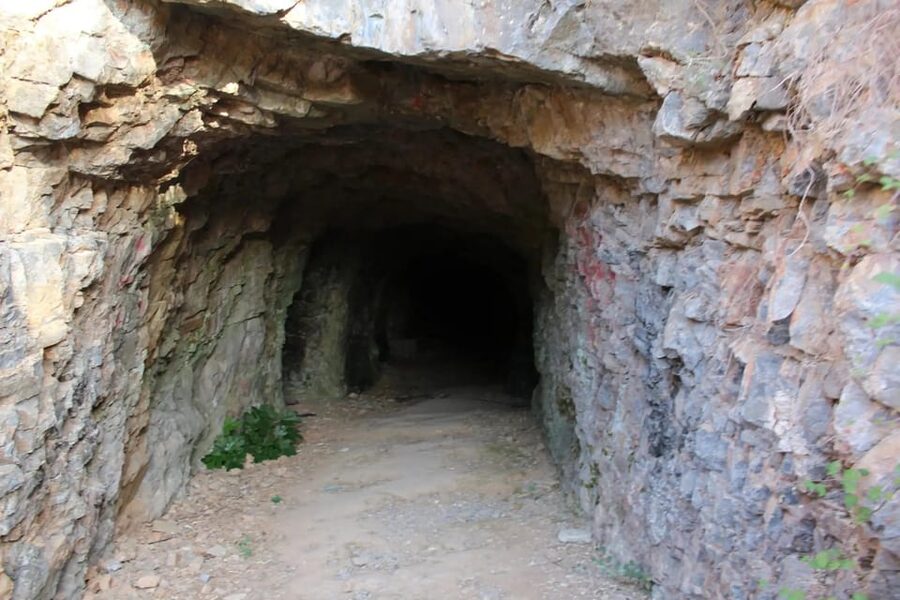
The total duration is 6.5 hours, including pickup and return to Chania. The listed stops divide the day into several guided visits of around 30 minutes to one hour, with driving between sites.
That is a full half-day, but it is not an exhausting march through a single museum. You spend time in the vehicle, walk at selected locations, visit cemeteries, stop for photographs, and explore military remains.
Private transport is included in a modern air-conditioned vehicle. This is useful in Crete’s warm weather and saves you from trying to connect widely separated sites on your own. Pickup and drop-off are included from central Chania areas, and the tour can also work as a shore excursion from Chania or Souda cruise port.
Bring your own water and food, since meals and drinks are not included. You should also pack sunscreen, a hat, comfortable shoes, and a camera. Smoking is not allowed during the activity.
The tour is offered in English or Greek. It is designed for a private group, so you are not sharing the vehicle with unrelated people. That makes it a good choice for families with older children, couples, or friends who want a focused history day.
Is $200 per person a fair price?
At $200 per person, this is not a bargain sightseeing trip. Its value depends on how much you want a specialist guide and private transport rather than a simple drive to Maleme.
The price includes a private group, a historian-guide, transport, pickup and drop-off, access to the planned military sites, historical photographs and archives, insurance, and taxes. You also receive a small surprise gift at the end of the tour.
The strongest value comes from the research and interpretation. Without a guide, you could visit Maleme, cemeteries, and some visible wartime remains, but you might not understand how the sites connect. You would also miss the benefit of comparing old photographs with the present view and learning about installations that are not obvious from the roadside.
There is one extra cost to note. Entry to a Battle of Crete War Museum is not included and costs 5 euros per person. Food and drinks are also your responsibility.
I would consider the $200 price reasonable for two people or a small private group that wants a specialist day, especially from a cruise port where time and transport matter. For a solo visitor on a tight budget, it is a much larger commitment than joining a shared excursion.
Who should book this experience?
I would recommend it most strongly to people who want military history explained at the actual sites where events unfolded. It suits anyone researching the Battle of Crete, visitors with a family connection to the campaign, and people who prefer small private tours over broad sightseeing routes.
It also works for repeat visitors to western Crete. If you have already seen Chania’s old town and the main tourist sights, this offers a very different side of the region.
The tour is less suitable if you want a relaxed day with little walking, frequent food stops, or only the most polished attractions. The bunker and battlefield visits are the point, so you should be comfortable with outdoor conditions and old military structures.
The accessibility information needs care. The activity details describe the tour as wheelchair accessible, but also say it is not suitable for wheelchair users or people with mobility impairments. Treat the stricter warning as the safer guide and contact the provider before booking if access is important to you.
Should you book the Battle of Crete tour?
Book it if you want the Battle of Crete explained by a specialist rather than reduced to a few dates and monuments. The combination of Maleme airfield, Hill 107, cemeteries, battlefields, former military sites, rare photographs, and an abandoned German bunker gives the day real range.
The strongest reasons to choose it are the private format, Apostolis’s historical focus, and the chance to adjust the route to your interests. The main cautions are the $200 price, the lack of included food, outdoor walking, and unclear wheelchair suitability.
For a visitor who wants to understand why these quiet Cretan places mattered in May 1941, this is a focused and worthwhile use of a day in Chania.
FAQ
How long does the Battle of Crete tour last?
The tour lasts 6.5 hours, including pickup in Chania and the return journey.
Where does pickup take place?
Pickup and drop-off are included from all central Chania areas. The tour is also available as a shore excursion covering Chania and Souda cruise port.
Which languages are available?
The live tour guide is available in English and Greek.
Is this a private tour?
Yes. The experience is arranged for a private group, so you tour with your own friends or family.
What sites are included?
The route includes Maleme airfield, nearby Battle of Crete battlefields, Hill 107, the German War Cemetery, the Allied War Cemetery in Souda, Platanias, former military sites, wartime lookouts, and an abandoned German bunker system.
Are meals and museum entry included?
Food and drinks are not included. Entry to a Battle of Crete War Museum costs 5 euros per person and is paid separately.
What should I bring?
Bring comfortable walking shoes, a hat, sunscreen, water, and a camera. Smoking is not allowed.
Just added around Chania
- Cooking Class & Greek Night Experience★ 5.0 · 3 reviews
- Chania: Private Guided Food and Wine Walking Tour with Lunch★ 5.0 · 3 reviews
- Chania: Knossos Palace – Archaeological museum!★ 3.4 · 3 reviews
- Chania Highlights:Venizelos, Stavros, Agia Triada & Marathi★ 5.0 · 3 reviews
- Chania: Private Tour to Balos Lagoon★ 5.0 · 3 reviews
- Your Tailored Samaria Tour That Nobody Will Believe. From Chania.★ 5.0 · 3 reviews
- Sips of Crete: Flavors, Legends & Hidden Gems★ 5.0 · 3 reviews
- Elafonisi Beach Tour★ 3.3 · 3 reviews
Historical Tours, compared.
Richtis Waterfall, History, Azoria, OliveTasting, NorthCoast
Read our review →
Heraklion Highlights: Knossos, Museum & Historic City Drive
Read our review →
Knossos Palace & Historical Heraklion City Tour, with Old Market
Read our review →
Cretan Stories – A Journey Through History and Tradition
Read our review →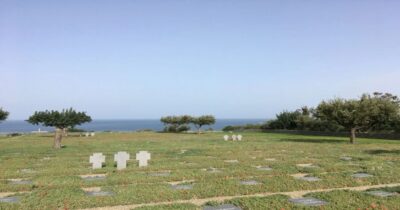
Chania Battle of Crete Private Tour: WW2 Military History
Read our review →Browse the lists this tour appears in