
Reviewed · CRETAN FOOD TOURS
Food Tour in Heraklion – Discover Cretan Flavors
Heraklion’s best introduction may be found at a café table, a market stall, and a taverna rather than behind a museum label. This four-hour walk ties Cretan food to city history, moving from bougatsa and Greek coffee to honey, sweets, raki, and a generous spread of meze.
I like the small-group feel and the mix of eating with sights such as Koules Fortress, the Lions Fountain, Agios Minas Cathedral, and the Central Market. I also like the stop at a family workshop where you learn how stivania, the leather boots of Cretan shepherds, are made.
The main drawback is the pace and the sound. One booking praised the quick rhythm but noted that it could be hard to hear the host in noisy areas. Comfortable shoes are essential, and a small headset would help if the group is larger or the streets are loud.
In This Review
- Key points to know before booking
- Why food is the right way into Heraklion
- Starting at the Archaeological Museum and Plateia Eleftherias
- Churches, fountains, and the old center
- Bougatsa, coffee, honey, and Cretan sweets
- The Venetian harbor and Rocca a Mare Fortress
- Agios Minas and the Central Market
- Learning about stivania at a family workshop
- Ending with Cretan meze at a traditional restaurant
- How much value do you get for $106?
- Pace, sound, and what to bring
- Who should book this Heraklion food walk?
- Should you book it?
- FAQ
- How long does the Food Tour in Heraklion last?
- How much does the Food Tour in Heraklion cost?
- Where does the tour begin?
- Where does the tour finish?
- What language is the tour offered in?
- What food and drinks are included?
- What sights does the route include?
- What should I bring?
Key points to know before booking
- Bougatsa starts the day with coffee: You begin with a classic Heraklion pairing of pastry and strong Greek coffee.
- The food comes with landmarks: The route links the Central Market, Venetian Loggia, Agios Titos, Agios Minas, and the harbor.
- Koules gives the walk a seafront pause: You stop at Rocca a Mare Fortress for photos, sightseeing, and a break.
- Stivania add a local craft angle: A family-run workshop shows the making and cultural role of traditional Cretan shepherds’ boots.
- The finish is a taverna-style meal: Cretan meze and local hospitality provide the tour’s most substantial tasting.
- The price favors hungry, curious walkers: At $106 per person, the value depends on how much you want food, context, and city orientation in one outing.
Why food is the right way into Heraklion
Heraklion can feel like a city you pass through on the way to Knossos or the coast. A food walk gives you a better first look. You are not only checking off monuments. You are seeing where people shop, what they eat in the morning, and how old customs remain part of daily life.
The route covers much of the city center on foot. It begins outside the Heraklion Archaeological Museum, then moves through squares, lanes, churches, the harbor, the market, a restaurant, and the Pastry History Museum. That combination makes the experience useful on your first day, since you get your bearings while learning which places deserve a second visit.
You should expect a walking tour with regular stops, not a formal sit-down meal from start to finish. Some tastings are quick, while others allow time for coffee, dessert, or meze. The food is the thread connecting the stops.
More Food Tours in Heraklion
- Crete: Sunset or Morning Quad with Local Products Tasting
★ 4.9 · 1,135 reviews - Heraklion: Olive Farm Tour with Tasting of Local Delicacies
★ 4.9 · 411 reviews - Crete: Olive Oil, Soap, Wine, Raki – Flavorful Culinary Journey
★ 5.0 · 119 reviews
Starting at the Archaeological Museum and Plateia Eleftherias
The meeting point is at the statue in the square outside the Heraklion Archaeological Museum. This is a practical place to begin because it is central and easy to identify, but check the exact statue and arrive with enough time to locate your host.
From there, you walk through Plateia Eleftherias and along Dedalou. These opening streets help set the tone. You get a first look at Heraklion as a working city, not just a collection of ancient sites. There is a guided walk and a photo stop, so the first section is about orientation as much as food.
Your English-speaking host provides the local background as you go. One booking specifically praised a host named Rallou, so Rallou may lead some departures, though you should confirm the guide assigned to your date.
Churches, fountains, and the old center
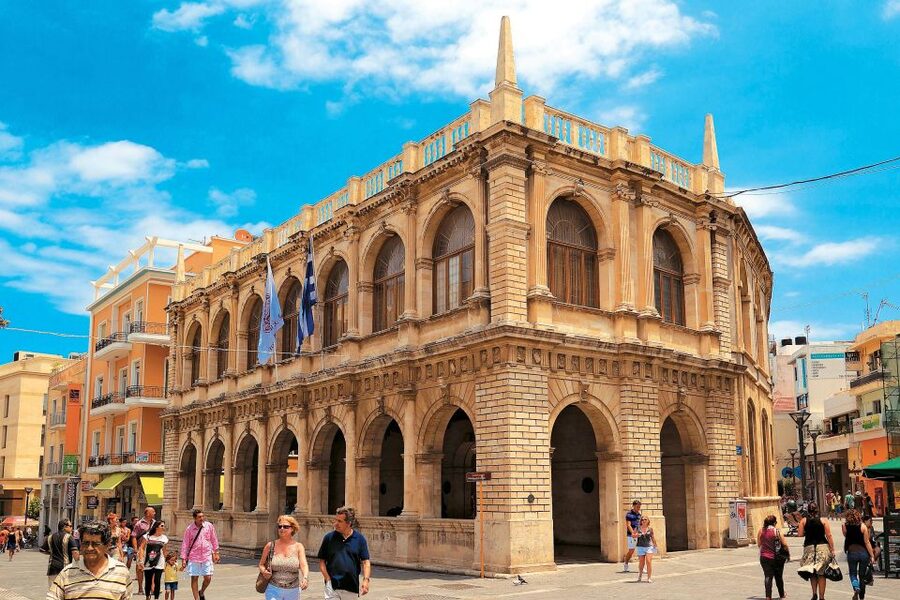
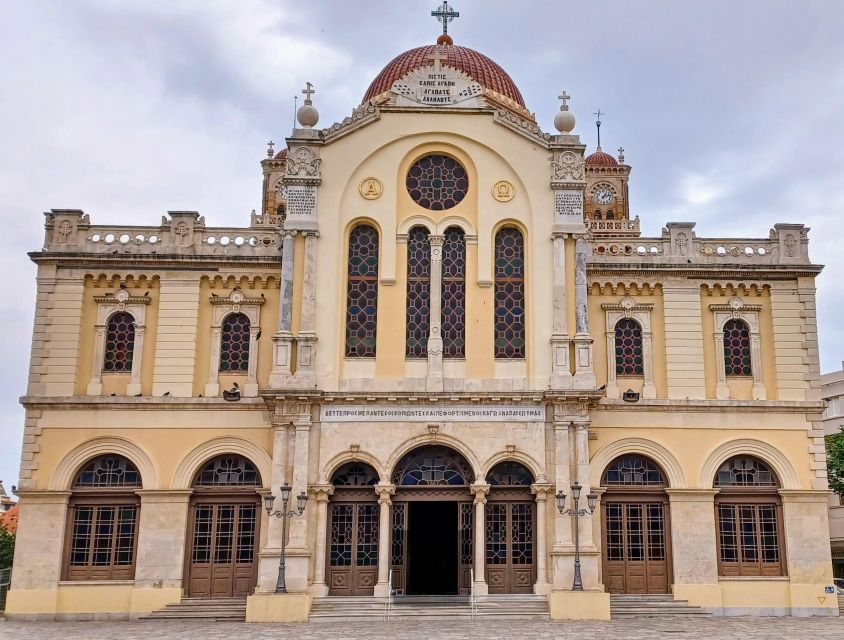
The first major cultural stops include the Basilica of Saint Mark, the Morosini Lions Fountain, the Venetian Loggia, and Agios Titos Church. Each gives the walk a different look at Heraklion’s past.
The Basilica of Saint Mark is a formal landmark in the center, while the Lions Fountain is one of the city’s best-known meeting points. You stop for photos and commentary rather than a long museum visit. That keeps the pace moving, though anyone hoping for detailed interior tours should keep expectations modest.
The Venetian Loggia adds another architectural pause. The route then continues to Agios Titos Church and along 25th Avgoustou Street. This is a useful stretch for understanding how the old center connects the civic heart with the harbor.
I like this part because it prevents the food from becoming a string of unrelated bites. A pastry tastes different when you have just heard about the city around you. The tour treats the streets as part of the meal.
Bougatsa, coffee, honey, and Cretan sweets
At a local café, you stop for bougatsa, coffee, dessert, and a tasting. Bougatsa is a familiar breakfast pastry in Greece, and here it gives you an easy entry into local eating habits. It is paired with strong Greek coffee, so this is both a food stop and a chance to slow down briefly.
You also taste premium local honey and traditional Cretan sweets. These samples point to the island’s use of local ingredients and older food customs. The selection is not described in exact detail, so you should not expect a fixed list of every sweet or a full meal at the café.
This is one of the tour’s stronger features for people who like context with their food. You are not simply handed something and sent on your way. The host explains how the items fit into Cretan food culture, giving you ideas for what to seek out later.
If you do not usually eat a large breakfast, pace yourself. The tour continues with more tastings, and the final meze stop is meant to be generous.
Same island, a completely different day out:
- Heraklion: Dia Island Sailboat Cruise with Swimming and Meal
★ 4.8 · 2,579 reviews - Heraklion Area: CRETAquarium Admission Ticket
★ 4.4 · 2,055 reviews - Crete: Palace of Knossos E-Ticket and Audio Guide
★ 3.8 · 1,540 reviews - Agia Pelagia Crete Quad Bike authentic backland Tour
★ 4.9 · 1,430 reviews
The Venetian harbor and Rocca a Mare Fortress
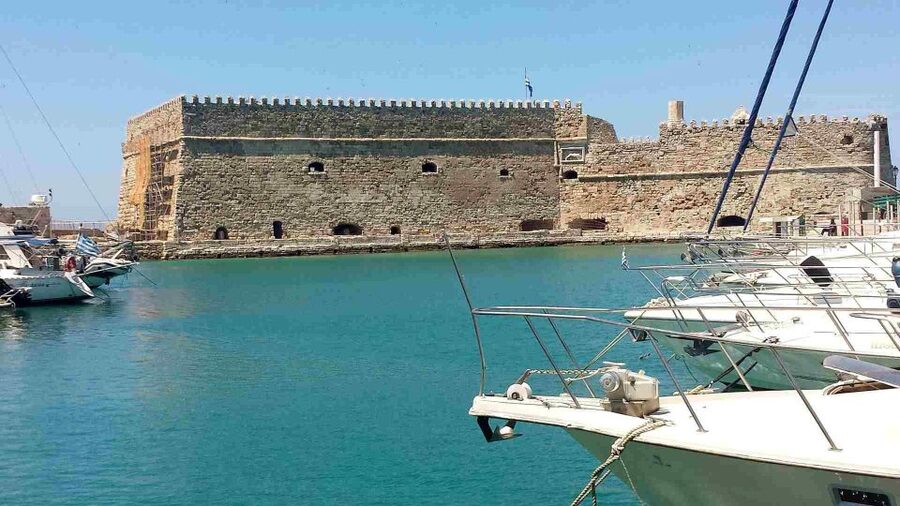
The walk reaches the Old Venetian Harbor and Rocca a Mare Fortress, also called Koules Fortress or Castello del Molo. The fortress is a natural highlight because it brings the city’s history into view from the waterfront.
You have time for a break, photos, sightseeing, and a guided visit. The route does not present this as a long fortress-focused tour, so the food remains the main subject. Still, the harbor stop adds space and variety after the tighter streets of the old center.
This is also where the pace may matter. The full route has many stops, and four hours goes quickly. One booking found the rhythm fast enough and liked the balance between restaurants and antiquities. If you prefer long pauses at every monument, you may find the schedule brisk.
Agios Minas and the Central Market
After the harbor, the walk continues to Agios Minas Cathedral and then to Heraklion’s Central Market. The cathedral provides another important city landmark, while the market is where the tour most clearly shifts from grand buildings to everyday food life.
The Central Market is the place to pay attention to smells, colors, and local products. You walk through with a host rather than simply wandering alone, which helps you understand what you are seeing and what might be worth buying later.
The market stop is especially useful if you have free time in Heraklion after the tour. You can return to explore at your own speed, pick up ingredients, or look for a snack you first noticed during the walk. The schedule lists a photo stop and guided walk, so treat this as a market introduction rather than a dedicated shopping session.
The route’s mix of cathedral and market works well. One shows public religious life and civic identity. The other shows how food reaches the table. Together, they make the city feel more complete.
Learning about stivania at a family workshop
Food is not the only local tradition on this walk. At a family-run workshop, you learn about stivania, the handmade leather boots traditionally worn by Cretan shepherds.
This is a worthwhile change of subject. Stivania are not just footwear in the tour’s telling. They connect rural work, practical craft, and Cretan identity. You see how an ordinary object can carry a strong link to the island’s customs.
The workshop also gives the tour a more personal scale. Churches and fortifications can explain public history, but a family craft shows how tradition survives through hands-on work. The exact amount of demonstration time is not specified, so expect an introduction to the process and its meaning rather than a full class.
For me, this stop helps separate the experience from a standard restaurant crawl. You are still eating well, but you are also getting a glimpse of local life beyond the plate.
Ending with Cretan meze at a traditional restaurant
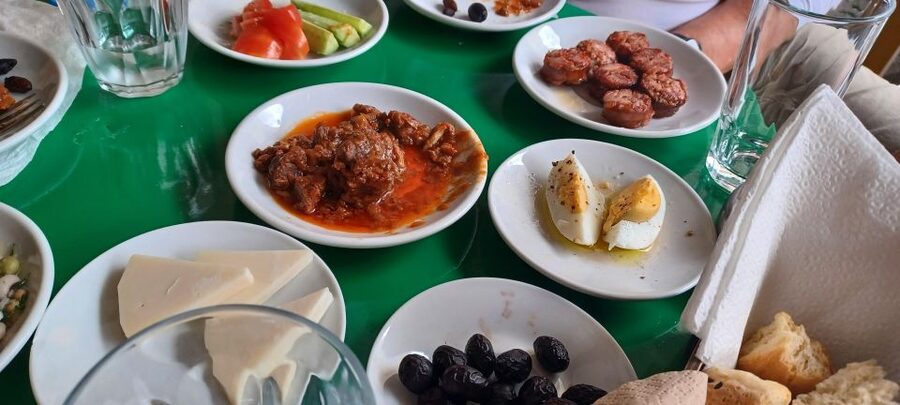
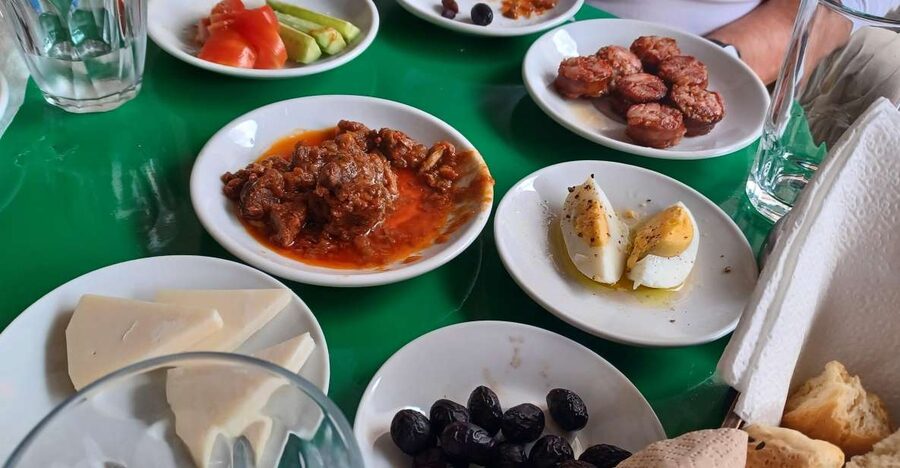
The most substantial food stop comes at a traditional restaurant. Here, you sit down to a generous selection of classic Cretan meze and have time to enjoy the taverna setting.
Meze is ideal for a group food tour because it lets you try several things instead of committing to one large dish. The exact menu can vary, and no fixed list is provided, so plan for a sampling of traditional Cretan plates rather than a guaranteed set menu.
This final stop is where the tour’s food side pays off. The café provides a morning-style bite and sweets. The restaurant offers a fuller taste of the island’s savory cooking and hospitality. You can also use this stop to ask the host what to order during the rest of your stay.
The tour finishes at the Pastry History Museum. That ending keeps the food theme in place, even after the main restaurant tasting.
How much value do you get for $106?
At $106 per person, this is not a low-cost market walk. You are paying for four hours, multiple food and drink tastings, an English-speaking local host, a walking tour through central Heraklion, market access, and visits to traditional workshops.
The value is strongest if you want several travel jobs handled at once:
- You want a first orientation to Heraklion.
- You prefer tasting several foods instead of choosing restaurants alone.
- You like churches, old buildings, and harbor views but do not want a history-only tour.
- You want a local perspective on food and craft.
- You have four hours available and are comfortable walking.
The value is weaker if your main goal is a large, formal lunch, a private guide, or extended time inside each landmark. The food portions and exact menu are not listed in detail, so I would not book it solely because you expect a full day of eating.
Small groups are a real advantage here. A smaller party makes it easier to hear explanations, ask questions, and stay together in market streets. The available rating is five out of five from three reviews, including strong praise for the food mix, the route, and Rallou’s hosting. That is encouraging, but the sample is small, so I would still treat the tour as a personal walking experience rather than a polished large-scale production.
Pace, sound, and what to bring
Wear comfortable shoes. The tour lasts four hours and includes repeated walking between squares, streets, churches, the market, harbor, restaurant, and museum.
The route is not described as difficult, but city walking can be tiring when you combine distance with standing at stops. Avoid brand-new footwear. You should also leave room in your schedule before and after the tour, since the pace is designed to cover many parts of the center.
Sound is the one practical concern worth taking seriously. A booking specifically noted that background noise made it hard to hear the host and suggested a microphone or headsets. Those devices are not listed as part of the experience, so stand close to the guide and ask for repetition when needed.
The tour is offered in English. Bring water if you normally need it during a long walk, though water is not listed among the included items. Anything not specifically mentioned as included should be treated as extra.
Free cancellation is available up to 24 hours before the start for a full refund, and you can reserve now and pay later. Check the available starting times before committing, since the exact departure time is not fixed in the information provided.
Who should book this Heraklion food walk?
I would recommend it to first-time visitors who want a friendly introduction to Heraklion without choosing between food and sightseeing. It also suits anyone who likes local markets, traditional sweets, modest cultural stops, and stories about everyday customs.
Couples, friends, and solo visitors can all get something from the format. The small-group setup should make it easier for solo participants to connect with the host and other people, though the actual group size is not stated.
You should think twice if you dislike walking, need a slow pace, or want exact control over every dish. The tour covers a lot of ground, and the menu is described by type rather than by a guaranteed itemized list. It is also not the right pick if your priority is a long, quiet visit to one monument.
Should you book it?
Book this Food Tour in Heraklion if you want to understand the city through food, streets, and local customs in one four-hour outing. The best parts are the mix of bougatsa and coffee, market browsing, harbor views, Cretan meze, and the unusual stivania workshop.
At $106, the price makes sense when you value the guide and the range of stops as much as the food itself. Go with comfortable shoes, stay near the host in noisy streets, and arrive ready for a fairly active morning or afternoon. If that sounds like your kind of introduction to Crete, this is a strong choice.
FAQ
How long does the Food Tour in Heraklion last?
The tour lasts four hours.
How much does the Food Tour in Heraklion cost?
The price is $106 per person.
Where does the tour begin?
It begins at the Heraklion Archaeological Museum, at the statue in the square.
Where does the tour finish?
The tour finishes at the Pastry History Museum.
What language is the tour offered in?
The host or greeter speaks English, and the walking tour is conducted in English.
What food and drinks are included?
The experience includes multiple tastings, including Cretan bougatsa, Greek coffee, local honey, traditional sweets, and Cretan meze. Raki is also listed among the traditional drinks offered.
What sights does the route include?
The route includes Plateia Eleftherias, Dedalou, the Basilica of Saint Mark, the Morosini Lions Fountain, the Venetian Loggia, Agios Titos Church, 25th Avgoustou Street, Rocca a Mare Fortress, Agios Minas Cathedral, the Central Market, and the Pastry History Museum.
What should I bring?
Bring comfortable shoes. The tour includes four hours of walking through central Heraklion.
Just added around Heraklion
- Crete: Knossos Palace & Heraklion City Tour★ 3.5 · 3 reviews
- Full-Day Tour:Lasithi Plateau -Mythology Park&Knossos Palace★ 3.0 · 3 reviews
- Knossos: Knossos Private Guided Tour★ 5.0 · 3 reviews
- Snorkeling Tour with Sea Scooter in Heraklion★ 5.0 · 3 reviews
- Heraklion: Holistic Massage: Revitalization of Body & Spirit★ 5.0 · 3 reviews
- Gramvousa and Balos Tour From Heraklion★ 4.0 · 3 reviews
- Heraklion: Walking city tour & Wine tasting★ 5.0 · 3 reviews
- Private Wine Tour at Peza Valley – 2 Wineries and Lunch at Peza★ 5.0 · 3 reviews
Cretan Food Tours, compared.

Olive Farm Tour with Tasting of Local Delicacies
Read our review →
Old Town Highlights Guided Tour with Street Food
Read our review →
Walking “Food tasting tour” in the town of Chania
Read our review →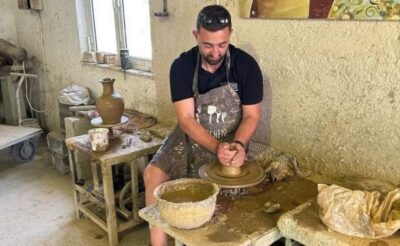
Full-Day Cretan Wines, Olive Oil, Raki and Food Tour
Read our review →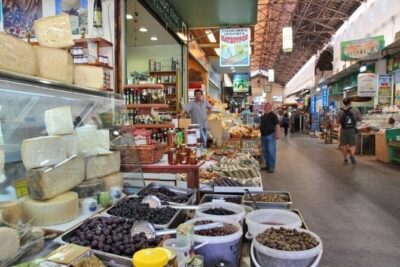

Olive Oil, Soap, Wine, Raki – Flavorful Culinary Journey
Read our review →Browse the lists this tour appears in