
Reviewed · CRETAN FOOD TOURS
From Chania: The Ultimate Food Tour Of Chania Villages
The best part of this six-hour trip is its route through Apokoronas, where food takes you from an olive mill to a raki distillery, bakery, cheese factory and village kafeneio. You are not simply handed samples. You see how Cretan staples are made, then taste them in the places where local families produce and serve them.
I like the small family businesses and the way the tour connects food with daily life. I also like the final lunch in Fres, where the setting is a village square rather than a large tourist restaurant. Guides including Maria, Andres and Yannis have been praised for being friendly, attentive and easy to follow.
The main caution is that the tastings can vary. One departure offered only a single chocolate cookie at the bakery, and some producer explanations may be harder to follow because of strong accents. If you have already taken the Seven Villages tour around Chania, you may also repeat three stops.
In This Review
- Key points to know before booking
- Why this Chania food tour works
- The olive mill explains Crete in one stop
- Raki comes with a lesson in Cretan hospitality
- Embrosneros brings bread and cheese together
- Fres supplies the proper meal
- The route is as important as the tastings
- What $135 covers, and where the value lies
- Who will enjoy this day most
- Should you book the Chania village food tour?
- FAQ
- How long does the food tour last?
- What areas does the tour visit?
- Is hotel pickup included?
- What language is the tour conducted in?
- What food and drinks are included?
- Which Cretan products will I taste?
- Can I reserve now and pay later?
- What is the cancellation policy?
Key points to know before booking
- Olive oil from harvest to tasting: See how extra virgin olive oil is produced, then learn what separates it from lower-grade oil.
- Two sides of Cretan raki: Visit a traditional distillery and a modern professional operation before tasting tsikoudia.
- Cheese in the White Mountains foothills: At a cheese factory in Embrosneros, sample graviera, anthotyros and mizithra with honey and rusk.
- A village bakery stop: Taste local bread, biscuits and cookies, though the number of samples may be modest.
- Lunch in Fres: Finish with a customary Cretan meal at a local kafeneio, with food included in the price.
- Good value for a full half-day: The $135 price covers transport, guide, tastings, lunch, water and hotel pickup and drop-off.
Why this Chania food tour works
Crete is easy to experience as a beach-and-ruins destination. This tour gives you another way in. You leave the city and spend the day around the farms, workshops and village businesses that keep local food traditions going.
I like that the schedule is built around production. You do not just taste olive oil, raki or cheese with no explanation. You see the steps behind each product, which makes the food on your plate later in the day more meaningful.
The route takes you through the mainland of East Chania and the villages of Apokoronas, toward the foothills of the White Mountains. The drive is part of the experience, with views of rural Crete and stops in places that are less polished and less crowded than the coast.
The tour lasts six hours and includes an English-speaking local driver and escort. Transportation is by air-conditioned minibus or minivan, with hotel pickup and drop-off within the Chania region. That matters in Crete, where a rental car gives you freedom but also leaves you responsible for narrow roads, navigation and, after a raki tasting, getting back safely.
More Food Tours in Chania
- Walking “Food tasting tour” in the town of Chania
★ 5.0 · 297 reviews - The Delicious Chania Street Food Tour
★ 5.0 · 138 reviews - Sunset Craft Beer & Food Tour – Chania Old Port
★ 5.0 · 86 reviews
The olive mill explains Crete in one stop
The olive mill is a smart first visit because olive oil sits at the center of Cretan cooking. Here you follow the process from the harvest of the olives through production and finally to the palate.
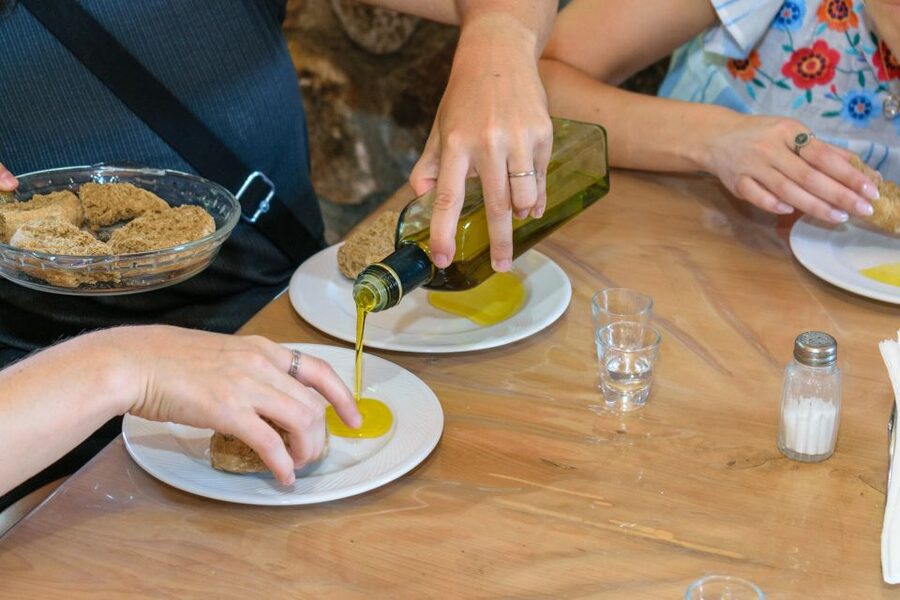
The focus is extra virgin olive oil, the highest quality category discussed on the tour. You learn how the oil is made and why production methods affect taste, aroma and quality. This is useful beyond the day itself because you will have a better sense of what to look for when buying a bottle in Crete.
The tasting turns a technical visit into something practical. You can compare the flavor and texture of the oil with what you might find at home, then connect it to the bread, cheese and lunch served later.
The amount of detail may depend on the guide and the mill staff. Maria has been praised for attentive guiding and clear English, while Andres has also been described as a warm and engaging escort. The mill is most valuable if you ask questions and take your time with the tasting rather than treating it as a quick sample stop.
Raki comes with a lesson in Cretan hospitality
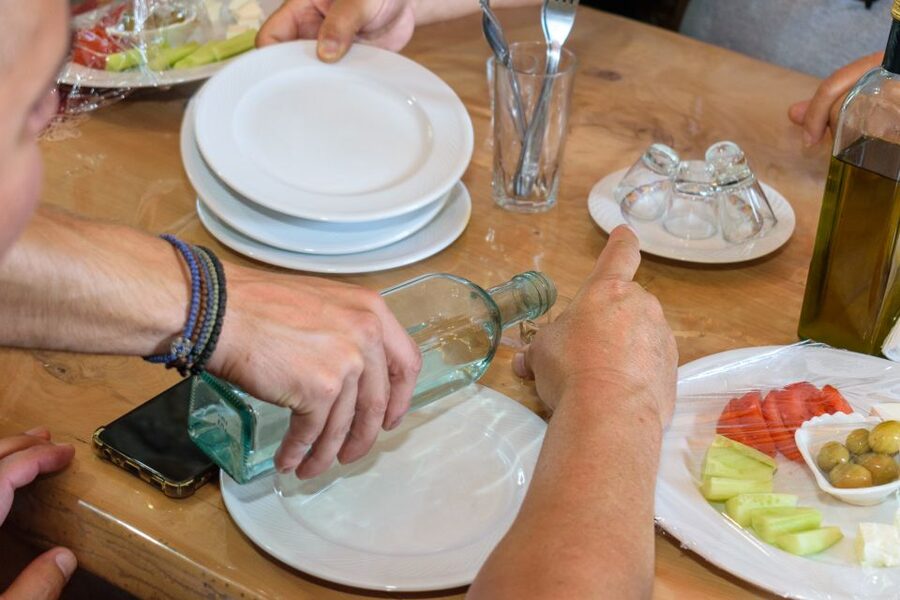
Next comes tsikoudia, usually called raki. This clear Cretan spirit is made from grape remnants after winemaking, although the supplied tour information focuses on seeing and tasting the production process rather than giving a full technical explanation of the ingredients.
You visit a local distillery in a traditional village. The stop includes both a time-honored conventional distillery and a modern professional operation, allowing you to see how old methods and newer equipment can sit side by side.
This is one of the more distinctive parts of the day. Raki is not just another drink to tick off a tasting list. In Crete, it is tied to social life and the custom of welcoming people with food and a small glass. The tour helps you understand that connection without requiring you to spend an evening in a bar.
Keep in mind that the tasting is included, but extra food and drinks are not. If you do not drink alcohol, you may still find the production visit worthwhile, though the tour is clearly designed with raki tasting as one of its central pleasures.
Embrosneros brings bread and cheese together
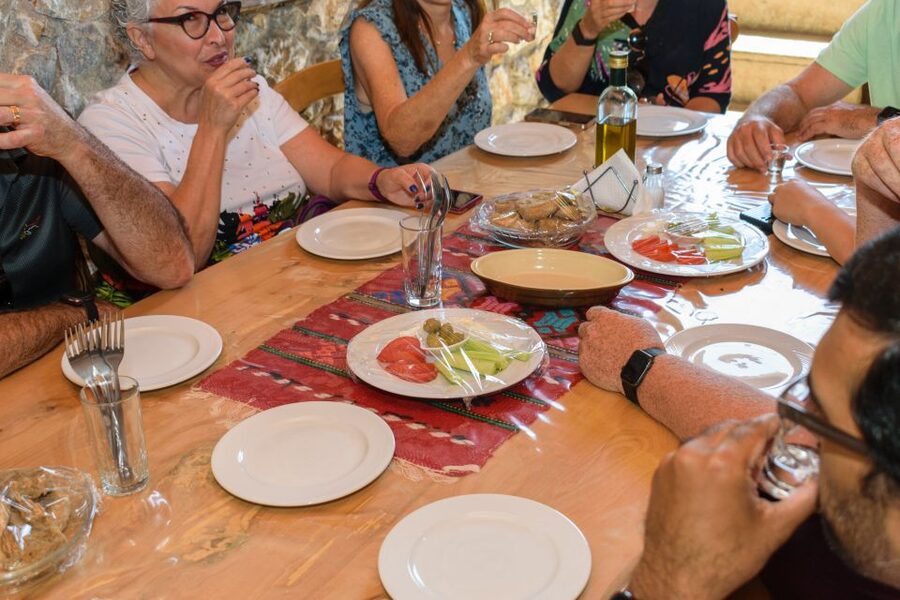
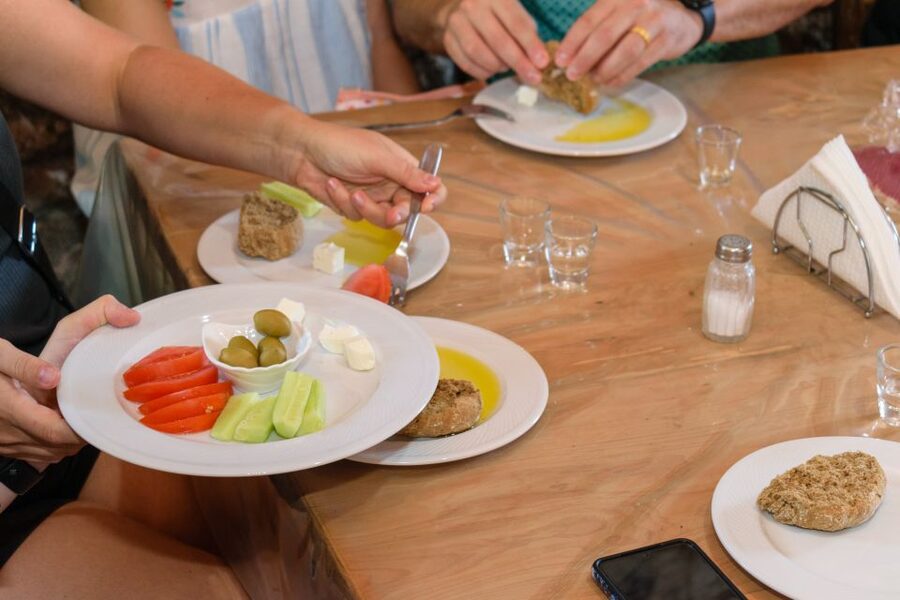
The route continues to Embrosneros, a village near the White Mountains foothills. The first stop there is a bakery, where you taste local bread, cookies and biscuits.
This sounds simple, but bread gives you a useful introduction to everyday Cretan food. It is also a good bridge between the farm products and the meal later in the day. Still, you should set realistic expectations. One departure included only one chocolate cookie as a bakery sample, with no further tastings of the local baked goods. If you are especially interested in pastry, this stop may feel brief.
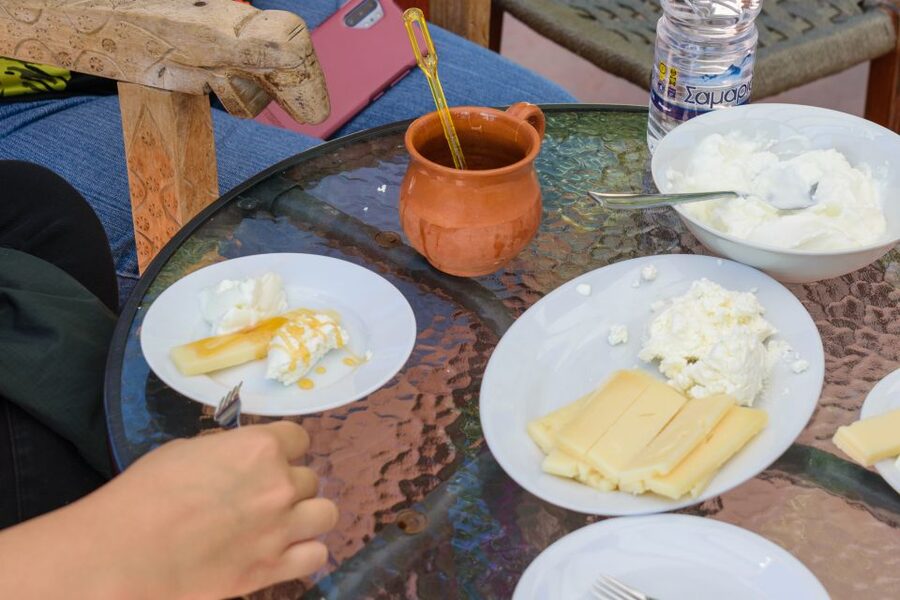
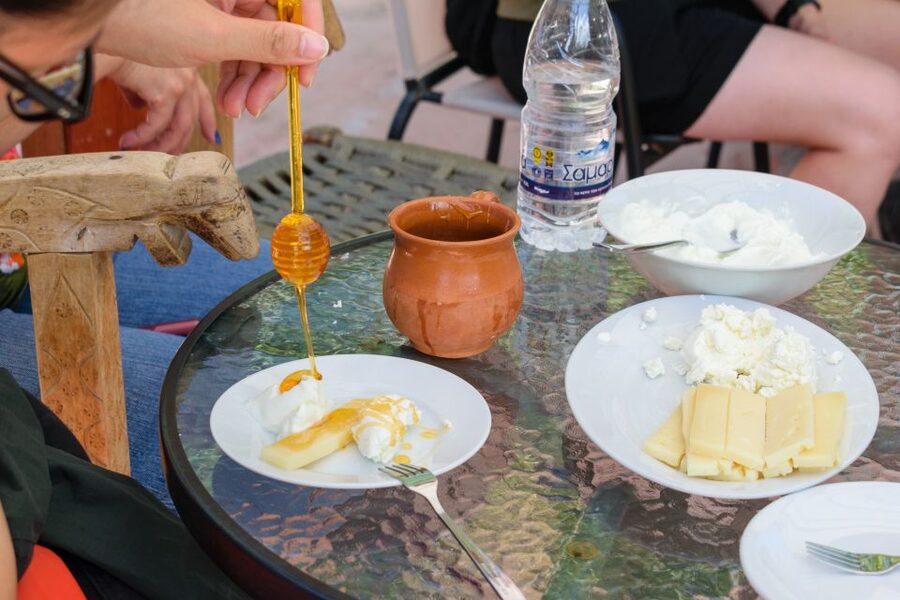
The cheese factory is likely to be more substantial. You see how several familiar Cretan cheeses are produced and taste them after the explanation. The tasting includes graviera, anthotyros and mizithra, served with local honey and rusk, a dry, crisp bread.
Each cheese gives you a different idea of Cretan dairy food:
- Graviera is the firm, savory cheese you may recognize from many Greek menus.
- Anthotyros is a softer cheese with a lighter character.
- Mizithra is another soft cheese, often associated with fresh Cretan cooking.
The important point is not memorizing the names. You learn how milk, production methods and aging create different textures and flavors. Honey adds sweetness, while rusk gives the tasting a dry, crunchy counterpoint.
I like this stop because it brings together several products made by small local businesses. You are tasting a simple combination, but it reflects the way Cretan food often works: good ingredients, little fuss and plenty of local character.
There can be a language barrier at some stops. The main guide speaks English, but the people explaining production may have heavily accented English or limited fluency. Yannis, who has been described as friendly, funny and talkative, can make the running commentary enjoyable, but you should not expect every technical detail to be delivered in polished English.
More Traditional Village Tours in Chania
- Elafonissi Beach Day Trip from Chania -Stop in Elos Village
★ 4.5 · 744 reviews - The 7 Villages of Apokoronas Tour – Explore East Chania Mainland
★ 5.0 · 178 reviews - Elafonissi Beach Tour from Chania with stop in Elos Village
★ 4.5 · 168 reviews - From Chania: Imbros Gorge Guided Hike and Village Visit
★ 4.5 · 133 reviews
Fres supplies the proper meal
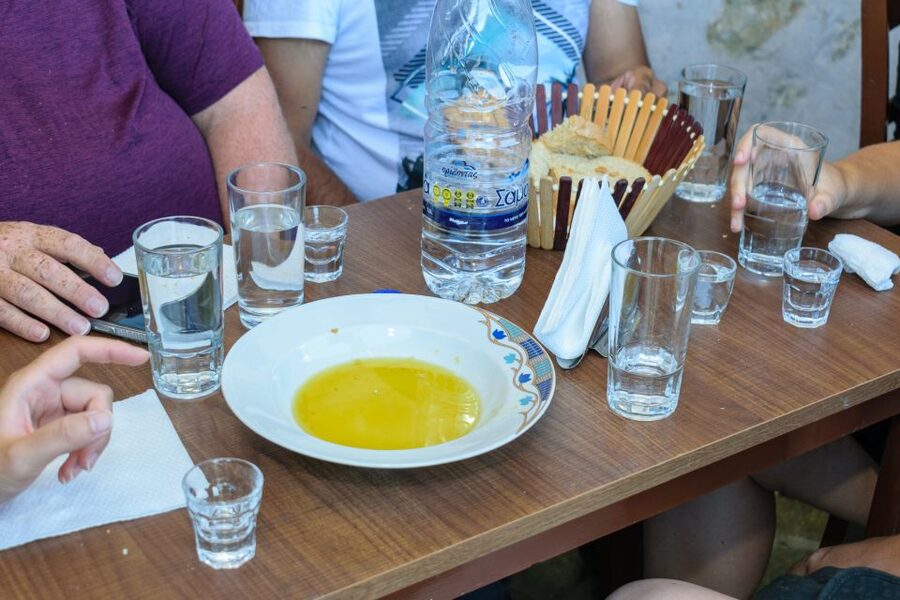
The final stop is a local coffee shop, or kafeneio, in the village of Fres. This is where the day shifts from tasting individual foods to eating a Cretan meal.
A kafeneio is more than a place for coffee. It is a social meeting point where people may also eat, talk and spend time together. Ending the tour here gives you a better sense of how local food is served in village life.
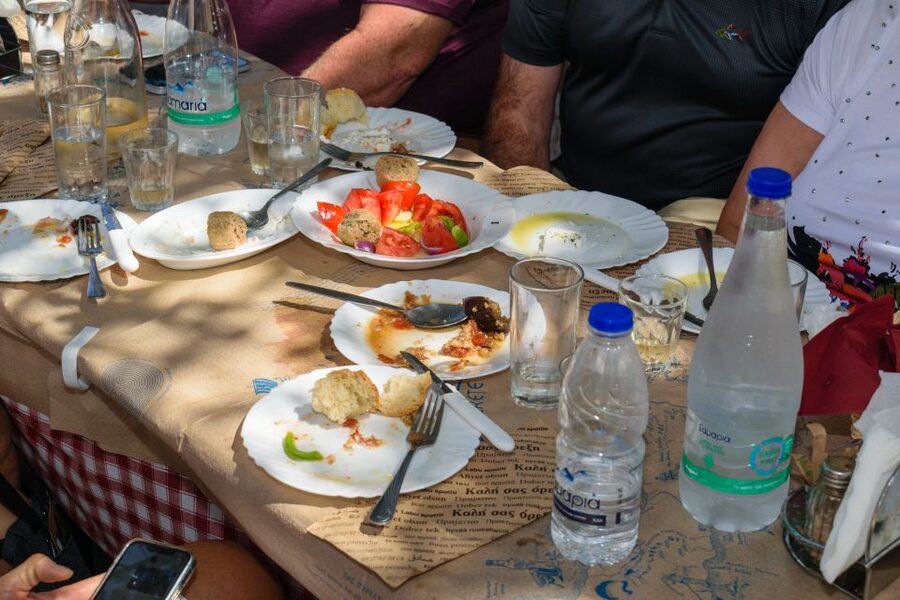
The meal is included and features traditional Cretan recipes. You should expect a selection of dishes rather than a single main course, although the exact menu can change. The supplied information describes the food as traditional and sufficient, and the setting as a friendly village tavern with a welcoming host.
I consider this lunch the strongest value point after the transport. You have already tasted the individual ingredients, so the meal shows you how they work together in a real setting. Olive oil, cheese, bread, honey and other local products stop being separate demonstrations and become part of a complete meal.
You can buy additional food and drinks if you want them, but those extras are not included. If you prefer a long, leisurely lunch, remember that the tour has to continue according to its six-hour schedule.
The route is as important as the tastings
This is not a walking food tour in Chania’s old town. You spend the day traveling by air-conditioned minibus or minivan between rural stops, which makes the tour useful for people who want to explore beyond the city without renting a car.
The route passes through villages in the Chania region and reaches the White Mountains foothills. You get a look at the mainland side of the area, away from the busiest coastal sights. The views were a major part of what made the day appealing to Tina, who described the trip as relaxing, scenic and full of good food.
The pace also helps. You are not rushing through a long list of attractions. The schedule centers on a handful of food stops, each with a clear purpose. That gives you time to listen, taste and ask questions.
There is one planning issue to note. The tour includes pickup and drop-off within the Chania region. If you are staying in another part of Crete, you need to contact the provider about pickup before booking. You should also wait outside your meeting point 10 minutes before pickup, since the driver waits no longer than five minutes after the scheduled time.
What $135 covers, and where the value lies
At $135 per person, this is not the cheapest way to eat in Crete. You could buy a bakery snack, a village meal and a bottle of olive oil for far less. The price makes more sense when you count what is included and what you would have to arrange yourself.
The fee includes:
- Hotel pickup and drop-off in the Chania region
- Air-conditioned minibus or minivan transport
- An English-speaking local driver and escort
- The olive mill, distillery, bakery and cheese factory visits
- All listed tastings
- Bottled water
- Traditional Cretan lunch
- Taxes, fees and handling charges
I see this as good value for a visitor without a car who wants a guided introduction to Cretan food in one day. You are paying for access, transport, translation and planning as much as for the food itself.
The value is weaker if you have already visited the same villages or taken another countryside tour. Frank took the Seven Villages tour around Chania and found three repeated locations. Before booking, compare the routes of any other food or village excursions you have planned.
The booking terms are useful for uncertain plans. You can reserve now and pay later, and cancellation is free up to 24 hours before the tour for a full refund.
Who will enjoy this day most
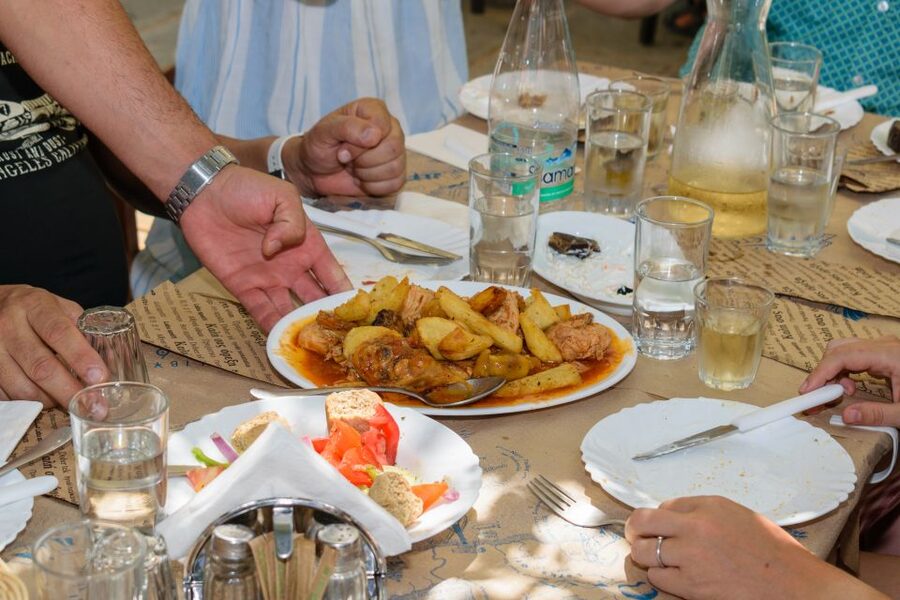
I would choose this tour if you want food with context. It suits you if olive oil, cheese, local spirits and village cooking interest you more than a formal restaurant meal or a city-only tasting.
It is also a good fit if you are staying in Chania and do not want to drive. The included pickup, rural transport and local escort remove much of the effort involved in reaching Apokoronas.
The tour works well for friends and couples, and it can be a relaxed option for anyone who prefers a full day built around eating and scenery. Tina described the pace as relaxing, which is useful if you want a break from tightly scheduled sightseeing.
You may want to think twice if you need a highly polished food presentation at every stop. The bakery tasting may be small, and explanations from local producers may not always be easy to understand. The experience is better suited to curiosity and flexibility than to a strict gourmet itinerary.
Guide quality can shape the day. Maria has been described as attentive with perfect English, Andres as a wonderful guide, and Yannis as experienced, funny and sociable. The provider assigns the guide, so you should not assume a particular person will lead your departure.
Should you book the Chania village food tour?
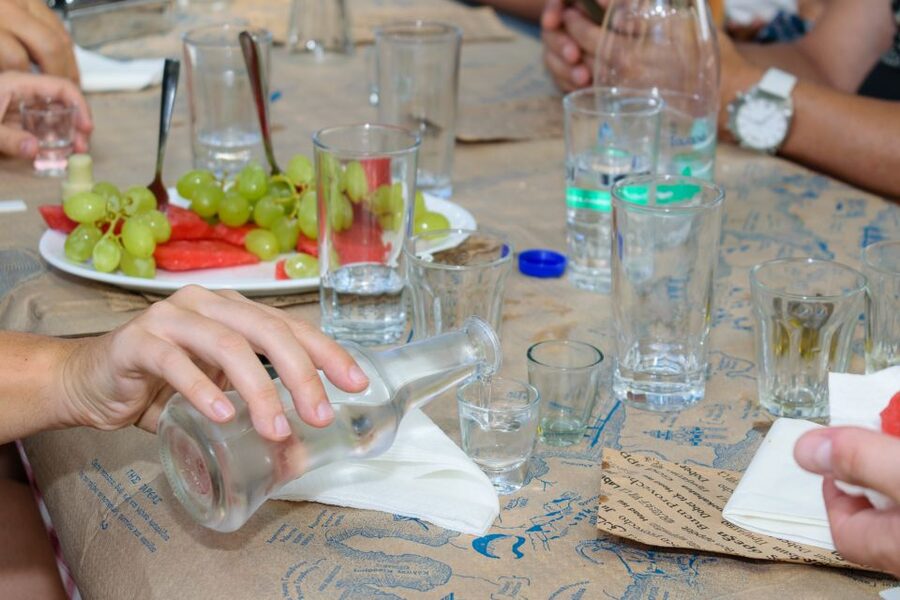
Book it if you want to taste Cretan food where it is produced and served, and if you value a rural route over a long list of city sights. The olive mill, raki production, cheese tasting and lunch in Fres form a clear story about Cretan food, from raw ingredients to the table.
The $135 price is fair for a six-hour outing with transportation, tastings and lunch included. Just keep your expectations balanced: the bakery sample may be limited, some explanations may be difficult to follow, and parts of the route can overlap with other village tours.
For a first visit to Chania, I would put this high on the list for food-focused visitors. It gives you a practical taste of mainland Crete, introduces you to local producers and leaves you with more than a full stomach. It gives you a better idea of how the island eats.
FAQ
How long does the food tour last?
The tour lasts six hours.
What areas does the tour visit?
It explores East Chania and the villages of Apokoronas, including Embrosneros and Fres. The route also reaches the foothills of the White Mountains.
Is hotel pickup included?
Yes. Hotel pickup and drop-off are included for pickup points within the Chania region.
What language is the tour conducted in?
The tour has an English-speaking live guide and an English-speaking local driver or escort.
What food and drinks are included?
The tour includes tastings at the olive mill, raki distillery, bakery and cheese factory, along with bottled water and a traditional Cretan lunch. Additional food and drinks are not included.
Which Cretan products will I taste?
You can expect to taste olive oil, raki or tsikoudia, bread, cookies, biscuits, graviera, anthotyros, mizithra, honey, rusk and other local delicacies.
Can I reserve now and pay later?
Yes. The tour offers a reserve-now, pay-later option.
What is the cancellation policy?
You can cancel up to 24 hours in advance for a full refund.
Just added around Chania
- Cooking Class & Greek Night Experience★ 5.0 · 3 reviews
- Chania: Private Guided Food and Wine Walking Tour with Lunch★ 5.0 · 3 reviews
- Chania: Knossos Palace – Archaeological museum!★ 3.4 · 3 reviews
- Chania Highlights:Venizelos, Stavros, Agia Triada & Marathi★ 5.0 · 3 reviews
- Chania: Private Tour to Balos Lagoon★ 5.0 · 3 reviews
- Your Tailored Samaria Tour That Nobody Will Believe. From Chania.★ 5.0 · 3 reviews
- Sips of Crete: Flavors, Legends & Hidden Gems★ 5.0 · 3 reviews
- Elafonisi Beach Tour★ 3.3 · 3 reviews
Cretan Food Tours, compared.

Olive Farm Tour with Tasting of Local Delicacies
Read our review →
Old Town Highlights Guided Tour with Street Food
Read our review →
Walking “Food tasting tour” in the town of Chania
Read our review →
Full-Day Cretan Wines, Olive Oil, Raki and Food Tour
Read our review →

Olive Oil, Soap, Wine, Raki – Flavorful Culinary Journey
Read our review →Browse the lists this tour appears in